

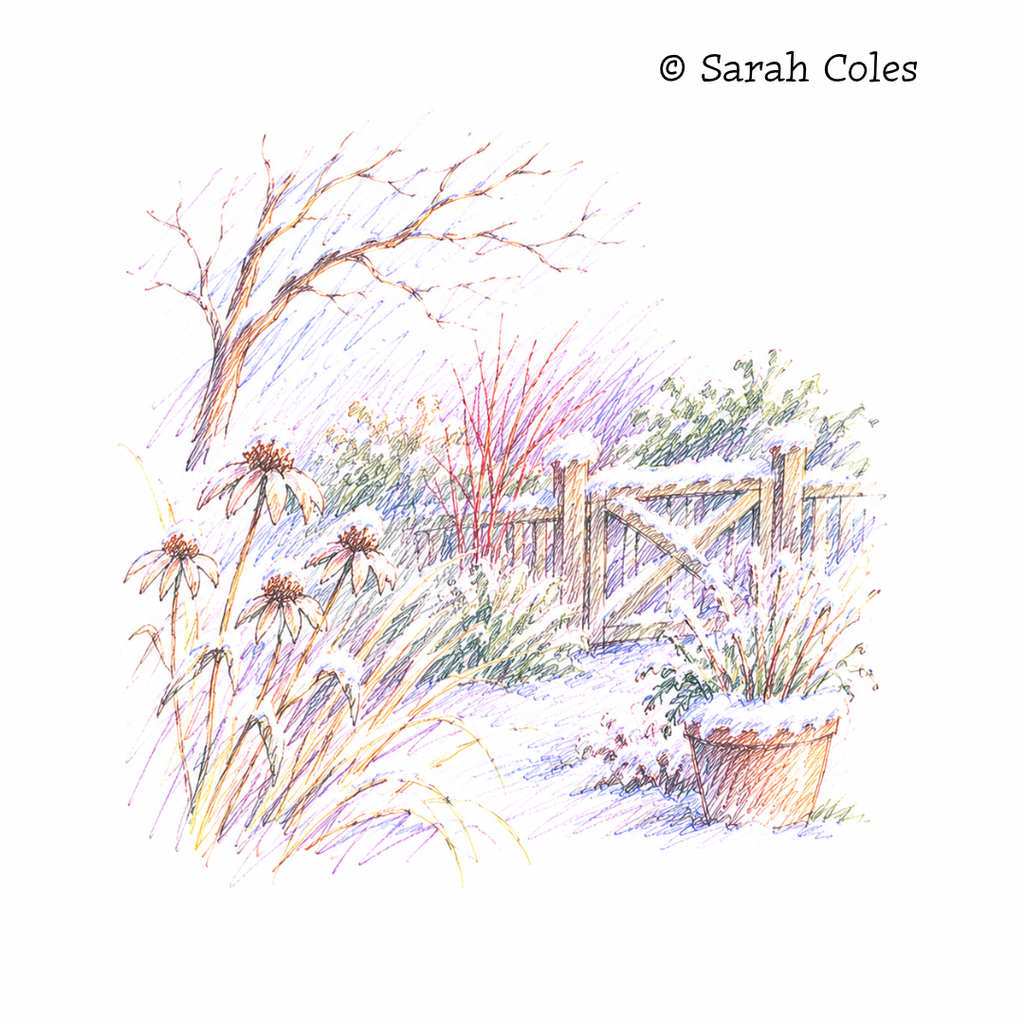
There is a particular beauty to the British countryside in December. The hedgerows have grown quiet, the trees stand bare against the winter sky, and the garden has settled into its annual rest. Yet, even on the shortest days, there are signs of life amongst the sleeping landscape.
Holly glistens with bright red berries, ivy clings to ancient walls and woodland trees, and mistletoe hangs in pale green clusters amongst the branches of old orchards.
These familiar plants have been part of our Christmas celebrations for centuries. Long before artificial wreaths and sparkling decorations, people gathered greenery from their gardens, hedgerows and woodlands to bring colour into their homes during the darkest months of the year.
But these plants were never simply decorations. Each carried its own stories, superstitions and meanings, passed down through generations and woven into the traditions of a British Christmas.
Bringing the Outside In
Imagine Christmas in a medieval English village. There are no fairy lights in the windows or brightly decorated Christmas trees in the cottages. Instead, preparations for the festivities involve gathering whatever greenery the surrounding countryside can provide.
Branches of holly, trailing ivy, fragrant bay and other evergreens are brought indoors to decorate homes and churches.
We know this was an established custom by the late Middle Ages. An account of London in 1444 describes houses and parish churches being dressed with holly, ivy, bay and other seasonal greenery.
Evergreen plants held particular significance because they remained green when much of the natural world appeared dormant. Within Christian tradition, they came to represent everlasting life and the promise of renewal.
The greenery also brought something cheerful into the home at a time when daylight was scarce and winter could be particularly harsh.
It is a simple idea, but a rather lovely one. By bringing a little of the living countryside indoors, people could celebrate Christmas while keeping a connection with the changing seasons.
Holly: A Tree of Protection and Good Fortune
Of all the plants associated with Christmas, holly is perhaps the most instantly recognisable.
Its glossy, dark green leaves and scarlet berries seem made for December. Whether growing in a woodland, standing in an old garden or tucked into a Christmas wreath, holly brings colour to the winter landscape.
Our native holly, Ilex aquifolium, has a long history in British folklore.
It was once believed that a holly tree growing near the house could offer protection against evil spirits and misfortune. In some places, cutting down a mature holly was considered unlucky, particularly if it had stood beside a home for generations.
These beliefs reflected the importance people attached to trees that remained green throughout winter. Holly appeared to possess a strength that other plants lacked, surviving the cold and darkness without losing its leaves.
With the spread of Christianity, holly acquired additional meanings. Its prickly leaves were associated with Christ’s crown of thorns, while its red berries came to symbolise his blood.
There is an interesting detail about holly that is often overlooked. Most holly plants are either male or female, and it is generally the female plants that produce berries, provided they have been pollinated by a suitable male plant nearby. A few cultivated varieties are self-fertile.
For gardeners hoping to enjoy a colourful display at Christmas, choosing the right holly is therefore rather important.
The berries also serve a purpose beyond decoration. They provide valuable winter food for blackbirds, thrushes and other birds, while the dense evergreen branches offer shelter from harsh weather.
A holly tree laden with berries is a wonderful sight, but leaving plenty for the birds is one of the kindest things we can do in a winter garden.
Ivy: The Faithful Companion
Ivy rarely receives quite the same attention as holly, yet it has been part of our Christmas traditions for just as long.
It winds around old gateposts, climbs weathered stone walls and spreads across woodland floors, remaining green when the surrounding vegetation has faded.
Because ivy clings so firmly to whatever supports it, it became associated in folklore with loyalty, friendship and faithfulness.
Holly and ivy were often mentioned together in traditional songs and seasonal customs. Sometimes they were portrayed as rivals, competing for importance, while other interpretations treated them as companions representing different qualities.
Their relationship is preserved in the familiar Christmas carol The Holly and the Ivy, although the song’s religious symbolism is only one part of their much wider history.
Ivy also had a reputation as a protective plant. In some local traditions, it was believed to guard buildings against harmful influences.
Beyond the folklore, ivy is one of the most valuable plants we can allow to grow in a wildlife-friendly garden.
Its flowers appear in autumn, providing a late source of nectar and pollen for bees, hoverflies and other insects. Its dark berries ripen during winter and early spring, offering food to birds when other supplies may be running low.
Dense ivy also creates shelter for insects and nesting birds.
Although it has sometimes been blamed for damaging trees, ivy does not normally take nutrients directly from a healthy tree. Problems can arise when heavy growth adds weight, catches the wind or conceals existing damage, particularly on weakened trees.
In the right place, however, ivy is an important part of the garden’s natural balance.
A few trailing stems make a beautiful addition to a Christmas wreath, but there is something equally appealing about leaving ivy to flourish outdoors, where it supports wildlife throughout the year.
Mistletoe: The Most Mysterious Christmas Plant
There is something almost magical about seeing mistletoe growing high in the branches of a tree.
In summer, it is easily overlooked amongst the leaves. By December, however, its rounded clusters stand out clearly against the bare branches, particularly in old apple orchards.
Mistletoe, Viscum album, is an unusual plant. Rather than growing in the soil, it lives attached to a host tree, drawing water and minerals from its branches while producing some of its own food through photosynthesis.
In Britain, it is particularly associated with traditional orchards, especially in parts of western and central England.
Its unusual appearance has helped inspire centuries of stories.
The Roman writer Pliny the Elder described Druids in Gaul gathering mistletoe from oak trees as part of a sacred ceremony. Over time, this account became closely associated with British folklore, although Pliny did not describe a Christmas custom or specifically place the ceremony in Britain.
The connection between mistletoe and Christmas developed through later traditions, and its precise origins remain uncertain.
By the seventeenth century, mistletoe was clearly associated with seasonal decorations. The poet Robert Herrick included it amongst the greenery to be removed at Candlemas.
The familiar tradition of kissing beneath mistletoe appears in English written records by 1784.
According to one custom, a berry was removed after each kiss. Once the berries had gone, no more kisses were permitted.
It is one of those curious Christmas traditions that has survived long after most people have forgotten its history.
Mistletoe has an important place in the natural world, too. Its white berries provide food for birds such as the mistle thrush, which helps disperse the seeds to new trees. Several specialist insects also depend upon the plant.
Although mistletoe can weaken trees when present in large quantities, a modest amount can form part of a healthy orchard ecosystem.
Its berries should never be eaten, and any mistletoe brought indoors should be kept out of reach of children and pets.
Christmas Wreaths and Kissing Boughs
The Christmas wreath hanging on the front door is such a familiar sight that it is easy to imagine it has always been part of British festive life.
In fact, the decorations we recognise today developed over many centuries.
Evergreen branches had long been used to decorate buildings, but the familiar door wreath became particularly popular during the nineteenth century.
Victorian households often used holly, ivy, fir, pine cones and ribbons to create welcoming arrangements for visitors.
Earlier Christmas decorations included the kissing bough, an arrangement of greenery suspended from the ceiling or over a doorway.
These could be surprisingly elaborate. Some were made using crossed hoops decorated with evergreen foliage, fruit, ribbons and other ornaments.
Kissing boughs are often associated with Tudor Christmas celebrations, although their earliest history is not entirely clear. By Georgian times, they had become part of the festive decoration of some households.
The tradition of kissing beneath greenery was associated with these arrangements and may have contributed to the later popularity of mistletoe.
There is something rather appealing about the idea of a decoration made from whatever the garden or surrounding countryside could provide.
A modern wreath need not be complicated. Holly, ivy, rosemary, conifer foliage, rosehips and dried seedheads can all be combined to make something beautiful.
Using a reusable wreath ring or a base woven from flexible willow stems is a practical way to avoid unnecessary waste.
When gathering greenery, take only small amounts, avoid stripping berries needed by wildlife and always obtain permission before cutting plants on land that is not your own.
When Should Christmas Greenery Come Down?
Christmas folklore does not end when the decorations have been hung.
For generations, people have held strong opinions about when festive greenery should be removed, often warning that leaving it in place too long would bring bad luck.
Today, many households take down their decorations on Twelfth Night, around 5 or 6 January, depending on how the twelve days of Christmas are counted.
Historically, however, the picture was rather different.
In medieval and early modern England, the wider Christmas season extended to Candlemas on 2 February, although the main festivities centred on Christmas and the Twelve Days that followed.
There is good evidence that greenery remained in churches and homes until this date.
The seventeenth-century poet Robert Herrick wrote about removing rosemary, bay, mistletoe, holly and ivy at Candlemas, reflecting the belief that no festive greenery should be left behind.
The familiar warning about decorations remaining up after Twelfth Night is therefore not a universal ancient rule, but part of a changing collection of customs.
It is a reminder that traditions are rarely fixed. They develop over time, influenced by local beliefs, religious observances and family habits.
Keeping Christmas Traditions Growing
Perhaps the nicest thing about these old customs is that they encourage us to look more closely at the plants growing around us.
A holly tree in the garden is not simply a source of Christmas decorations. It is a shelter for birds, a source of winter berries and a living connection to centuries of folklore.
Ivy climbing an old wall provides food and refuge for wildlife, while mistletoe growing in an orchard reminds us of the importance of traditional landscapes and the creatures that inhabit them.
Even a modest garden can contribute to these traditions.
Planting a holly, allowing ivy to grow in a suitable corner or making a wreath from carefully gathered greenery are simple ways to celebrate the season without losing sight of the natural world.
And perhaps that is the real charm of Christmas greenery.
These are not decorations invented for a single day in December. They are living plants with histories stretching back through generations, each carrying stories of protection, friendship, hope and renewal.
As winter settles over the countryside and the days grow short, their evergreen leaves remind us that the garden is never quite as still as it seems.
Somewhere amongst the bare branches and frosted hedgerows, life continues quietly, waiting for the return of spring.
And that is surely one of the loveliest Christmas traditions of all.
For Inspiration Follow Me on Instagram, Facebook, Bluesky and Threads
Further Reading: Who Lives Beneath the Leaves? The Wildlife We Protect by Leaving Them, Best Plants for Wildlife: Flowers, Shrubs and Climbers for a Nature-Friendly Garden, How to Create a Wildlife-Friendly Garden, The Art of Leaving the Garden Alone in Winter, Why Your Garden Soil Needs a Winter Blanket, Dead Stems, Seedheads and Hollow Stalks: Why They Matter in Winter
