


Beneath the fallen leaves of autumn lies a remarkable little world. From beetles and earthworms to overwintering butterflies and hedgehogs, the garden floor is far more alive than we might imagine.
By November, the garden has acquired its familiar autumn covering. Leaves gather beneath the hedges, settle around the roots of shrubs and collect in the quieter corners where the wind has carried them. Some remain golden and crisp, while others darken with the rain, gradually becoming part of the soil beneath our feet.
For many of us, this is the moment to reach for the rake. There are lawns to clear, paths to sweep and borders to tidy before winter takes hold.
But before gathering every last leaf, it is worth considering what might be living beneath them.
Lift a handful of damp leaves from a sheltered corner and you may discover an entire community going about its business. Tiny creatures move through the decaying vegetation, feeding, hunting, sheltering and helping to return nutrients to the soil.
Some are preparing to survive the winter. Others remain active whenever conditions allow.
And although we may barely notice them, they are doing work that no gardener could ever hope to accomplish alone.
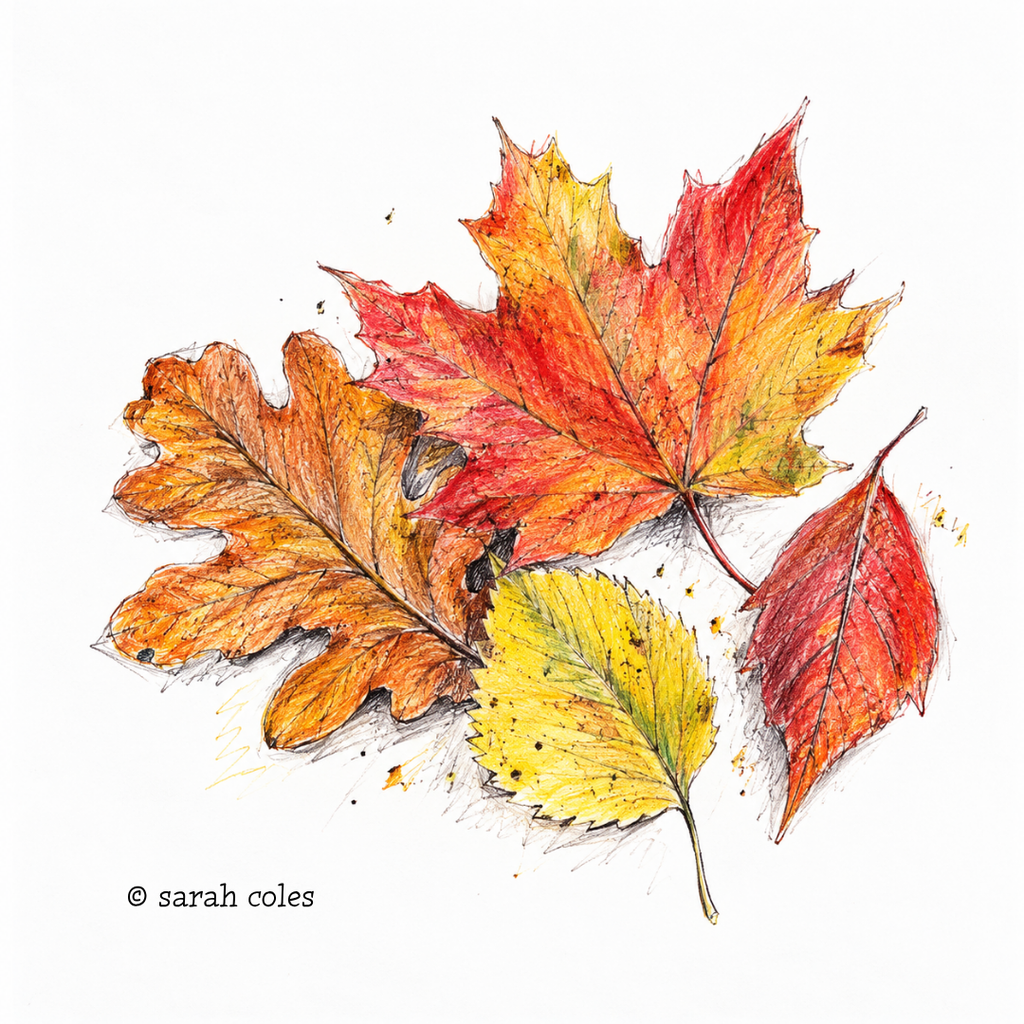
The fallen leaves are not simply the remains of another growing season. They are a habitat in their own right.
The Woodland Floor Has Something to Teach Us
Take a walk through a British woodland in November and one thing becomes immediately apparent. Nobody has tidied the leaves.
They lie where they have fallen, gathering beneath the trees and settling into hollows in the ground. Over time, they form layers of decomposing vegetation, supporting an extraordinary variety of organisms.
This covering is known as leaf litter, and it is an essential part of woodland ecology.
It provides shelter from cold temperatures, drying winds and predators. It helps retain moisture in the soil and creates the conditions needed by fungi, bacteria and the countless small creatures involved in decomposition.
As the leaves gradually break down, their nutrients are returned to the soil, where they can be taken up by growing plants.
Our gardens are not woodlands, of course, and they need managing differently. But there is much we can learn from allowing natural processes to take place.
A scattering of leaves beneath a hedge or a sheltered pile at the back of a border can provide some of the same benefits.
And the creatures making use of them are often rather more interesting than we might expect.
Woodlice: The Quiet Recyclers of the Garden
Amongst the most familiar inhabitants of damp leaf litter are woodlice.
They are easy to overlook, with their small, grey, armoured bodies and habit of disappearing beneath stones, logs and fallen leaves whenever disturbed.
Yet woodlice are remarkable creatures.
Despite living on land, they are crustaceans, related to crabs and shrimps rather than insects. They depend on suitably moist conditions, which is why they are so frequently found in sheltered, damp places.
Much of their diet consists of decaying plant material, including fallen leaves and rotting wood.
As they feed, they break larger pieces of organic matter into smaller fragments, helping fungi and microorganisms continue the process of decomposition.
This is an important part of nutrient cycling.
Without the countless organisms involved in breaking down dead vegetation, gardens and woodlands would accumulate enormous quantities of undecomposed material.
Woodlice may not be the most celebrated of garden inhabitants, but they are certainly amongst the most useful.
And a sheltered layer of leaves provides exactly the sort of environment in which they thrive.
Millipedes: The Many-Legged Garden Helpers
If you have ever disturbed a pile of damp leaves and discovered a slender, many-legged creature slowly making its way through the debris, you may have encountered a millipede.
Unlike centipedes, which are generally predators, most millipedes feed on decaying vegetation.
Their work is much like that of woodlice. They consume dead plant material, breaking it down and contributing to the gradual recycling of nutrients.
Many species spend much of their lives hidden within the soil and leaf litter, emerging when conditions are suitably moist.
They are particularly well suited to the sheltered environment beneath fallen leaves.
It is worth remembering that millipedes and centipedes are quite different creatures, despite their similar appearance.
Millipedes generally have two pairs of legs on most body segments and move relatively slowly. Centipedes have one pair of legs per segment and are active hunters, feeding on other small invertebrates.
Both have a place in a healthy garden.
One helps break down decaying material, while the other forms part of the natural balance between predators and prey.
Neither needs an invitation to arrive. Given suitable habitat, they will often find their own way.
Beetles: A Hidden World Beneath Our Feet
Britain is home to an extraordinary variety of beetles, and many spend at least part of their lives amongst fallen leaves, soil and decaying wood.
Some feed on decomposing plant material or fungi. Others are hunters, searching for smaller invertebrates.
Ground beetles are particularly valuable garden inhabitants.
Many species are nocturnal predators, feeding on creatures such as insect larvae, slugs and other small animals. During the day, they often shelter beneath stones, logs and vegetation.
Leaf litter provides both cover and hunting opportunities.
Other beetles spend winter hidden in protected places, waiting for conditions to improve before becoming active again.
This is one reason why removing every fallen leaf and clearing every sheltered corner can have consequences beyond the immediate appearance of the garden.
We may be removing the very places where useful predators survive the colder months.
A garden with a variety of habitats is better able to support these natural relationships.
And those relationships are part of what makes a garden resilient.
Ladybirds and Lacewings: Winter Shelter for Summer’s Garden Allies
Ladybirds are amongst the most welcome visitors to our gardens, particularly because many species feed on aphids.
But what happens to them when autumn arrives?
As temperatures fall, adult ladybirds seek sheltered places in which to spend the winter.
Depending on the species, they may gather in crevices, beneath loose bark, amongst vegetation or in other protected locations.
Leaf litter can provide shelter for some species, although not all ladybirds overwinter in the same way.
Green lacewings are another useful garden ally.
Their larvae are enthusiastic predators of aphids and other small insects, making them valuable inhabitants of a garden during the growing season.
Some green lacewing species overwinter as adults, seeking protection in sheltered vegetation, crevices and leaf litter.
By leaving suitable areas undisturbed, we improve the chances of these beneficial insects surviving until spring.
It is a simple example of how winter gardening decisions can influence the natural balance of the garden months later.
Butterflies and Moths: The Lives We Rarely See
When the last butterflies disappear from the garden, it is tempting to imagine that their season has ended.
In reality, many species are still present, simply hidden from view.
Different butterflies and moths survive winter at different stages of their life cycles.
Some overwinter as eggs attached to plants. Others remain as caterpillars, tucked away amongst vegetation. Certain species spend winter as pupae, while a smaller number of British butterflies overwinter as adults.
The brimstone, peacock and small tortoiseshell are examples of butterflies that can survive winter in their adult form, although their preferred shelters differ.
Leaf litter and the vegetation around it can be particularly important for species that overwinter close to the ground.
Some moth caterpillars shelter amongst low-growing plants and fallen leaves, while pupae of other species remain protected in the soil or amongst debris.
This is why the winter garden is not simply a collection of empty plants waiting to grow again.
It may contain the next generation of butterflies and moths, hidden in forms we would scarcely recognise.
Clearing every corner too thoroughly risks disturbing these vulnerable stages.
And when spring arrives, some of the insects we enjoy seeing may owe their survival to the shelter we left undisturbed.
Earthworms: The Gardeners Beneath the Soil
Few creatures have contributed more to the health of our gardens than earthworms.
Their work takes place largely out of sight, yet the effects can be seen in the structure and fertility of the soil.
Different types of earthworms occupy different parts of the soil environment.
Some live close to the surface, feeding amongst decaying organic matter. Others create burrows through the soil, helping water and air move through it.
Certain species draw fallen leaves and other plant material into their burrows, where it gradually breaks down.
This process helps incorporate organic matter into the soil.
Earthworm activity varies according to temperature, moisture and species. During cold or very dry conditions, many retreat deeper into the ground or become less active.
But when conditions are suitable, they continue their valuable work.
Leaving leaves beneath shrubs and allowing organic matter to decompose naturally helps provide food for the organisms that support healthy soil.
It is worth remembering that soil fertility is not simply something we add from a bag.
Much of it develops through the continuing activity of living organisms.
Springtails: The Tiny Creatures We Almost Never Notice
Amongst the smallest inhabitants of leaf litter are springtails.
Most are only a few millimetres long, and many are so tiny that we can easily overlook them.
Some species possess a remarkable springing structure beneath their bodies, allowing them to leap away when disturbed.
Springtails are not insects in the modern scientific classification, although they are closely related to them.
They are particularly common in moist environments, including soil, compost heaps and decomposing leaf litter.
Many feed on fungi, microorganisms and decaying organic material.
In doing so, they contribute to the complex processes that break down fallen vegetation and recycle nutrients.
Their presence is a reminder that some of the garden’s most important inhabitants are also amongst its least visible.
A handful of damp leaves may contain far more life than we can see with the naked eye.
Hedgehogs: Finding Shelter Amongst the Fallen Leaves
Not everything that benefits from fallen leaves is small enough to hide beneath a single one.
For hedgehogs, dry leaves are an important nesting material.
As autumn progresses, hedgehogs prepare for hibernation by finding sheltered places and constructing nests from leaves, grass and other vegetation.
These nests, sometimes called hibernacula, are often built beneath hedges, within piles of brushwood, under logs or in other protected locations.
The tightly packed leaves help provide insulation and protection from winter weather.
A quiet, undisturbed corner of the garden can therefore be extremely valuable.
It is important, however, to understand that hedgehogs do not simply sleep beneath any loose pile of leaves.
They construct carefully arranged nests in suitable sheltered locations, and these may remain occupied for considerable periods.
Hedgehogs can also wake and move between nests during winter, particularly when conditions change.
For this reason, we should take care before disturbing leaf piles, compost heaps and other potential nesting places.
If a hedgehog is discovered in a winter nest, avoid unnecessary handling or disturbance and seek advice from a hedgehog rescue organisation if you are concerned.
Sometimes the best way to help is simply to leave a suitable corner of the garden undisturbed.
Birds Benefit from Fallen Leaves Too
One of the pleasures of a November morning is watching a blackbird working its way along the edge of a border.
It pauses, listens, turns over a leaf and investigates the damp ground beneath.
Blackbirds, song thrushes and other birds search for invertebrates amongst soil and fallen vegetation.
The creatures living in leaf litter form an important part of the wider garden food web.
Earthworms, beetles, insect larvae and other small animals provide food for birds and mammals.
By supporting the smaller inhabitants of the garden, we also help support the wildlife that feeds upon them.
It is easy to think of wildlife gardening in terms of putting out bird food or planting flowers for pollinators.
Both can be valuable, but providing natural habitat is just as important.
A garden rich in invertebrates offers opportunities for birds to find food for themselves.
And sometimes that begins with something as ordinary as leaving a few fallen leaves where they are.
Fungi: The Unseen Workers That Make It All Possible
There is another group of organisms that deserves recognition, although we may rarely see much evidence of their activity.
Fungi are essential to the breakdown of fallen leaves and dead wood.
Thread-like structures called hyphae grow through organic material, releasing enzymes that help break down complex substances.
Together with bacteria and other decomposers, fungi gradually transform dead plant material into simpler substances that can be recycled through the soil ecosystem.
Some fungi produce visible mushrooms or other fruiting bodies, particularly during damp autumn weather.
But much of their activity takes place unseen.
The dark, crumbly material that develops as leaves decay is the result of a remarkable collaboration between fungi, microorganisms and invertebrates.
It is a process that has sustained woodland soils for countless generations.
And it can take place beneath the shrubs and hedges of our own gardens.
Should We Leave Every Leaf in the Garden?
There is a balance to be found between supporting wildlife and maintaining a healthy, usable garden.
Leaving fallen leaves does not mean allowing them to accumulate everywhere.
A thick covering of leaves on a lawn can block light and damage the grass beneath. Wet leaves on paths and steps can become slippery, while blocked drains and gutters can cause problems during heavy rain.
Some diseased leaves also need particular attention. Where fallen foliage is known to carry a troublesome plant disease, removing it may help reduce the risk of reinfection.
The aim is not to abandon sensible garden care, but to reconsider what genuinely needs clearing.
Leaves can be moved from lawns and paths into more suitable places, rather than being removed from the garden entirely.
Beneath established hedges, around shrubs and in sheltered borders, they can often remain to break down naturally, provided they are not smothering vulnerable plants or encouraging problems around crowns and stems.
Where leaves are particularly plentiful, some can be collected to make leafmould.
This creates a useful soil conditioner while allowing natural decomposition to continue.
A thoughtful approach means keeping the areas we use safe and practical while giving wildlife room to thrive.
Creating a Leaf-Litter Haven in Your Garden
You don’t need a large garden or an extensive woodland border to make a difference.
Even a small space can offer valuable habitat.
Choose a sheltered corner beneath a hedge, beside established shrubs or somewhere that receives little foot traffic.
Allow a modest covering of fallen leaves to accumulate naturally. A few small twigs and pieces of untreated dead wood can add further shelter and create different conditions for invertebrates.
Avoid repeatedly turning the material over, particularly during winter when creatures may be sheltering within it.
There is no need to introduce wildlife or purchase anything special.
Given suitable conditions, many of the organisms involved in decomposition will arrive naturally or may already be present.
It is also worth avoiding unnecessary pesticide use, which can harm the creatures you are trying to encourage.
And if you have a particularly tidy garden, remember that a wildlife-friendly corner does not have to be on show.
A small undisturbed area behind a shrub can be just as valuable as a larger, more visible habitat.
The important thing is not how it looks to us, but what it provides for the creatures living there.
What Happens When Spring Arrives?
As winter gives way to spring, the creatures sheltering amongst fallen leaves begin to respond to changing conditions.
Some insects emerge from their overwintering stages. Others become more active as temperatures rise.
Earthworms, fungi and other decomposers continue breaking down the remaining vegetation whenever conditions are suitable.
The leaves themselves gradually become less recognisable, blending into the soil and contributing to its organic matter.
There is no need to remove every trace of them when the first spring flowers appear.
Where leaf litter is not causing problems, it can simply remain.
If a particular area needs tidying, work carefully and consider leaving some undisturbed habitat elsewhere in the garden.
A single warm day does not mean that all overwintering wildlife has emerged.
By allowing some areas to remain sheltered throughout the year, we provide continuity for creatures whose life cycles do not follow our gardening calendar.
A Different Way of Looking at Fallen Leaves
Perhaps the greatest change we can make is not to the garden itself, but to the way we see it.
A covering of autumn leaves is so familiar that we rarely give it much thought.
We notice the colour when the leaves first fall, and perhaps the inconvenience when they gather on the lawn or blow across the path.
But beneath them lies a living community, carrying out work that supports the health of the entire garden.
Woodlice and millipedes are breaking down dead vegetation. Beetles and centipedes are hunting. Earthworms are drawing organic matter into the soil. Tiny springtails and fungi are helping return nutrients to the ground.
Some insects are waiting for spring, while hedgehogs may be sleeping in carefully constructed nests nearby.
Each has its place, and each contributes something to the wider natural world.
We spend so much time thinking about what we should add to our gardens to encourage wildlife. More flowers, more shrubs, more nesting places and more places to shelter.
Yet sometimes we overlook what is already there.
The leaves have fallen without any effort on our part. The habitat has begun to form naturally. All that is required is for us to recognise its value.
So, the next time you find yourself standing in the garden with a rake in your hand, consider leaving a little of the autumn behind.
Clear the paths, look after the lawn and tend to the places that need attention.
But beneath the hedges, amongst the shrubs and in those quieter corners, allow the leaves to remain.
Because what looks like the end of the growing season to us may be the beginning of something rather important for the wildlife that shares our gardens.
Further Reading: Best Plants for Wildlife: Flowers, Shrubs and Climbers for a Nature-Friendly Garden, The Art of Leaving the Garden Alone in Winter, How to Mulch Your Garden and Why It Matters, Embrace Chop and Drop for a Greener Garden, How to Create a Wildlife-Friendly Garden
For Inspiration Follow Me on Instagram, Facebook, Bluesky and Threads
