


From rain-soaked borders in winter to sun-baked soil in summer, British gardens are facing increasingly contrasting conditions. Discover the plants that can adapt, and how working with nature can help create a beautiful, resilient garden.
There is something rather extraordinary about the way a British garden can change in the space of a few months.
In January, the borders may be heavy with rain, the lawn squelching underfoot and the soil so saturated that even the thought of putting a spade into it seems unwise. Yet by August, that same ground may be baked hard beneath the summer sun, with cracks appearing in the clay and plants beginning to wilt.
For gardeners, it is a familiar frustration. Just as we begin to recover from one extreme, another seems to arrive.
And with our climate changing, these contrasts are becoming an increasingly important consideration when choosing what to grow.
Many of the plants we associate with hot, dry summers, such as lavender and rosemary, are wonderfully adapted to drought but can struggle when their roots remain wet through winter. Meanwhile, plants that flourish in damp meadows and beside streams may find themselves suffering when the rain disappears for weeks at a time.
So what should we plant in a garden that can be wet in winter and dry in summer?
Fortunately, nature offers some rather lovely answers.
There are perennials, grasses, bulbs and shrubs that can cope with considerable changes in soil moisture, particularly once their roots have had time to establish. Some will tolerate surprisingly wet ground, while others are better suited to places where winter rain drains away more readily.
The key is knowing which plants to choose, understanding the soil beneath our feet and recognising that even the most adaptable plants have their limits.
Learning to garden with a changing climate
British gardeners have always been accustomed to unpredictable weather. A warm spell in March can be followed by frost in April, while a promising start to summer may give way to weeks of cloud and rain.
But the longer-term picture is changing.
Our winters are expected to become generally warmer and wetter, while summers are likely to bring higher temperatures and an increased risk of drought. Heavy downpours may also become more intense, leaving gardens to cope with both too much water and too little.
For those gardening on clay, the contrast can be particularly striking.
In winter, clay soil holds on to moisture, becoming sticky, heavy and difficult to work. During a dry summer, the surface can harden and crack, sometimes making it difficult for rain to soak in when it finally arrives.
Yet clay has its advantages. Beneath that dry surface, it can retain valuable moisture long after lighter soils have dried out. It is often fertile, too, supporting an abundance of plants once its particular characteristics are understood.
Sandy soils present almost the opposite challenge. Although they tend to drain more freely in winter, they can lose moisture quickly during hot weather, leaving plants dependent on rainfall or watering.
Even within a single garden, the conditions can vary enormously. A sheltered corner beneath established shrubs may remain surprisingly moist, while a sunny border beside a south-facing wall becomes dry much earlier in the season.
Learning to recognise these differences is one of the most useful things we can do.
Rather than expecting every part of the garden to behave in the same way, we can begin to choose plants that suit the conditions already there.
Why some plants cope better than others
Before choosing plants for wet winters and dry summers, it helps to understand the difference between moist soil and waterlogged ground.
Many plants are perfectly happy in soil that holds plenty of moisture through winter and spring. Indeed, that moisture can be important for the growth of healthy roots and foliage.
Waterlogging, however, is another matter.
When the spaces between soil particles become filled with water, there is less oxygen available to plant roots. If these conditions continue for too long, roots can become damaged and eventually die.
This is why a plant that survives a bitterly cold winter in well-drained soil may struggle through a milder but persistently wet one.
Equally, a plant that enjoys damp conditions may cope with a few dry weeks without necessarily being able to withstand a whole summer of drought.
The most useful plants for gardens with changing moisture levels are often those that have developed ways of adapting to the seasons.
Some have extensive root systems that reach moisture beneath the surface. Others make most of their growth during the wetter months, retreating into dormancy when summer arrives. Certain grasses and herbaceous perennials are naturally accustomed to the changing conditions found in meadows and grasslands.
And many become considerably more resilient with age.
A newly planted perennial may need regular watering during its first summer, while the same plant, once established, may cope quite happily with several weeks of dry weather.
It is worth remembering, though, that few plants can tolerate both prolonged flooding and severe drought. The aim is to find those that can manage the ordinary seasonal changes of a British garden, rather than expecting them to survive every extreme.
Spring flowers that make the most of winter moisture
One of the loveliest plants for a garden that is moist in spring but drier in summer is the camassia.
Camassia leichtlinii subsp. suksdorfii Caerulea Group produces elegant spires of star-shaped blue flowers in late spring, rising above fresh green foliage just as the garden begins to fill out.
Planted in generous drifts, camassias have a wonderfully natural appearance, particularly amongst grasses and later-flowering perennials.
Their ability to cope with seasonal changes comes from their growth cycle.
Camassias thrive in soil that holds moisture during spring, when their roots and leaves are actively growing. As summer approaches, their foliage gradually fades and the bulbs enter dormancy, allowing them to tolerate much drier conditions.
They are happiest in moisture-retentive ground that drains sufficiently to prevent the bulbs sitting in stagnant water for long periods.
Allow their foliage to die back naturally after flowering, and plant them amongst perennials that will gradually grow up around them, hiding the fading leaves.
For a brighter splash of spring colour, Geum ‘Lady Stratheden’ is another lovely choice.
Its golden-yellow flowers are held on slender stems above neat clumps of foliage, bringing a cheerful informality to borders in late spring and early summer.
Geums generally prefer fertile soil that retains some moisture, but established plants can cope with a degree of seasonal drying. They are particularly attractive planted amongst blue camassias, hardy geraniums and the emerging foliage of ornamental grasses.
In very dry summers, flowering may be shorter, but in a border where moisture remains available beneath the surface, they can be wonderfully rewarding.
Iris sibirica, the Siberian iris, is also worth considering, particularly where the soil remains damp during winter and spring.
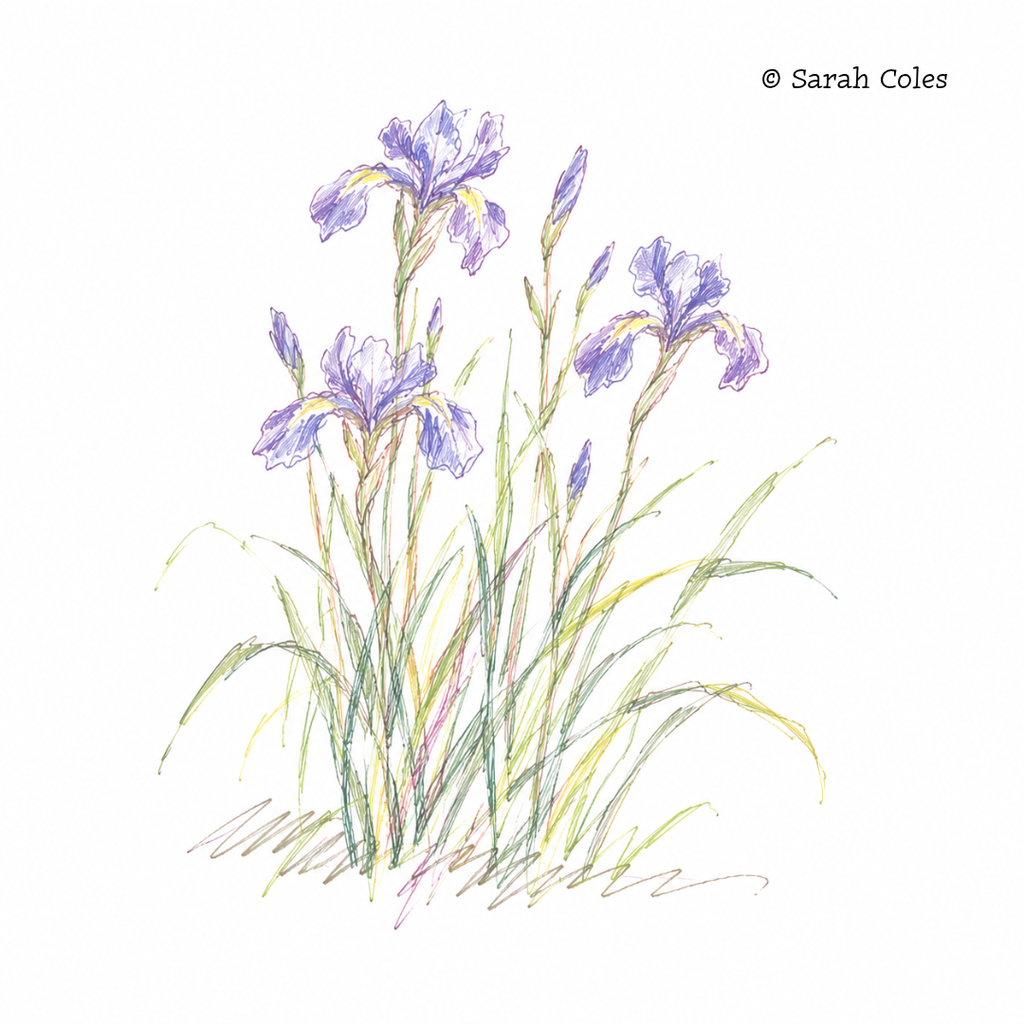
Its graceful flowers rise above narrow, upright leaves, giving the plant an elegant appearance even after flowering has finished.
Siberian irises are naturally suited to moisture-retentive ground and can tolerate some summer drying once established. They are especially useful in heavier soils that remain moist below the surface, although prolonged drought may reduce flowering and vigour.
Planted in groups, their upright foliage provides a lovely contrast to the softer shapes of geums and hardy geraniums.
Together, these plants can create a beautiful spring display that gradually gives way to the fuller growth of summer.
Hardy perennials for a summer of changing conditions
As spring turns to summer, the garden needs plants that can continue growing even when rainfall becomes less reliable.
Few are quite as generous as Geranium Rozanne, the familiar hardy geranium with violet-blue flowers and pale centres.
From early summer into autumn, its long, spreading stems weave between neighbouring plants, softening paths and spilling over the edges of borders.
Rozanne is particularly useful in soil that holds some moisture but drains between periods of heavy rainfall. Once established, it can cope with dry spells, although prolonged drought may cause flowering to slow and the foliage to become tired.
If that happens, cutting back untidy growth can encourage fresh leaves and flowers when conditions improve.
For something with a little more height, daylilies are well worth growing.
Hemerocallis ‘Burning Daylight’ produces warm golden-orange flowers above arching, strap-like foliage, bringing a welcome burst of colour to the summer border.
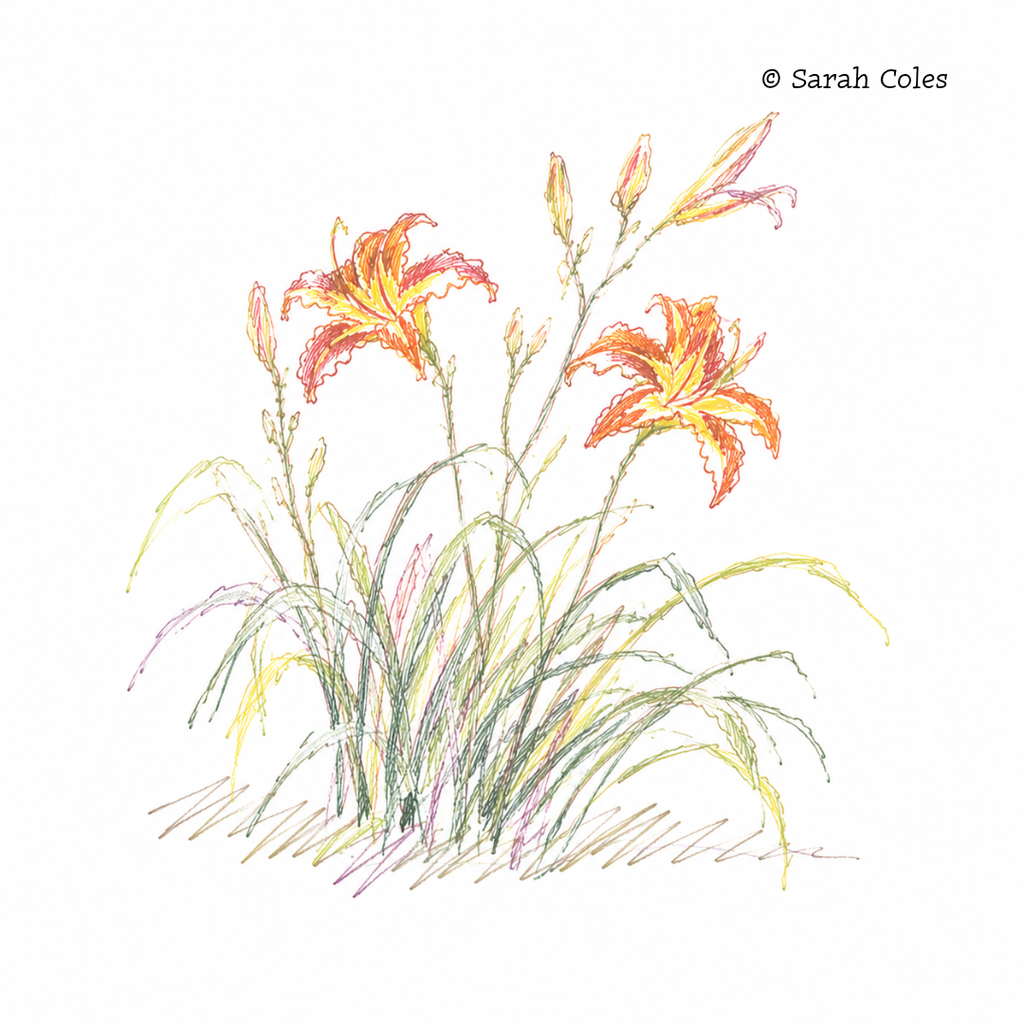
Although each flower lasts for only a day, established clumps can produce a succession of blooms over several weeks.
Daylilies are remarkably adaptable garden plants. They appreciate moisture while growing and flowering, yet established clumps can often cope with periods of summer dryness.
They perform particularly well in fertile, moisture-retentive soil, although prolonged drought may reduce their display.
As the season progresses, Bistorta amplexicaulis ‘Firedance’, also known as Persicaria amplexicaulis ‘Firedance’, begins to come into its own.
Its slender red flower spikes rise above generous green foliage, creating a lovely sense of movement amongst grasses and other late-flowering perennials.
Mountain fleece is especially at home in deeper, moisture-retentive soil. Once established, it can tolerate some summer drying, although severe drought may cause the leaves to wilt and flowering to slow.
Given the right conditions, it can become one of the most dependable plants in a late-summer border.
For a quieter, more natural appearance, Sanguisorba officinalis, or great burnet, is a particularly beautiful choice.
A native of British grasslands and damp meadows, it carries small, dark crimson flowerheads on slender stems that seem to hover above the surrounding planting.
Its beauty is subtle, especially when the flowers catch the evening light or move gently amongst ornamental grasses.
Great burnet is naturally associated with moisture-retentive ground, but established plants can tolerate some seasonal drying where the soil is sufficiently deep.
It also offers a useful source of food for visiting insects, making it a welcome addition to wildlife-friendly planting.
Another plant that deserves a place in a garden with changing moisture levels is Lythrum salicaria, purple loosestrife.
This beautiful British native produces tall spires of pinkish-purple flowers from midsummer onwards, bringing colour and height to damp borders.
In the wild, it is often found beside streams, ponds and in wet meadows, yet established plants can cope with some summer drying, particularly where the soil retains moisture below the surface.
Its flowers are also attractive to bees and other pollinating insects.
For gardeners with heavy, moisture-retentive soil, purple loosestrife can be a particularly rewarding choice, although it is unlikely to flourish in ground that becomes severely dry for long periods.
Grasses that bring movement and resilience
Ornamental grasses are amongst the most valuable plants for creating a garden that feels connected to the seasons.
Their foliage brings movement during summer, while their flowers and seedheads often remain attractive well into autumn and winter.
Some are also particularly well suited to soils that experience changing moisture levels.
Calamagrostis brachytricha, Korean feather reed grass, is a lovely example.
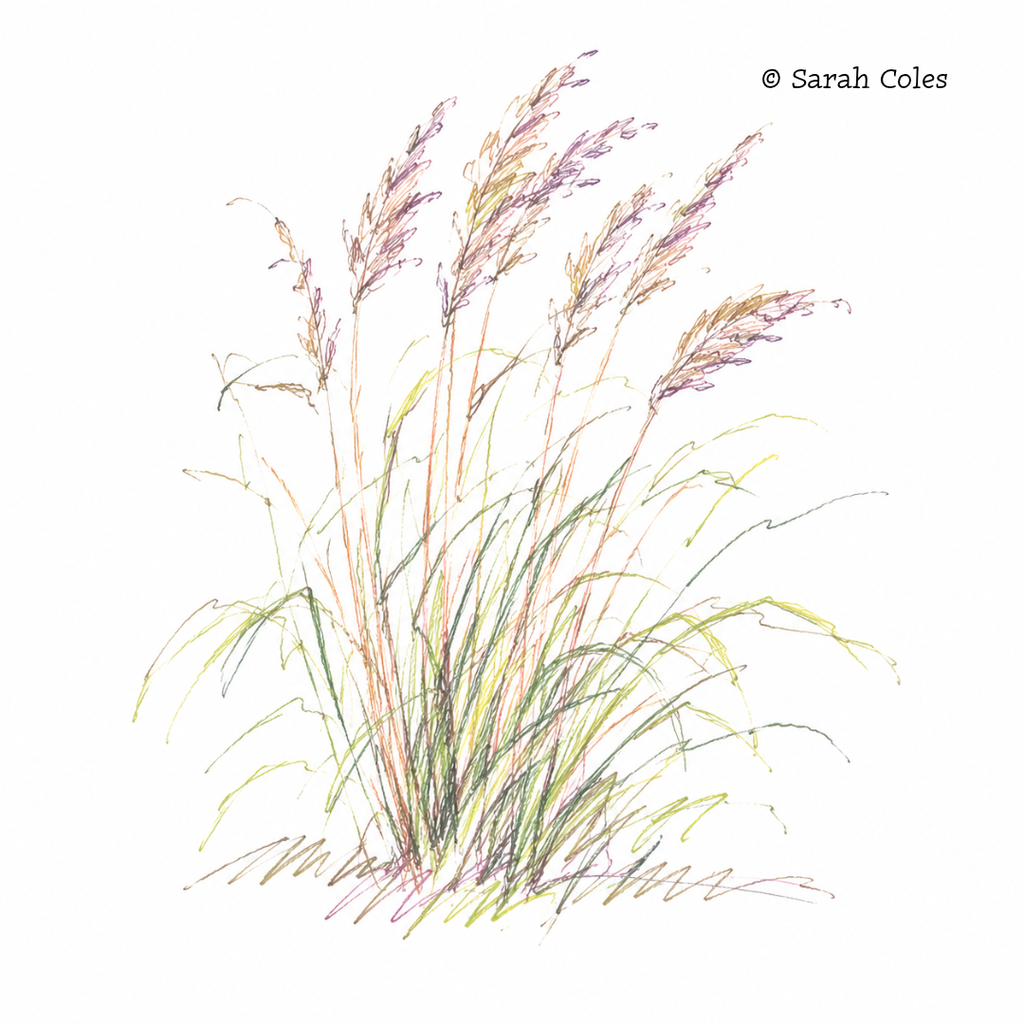
Its soft, feathery flowerheads emerge with a delicate pinkish tint before gradually ageing to silvery tones. In the low light of autumn, they seem almost luminous.
It works beautifully amongst hardy geraniums, mountain fleece and sanguisorbas, softening their shapes and bringing a sense of lightness to the border.
This grass appreciates moisture-retentive soil and can tolerate some seasonal drying once established, although it is not suited to prolonged, severe drought.
For a more distinctly meadow-like character, Molinia caerulea, our native purple moor grass, is another excellent choice.
Its fine flowering stems rise above clumps of narrow foliage, creating a delicate haze that moves with the slightest breeze. As autumn approaches, the foliage turns beautiful shades of yellow and gold.
Purple moor grass is naturally associated with damp, often acidic soils, but can cope with some summer drying where conditions are suitable.
Deschampsia cespitosa, or tufted hair grass, is equally attractive.
Its fine, airy flowerheads create a soft cloud above dense green foliage, particularly when planted in groups.
It is a useful grass for heavier, moisture-retentive soils, although it generally prefers some moisture to remain available during summer.
Leaving the faded stems of these grasses standing through winter adds structure to the garden and provides shelter for insects and other small creatures.
On a frosty morning, when the flowerheads are outlined in white, they can be every bit as beautiful as they were in summer.
Plants that come into their own towards autumn
As the days begin to shorten, some plants are only just reaching their finest moment.
Ceratostigma plumbaginoides, commonly known as hardy plumbago, is one of them.
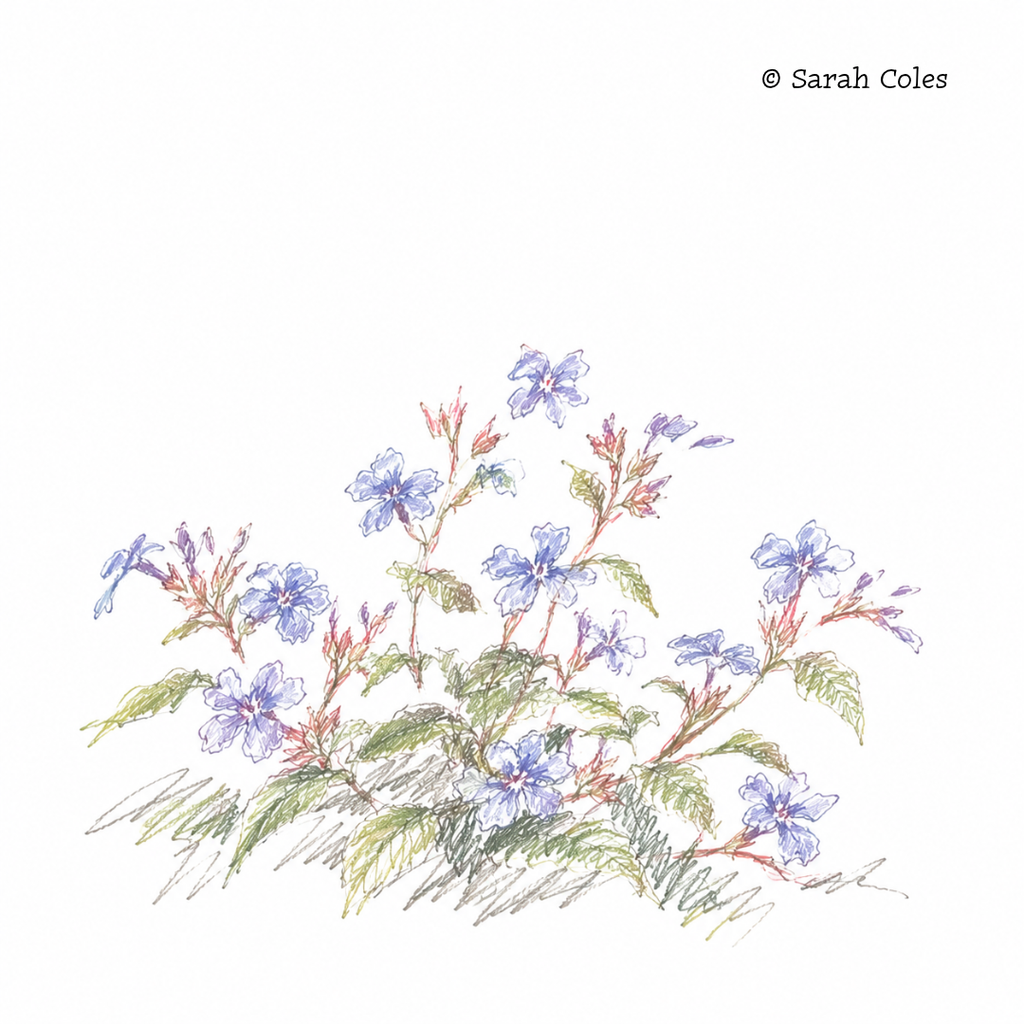
Its vivid blue flowers appear from late summer into autumn, just as many earlier perennials are beginning to fade. As temperatures fall, the foliage develops rich crimson and bronze tones, extending its season of interest.
Hardy plumbago is particularly useful towards the front of a sunny border or beneath open shrubs.
Once established, it tolerates summer dryness well, although it needs reasonably well-drained soil and should not be planted where water stands for long periods during winter.
It is also rather late to appear in spring, sometimes remaining hidden beneath the soil long after neighbouring plants have begun growing.
This can be disconcerting, but patience is usually rewarded.
For gardeners with heavier ground, the secret is to give hardy plumbago a slightly raised position or a naturally better-drained part of the border.
It is a useful reminder that even within a garden designed for changing conditions, different plants may need slightly different places.
Shrubs that provide year-round structure
While perennials and grasses bring much of the seasonal colour, shrubs give a garden its shape.
They provide shelter, help create a sense of permanence and ensure there is something to enjoy even when the herbaceous planting has died back.
For heavier, moisture-retentive soils, Cornus alba ‘Sibirica’ is a particularly valuable choice.
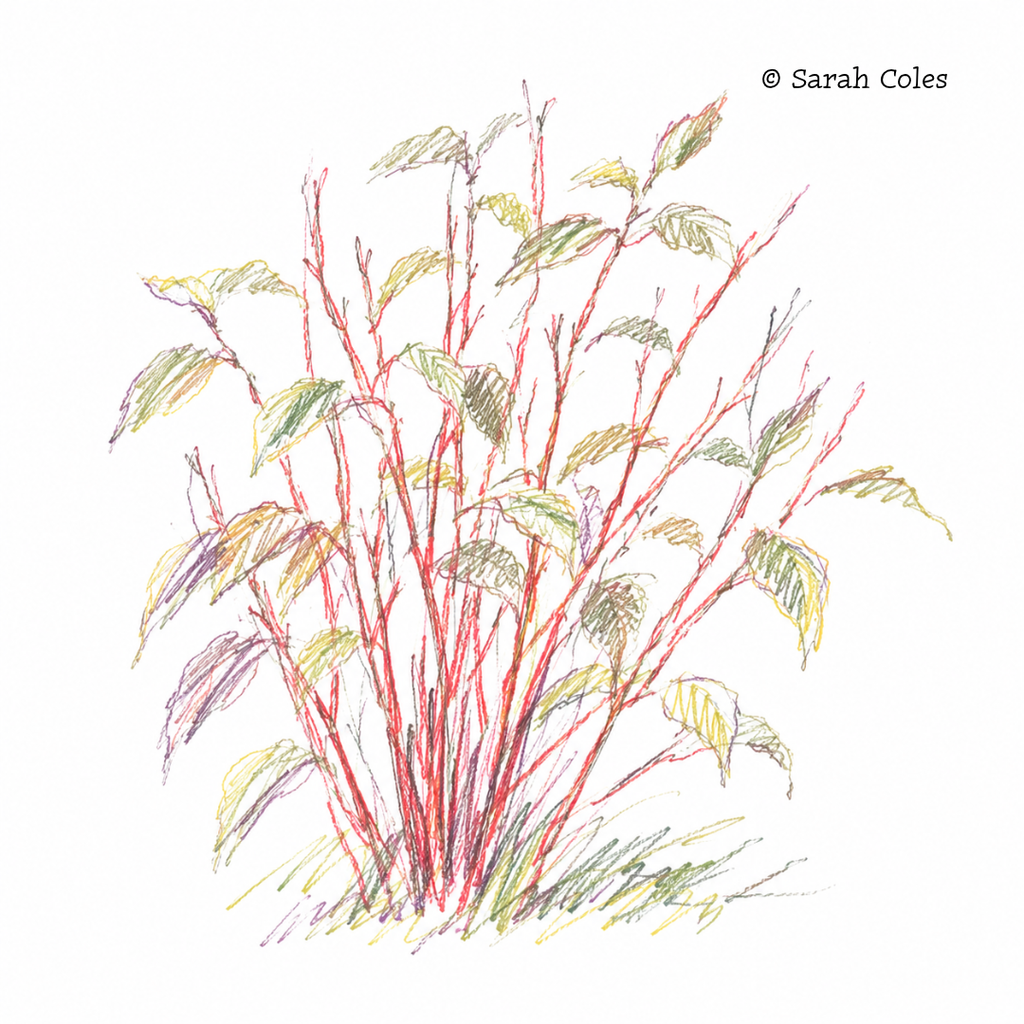
Through spring and summer, it forms a leafy shrub, but its finest display comes after the leaves have fallen.
Its brilliant red stems bring a welcome splash of colour to the winter garden, especially when planted against a dark evergreen hedge or amongst the golden remains of ornamental grasses.
Red-barked dogwood tolerates wet ground better than many shrubs and, once established, can also cope with periods of summer dryness, particularly where the soil retains moisture at depth.
Removing some of the oldest stems in late winter or early spring encourages the fresh growth that produces the brightest winter colour.
For something with a softer, more traditional appearance, Weigela florida ‘Variegata’ is another possibility.
Its arching branches carry pale pink, trumpet-shaped flowers in late spring, while the cream-edged leaves continue to brighten the border through summer.
Weigela prefers fertile soil with reasonable moisture retention, but established plants can tolerate occasional dry spells.
It is not suited to prolonged waterlogging or severe drought, yet in a sheltered border where moisture remains available beneath the surface, it can be a dependable and attractive shrub.
These plants remind us that resilience is not always about surviving the harshest conditions. Sometimes it is simply about choosing a plant that is comfortable with the natural character of the garden.
More plants for moisture-retentive borders
There are plenty of other plants worth exploring, particularly where the soil is heavy and inclined to remain damp during winter.
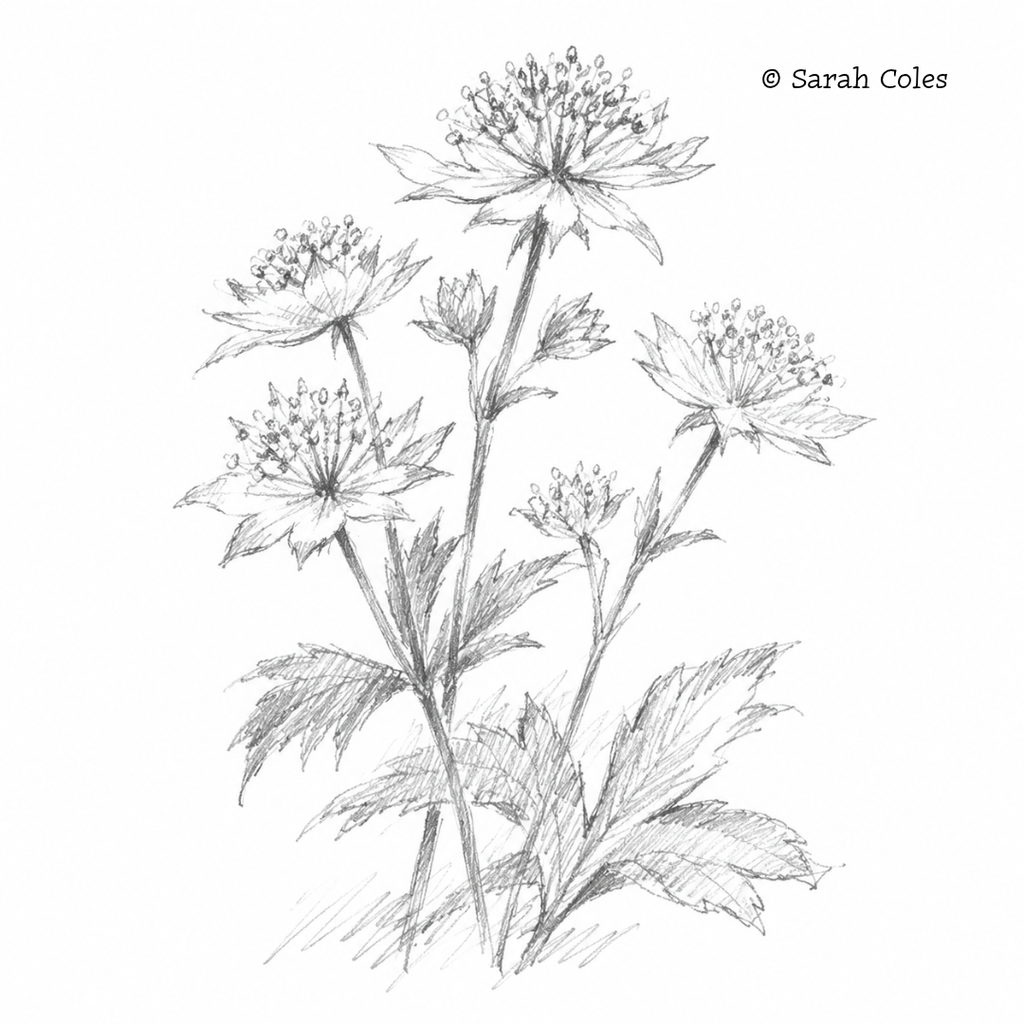
Astrantia major ‘Alba’ produces delicate white flowers that look especially lovely in softer, naturalistic borders. It benefits from moisture-retentive soil and some summer shade, making it a good choice for sheltered areas rather than exposed, drought-prone ground.
Another particularly useful plant is Euphorbia palustris, marsh spurge.
In spring, its fresh green foliage is topped with bright yellow-green flowers that seem to catch every trace of sunlight.
Despite its association with damp ground, marsh spurge can cope with some summer drying once established, making it a valuable choice for deeper, moisture-retentive soils.
Its bold, upright growth also provides a lovely contrast to the softer foliage of hardy geraniums and ornamental grasses.
Like other euphorbias, it produces a milky sap that can irritate the skin and eyes, so gloves are advisable when handling or cutting it back.
The important thing is not to assume that all moisture-loving plants will tolerate drought equally well.
A plant growing in deep clay may have access to moisture long after the surface has dried, while the same plant in shallow, stony soil could struggle within a few weeks.
Finding the right place for Mediterranean plants
With summers becoming hotter and drier, it is understandable that many gardeners are turning towards plants associated with Mediterranean landscapes.
Lavender, rosemary, germander and globe thistles all have much to offer. Their flowers attract pollinating insects, their foliage often remains attractive for long periods, and established plants can cope with remarkably little summer rainfall.
But their greatest challenge in Britain is often winter.
Most need soil that drains freely, particularly during cold weather.
Echinops ritro, the globe thistle, is a wonderful plant for a sunny border. Its rounded blue flowerheads bring strong architectural shapes to summer planting, while the flowers are popular with bees and other pollinators.
Once established, it tolerates dry conditions well, but it is unlikely to thrive where its roots remain waterlogged.
The same is true of Teucrium × lucidrys, hybrid germander, with its small evergreen leaves and pinkish-purple summer flowers.
Hylotelephium ‘Herbstfreude’, the familiar Autumn Joy stonecrop, is another plant that enjoys a sunny position and well-drained soil. Its broad flowerheads provide colour late in the season and remain attractive as they fade.
None of these plants needs to be excluded from a garden with heavy soil.
They simply need a suitable position.
A raised border, gentle slope or sunny area where drainage is naturally better may provide the conditions they need.
It is often more successful to create a small area for plants that enjoy dry conditions than to try to make an entire clay garden behave like a Mediterranean hillside.
The importance of looking after the soil
Whatever plants we choose, the soil beneath them has an enormous influence on how well they cope with changing weather.
Healthy soil provides space for roots to grow, allows air and water to move through it and supports the countless organisms involved in keeping a garden productive.
For gardeners with clay soil, adding well-rotted garden compost or leafmould can gradually improve its structure, helping roots grow and allowing air and water to move more freely.
However, where water stands for long periods, organic matter alone may not be enough. Raised planting areas, improved drainage or plants naturally adapted to wet ground may offer a more lasting solution.
It is also important to avoid walking on or digging heavy soil when it is very wet. Doing so can cause compaction, making drainage and root growth more difficult.
During summer, mulching can make a considerable difference.
A layer of garden compost or other suitable organic material, applied while the soil is moist, helps reduce evaporation and keeps the soil surface cooler during hot weather.
Around 5cm is a useful depth for many established borders, taking care to leave a little space around plant crowns and woody stems.
Mulching also helps protect the soil from the impact of heavy rain, gradually improving conditions as the organic material breaks down.
These are simple practices, but over time they can make a garden considerably more resilient.
Giving plants the chance to establish
One of the most important things to remember when choosing plants for dry summers is that drought tolerance usually develops with time.
A newly planted perennial may have only a small root system, confined to the area in which it was grown. It cannot yet reach the deeper reserves of moisture available to an established plant.
Even species that naturally tolerate drought may struggle during their first summer without additional watering.
For many hardy perennials, the first growing season is particularly important. Larger shrubs and trees may need attention for two or more summers while their roots spread into the surrounding soil.
When watering is necessary, a thorough soaking is generally more useful than frequent light sprinkling, which may wet only the surface.
Planting time can also make a difference.
Autumn is often an excellent season for planting hardy perennials and shrubs, as the soil retains warmth and seasonal rainfall helps roots establish before the following summer.
However, where the ground becomes very wet or waterlogged in winter, spring planting may be a safer choice.
A little care during these early months can make a remarkable difference to how well plants cope in later years.
Taking inspiration from the natural landscape
Perhaps the most useful lessons about resilient planting can be found beyond the garden gate.
Walk through a meadow, along a woodland edge or beside a stream, and it soon becomes clear that plants rarely grow in perfectly consistent conditions.
Some occupy the drier slopes, where water drains away quickly. Others flourish in lower ground, where moisture remains available for much of the year.
Certain plants grow vigorously in spring before retreating during summer. Others send roots deep into the soil or form dense networks that help them make use of available moisture.
There is a great deal we can learn from these natural patterns.
In our own gardens, a slightly raised sunny border might be the perfect place for globe thistles, germander and hardy plumbago.
A lower, moisture-retentive area could support Siberian irises, mountain fleece and purple moor grass.
Camassias may flourish where the soil is moist in spring but becomes drier as summer progresses.
And beneath established shrubs, where there is some shelter from the strongest sun, plants such as astrantias may find the conditions they need.
Planting in layers can help, too.
Spring bulbs flower before taller perennials have fully emerged. Summer plants gradually fill the spaces left behind, while grasses bring movement and structure through autumn and winter.
Together, they create a garden that changes naturally with the seasons, with something new to enjoy as one display gives way to another.
This approach can also benefit wildlife, offering flowers, seeds and shelter at different times of year.
Rather than expecting every plant to tolerate every condition, we can allow each one to grow where it is most likely to flourish.
A garden for all seasons
Gardening has always involved a little uncertainty.
There are years when everything seems to grow beautifully, when the rain arrives just as it is needed and the borders remain full of colour well into autumn.
And there are others when the weather tests even the most experienced gardener.
Yet perhaps the answer is not to try to overcome every difficulty, but to become more observant of the garden itself.
To notice where the ground remains damp after rain, where the first cracks appear during summer, and which plants seem to flourish without much attention.
These small observations can tell us a great deal.
By choosing plants that suit our soil, allowing them time to establish and caring for the ground beneath them, we can create gardens that are better able to cope with the changing seasons.
They may not look exactly the same from one year to the next. Some plants will flourish in a wet summer, while others will come into their own when the weather is warm and dry.
But that variety is part of the pleasure of gardening.
A beautiful garden is not simply one that looks its best on a sunny afternoon in June.
It is one that offers something to enjoy throughout the year, from the first blue flowers of camassias in spring to the golden grasses of autumn and the brilliant red stems of dogwood in winter.
And by learning to work with the natural rhythms of our gardens, rather than against them, we can create places that remain beautiful, welcoming and full of life, whatever the seasons may bring.
Further Reading: Winter-Flowering Honeysuckle: The Fragrance That Heralds Spring, Witch Hazel ‘Pallida’: A Little Winter Sunshine for the Garden, Clematis ‘Winter Beauty’: A Beautiful Evergreen Climber for the Winter Garden
For Inspiration Follow Me on Instagram, Facebook, Bluesky and Threads
