


There’s something rather wonderful about a garden that has grown into itself. The borders feel settled, the planting has a natural rhythm and, even in the depths of winter, there’s enough structure to make you want to wander outside and see what’s happening.
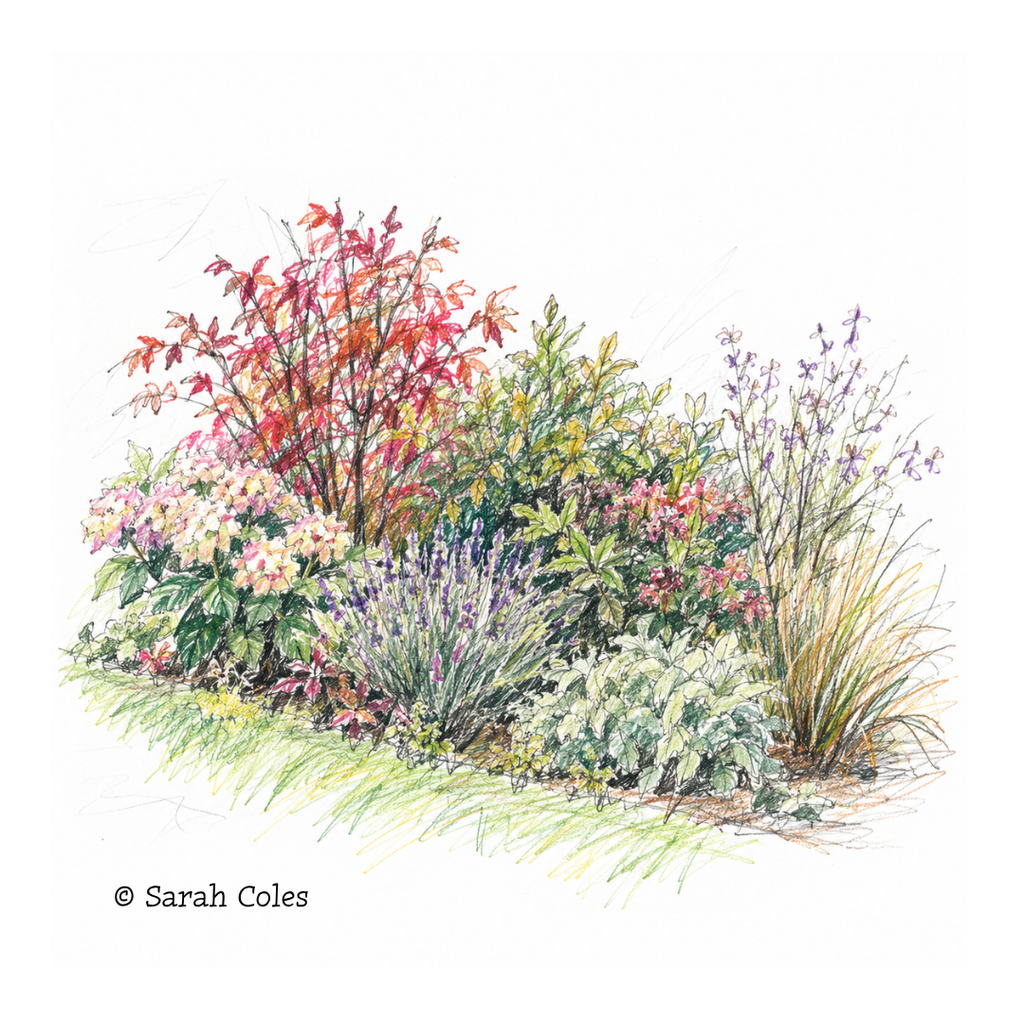
Very often, it’s the shrubs quietly holding everything together.
They might not always demand the attention of a magnificent rose or a border overflowing with summer flowers, but shrubs are the dependable characters of the garden. They give height and shape to our borders, provide shelter for wildlife, soften boundaries and bring colour, fragrance and interest through the changing seasons.
Think of the first golden flowers of forsythia brightening a chilly spring morning, the glorious scent of mock orange drifting across the garden in early summer, or the jewel-like berries of holly catching the low winter sunshine.
And perhaps the loveliest thing about shrubs is that, once they’re happily established, many ask for surprisingly little in return.
Whether you’re starting a garden from scratch, filling a troublesome gap in a border or looking for something to give your planting a little more character, knowing how to choose, plant and care for shrubs is a skill well worth having.
What Is a Shrub?
A shrub is generally a woody plant with several permanent stems growing from or close to its base. Unlike most trees, which develop a single main trunk, shrubs tend to have a naturally bushy, branching habit.
Of course, nature doesn’t always follow the gardening rulebook. Some shrubs can be trained into small trees, while others remain so compact that they barely rise above the surrounding planting.
Lavender, for example, is a small, woody shrub that might reach little more than 30–60cm in height, depending on the variety. At the other end of the scale, a mature rhododendron can grow into an impressive specimen several metres tall.
This wonderful variety is what makes shrubs so useful.
Some are grown for their flowers, others for their foliage, fragrance, berries or interesting winter stems. Deciduous shrubs shed their leaves in autumn, often treating us to a final display of colour before winter arrives. Evergreens keep their foliage throughout the year, providing welcome structure when much of the garden has retreated underground.
And shrubs aren’t simply ornamental.
A well-chosen shrub can offer nesting places for birds, nectar for pollinating insects and berries for wildlife. Native species such as hawthorn, hazel and guelder rose are particularly valuable additions to a wildlife-friendly garden.
Shrubs in the British Garden
Shrubs have been part of the British landscape for centuries.
Hawthorn has long formed the backbone of our countryside hedgerows, its frothy white blossom a familiar sight in May. Hazel has traditionally been grown for its useful coppiced stems and edible nuts, while holly has provided winter greenery and shelter for generations.
In our gardens, shrubs have played an equally important role.
From the clipped evergreens of formal gardens to the great flowering rhododendrons of historic estates, they have helped shape some of Britain’s most beautiful outdoor spaces.
But you certainly don’t need acres of land to appreciate them.
A single well-placed shrub can transform a modest garden, bringing a sense of maturity and permanence that is difficult to achieve with seasonal planting alone.
Choosing the Right Shrub for Your Garden
It’s very easy to fall in love with a shrub at the garden centre.
Perhaps it’s covered in flowers, has the most beautiful foliage or simply looks too lovely to leave behind.
We’ve all been there.
But before that tempting plant finds its way into your trolley, it’s worth thinking about where it’s going to live.
Choosing the right shrub for the right place is one of the simplest ways to avoid problems later on.
Consider Its Mature Height and Spread
That neat little shrub sitting in a two-litre pot might look perfectly at home in a small border today, but what will it look like in five or ten years?
Some shrubs remain naturally compact, while others develop into substantial plants that can quickly overwhelm their neighbours.
Always check the expected mature height and spread before buying.
A shrub planted too close to a pathway may eventually make walking past difficult, while one positioned beneath a window could block valuable light as it grows.
For smaller gardens, look for compact or slow-growing varieties. If you’re creating privacy or filling the back of a large border, a taller shrub may be exactly what you need.
It’s much easier to give a plant the space it needs from the beginning than spend years trying to keep it smaller than nature intended.
Think About Your Local Climate
Gardening in Britain comes with its own particular challenges.
A shrub flourishing in a sheltered Cornish garden may struggle in an exposed Yorkshire border, while plants perfectly happy in the mild south-west might find a frosty inland garden rather less welcoming.
Wind, winter temperatures, rainfall and exposure all influence how well a shrub will grow.
The Royal Horticultural Society uses a hardiness rating system, ranging from H1 for plants requiring protected conditions to H7 for those capable of withstanding very severe cold.
For most UK gardens, shrubs rated H5 to H7 are generally reliable choices, although local conditions still matter.
If your garden is particularly exposed, consider planting a sheltering hedge or choosing robust shrubs that tolerate wind and cold.
Choose Shrubs for Year-Round Interest
One of the pleasures of planning a garden is imagining how it will look throughout the seasons.
A border that bursts into colour in June is wonderful, but what happens in November?
By choosing shrubs with different flowering periods, foliage colours and seasonal characteristics, you can create a garden that always has something to offer.
Spring: Forsythia brings cheerful yellow flowers, while flowering currant and magnolia offer beautiful early displays.
Summer: Mock orange fills the air with fragrance, while hydrangeas provide generous flowers that often last well into autumn.
Autumn: Euonymus alatus develops brilliant red foliage, while many viburnums and cotoneasters carry colourful berries.
Winter: Holly, yew and other evergreens provide structure, while winter-flowering shrubs such as Viburnum × bodnantense ‘Dawn’ bring welcome flowers and fragrance.
There’s no need for every shrub to be spectacular all year. Often, the most beautiful gardens are those where different plants quietly take their turn.
Understand Your Garden Soil
Soil is one of the most important considerations when choosing shrubs.
Some plants are wonderfully adaptable, while others have quite particular requirements.
Rhododendrons, camellias and pieris prefer acidic conditions and may develop yellowing leaves and poor growth in alkaline soils.
Lilacs, meanwhile, generally perform well in neutral to alkaline conditions, provided the soil drains freely.
If you’re unsure what type of soil you have, a simple soil pH testing kit can be very useful.
It’s also worth looking at the soil’s texture.
Heavy clay tends to hold moisture and can become waterlogged in winter, while sandy soils drain quickly and may dry out during summer.
Rather than trying to change the natural character of an entire garden, it’s usually better to choose shrubs suited to the conditions you already have.
Acid-loving shrubs can also be grown successfully in large containers filled with suitable ericaceous compost if your garden soil is alkaline.
Sun or Shade?
Before planting anything, spend a little time watching how sunlight moves around your garden.
That lovely sunny border in the morning might be shaded by the house for much of the afternoon, while a sheltered corner could receive more sunshine than you first imagined.
Lavender, cistus and many flowering shrubs perform best in a sunny position.
Others, including skimmia, aucuba and certain mahonias, can cope well with partial shade.
Remember that shade beneath established trees can also mean dry soil and competition from tree roots, so choose plants accordingly.
Matching a shrub to the available light will give it a much better chance of thriving.
When Is the Best Time to Plant Shrubs in the UK?
For most hardy shrubs, autumn and early spring are particularly good times to plant.
The soil is usually moist, temperatures are cooler and plants are less likely to suffer from the stress of hot, dry weather.
Autumn planting has a particular advantage. While growth above ground may be slowing, roots can continue developing whenever soil conditions are suitable.
This gives shrubs an opportunity to establish before the demands of the following summer.
Planting Shrubs in Autumn
October and November are often excellent months for planting hardy shrubs, particularly deciduous varieties.
The soil may still retain some warmth from summer, and autumn rainfall can help keep newly planted roots moist.
However, avoid planting when the ground is frozen, saturated or excessively wet.
Planting Shrubs in Winter
Many deciduous shrubs can be planted during their dormant season, generally between November and March.
Bare-root shrubs are usually available during this period and can be a particularly economical option when planting hedges or larger areas.
Choose a mild day when the soil is workable, and protect bare roots from drying out before planting.
Planting Shrubs in Spring
Early spring is another excellent opportunity, particularly for evergreen shrubs and plants that may struggle with cold, wet winter conditions.
Spring planting gives them the growing season to establish, although regular watering becomes increasingly important as temperatures rise.
Can You Plant Shrubs in Summer?
Container-grown shrubs can be planted during summer, but they require considerably more attention.
Hot weather and dry soil can place newly planted shrubs under stress, especially before their roots have spread into the surrounding ground.
If possible, avoid planting during heatwaves and be prepared to water regularly.
How to Plant a Shrub: Step-by-Step Guide
Planting a shrub isn’t particularly complicated, but a little care at the beginning can make an enormous difference to how successfully it establishes.
And there’s something rather satisfying about knowing you’ve given a plant the best possible start.
Step 1: Prepare the Planting Area
Begin by removing weeds, particularly perennial weeds such as couch grass and bindweed that could compete with your new shrub.
Check that your chosen position offers enough room for the plant to reach its mature size.
If the soil is compacted, gently loosen a wider area around the intended planting position.
The aim is to encourage roots to grow naturally into the surrounding soil rather than remain confined to the original planting hole.
Step 2: Dig the Planting Hole
Dig a hole approximately twice as wide as the shrub’s root ball, but no deeper than the root ball itself.
This gives the roots room to spread sideways while ensuring the plant doesn’t sink too deeply into the ground.
Keep the excavated soil nearby, as you’ll normally use it for backfilling.
In most garden soils, there’s no need to fill the planting hole with compost. A sudden change between enriched compost and the surrounding soil can discourage roots from spreading outwards.
If your soil needs improving, it’s generally better to incorporate well-rotted organic matter across a wider area rather than concentrating it beneath the plant.
Step 3: Remove the Shrub From Its Container
Water the shrub if its compost is dry, then gently ease it from its pot.
Take a moment to examine the roots.
Healthy roots should be reasonably firm, although their colour will vary depending on the species.
If the roots are tightly circling the outside of the root ball, gently tease them apart to encourage outward growth.
Severely congested roots may need a little more attention, but avoid unnecessary damage.
Step 4: Position the Shrub Correctly
Place the shrub in the centre of the planting hole.
The top of the root ball should sit level with the surrounding soil, with the root flare or base of the stems at the appropriate natural depth.
Planting too deeply can cause serious problems, particularly where moisture collects around the base of the stems.
Step back and check the shrub from different angles before filling the hole.
This is especially worthwhile with plants that have an attractive natural shape.
Step 5: Backfill and Firm the Soil
Return the excavated soil around the roots, gently firming it as you go.
You want to remove large air pockets without compacting the soil excessively.
Once planted, the shrub should feel secure and stand at its original growing depth.
If you’re planting a larger specimen in an exposed position, temporary support may be helpful, although many smaller shrubs establish perfectly well without staking.
Step 6: Water Thoroughly
Give your newly planted shrub a generous watering, allowing the water to soak down into the root zone.
This helps settle the soil around the roots and ensures they have access to moisture.
Even when the weather is cool, it’s important to check that the root ball hasn’t dried out.
Step 7: Add a Layer of Mulch
Finish by spreading a layer of organic mulch, approximately 5–7cm deep, around the base.
Composted bark, leaf mould or well-rotted garden compost are all useful options.
Mulch helps conserve moisture, suppress weeds and improve soil conditions as it gradually breaks down.
Just remember to leave a small gap around the stems to prevent moisture collecting against them.
Then stand back and admire your work.
It might look a little small and lonely at first, but give it time. Gardens have a wonderful way of growing into themselves.
How to Care for Newly Planted Shrubs
Once your shrub is in the ground, the most important task is helping it establish a healthy root system.
The first couple of growing seasons are particularly important, especially during dry weather.
Watering Shrubs
Newly planted shrubs need regular attention until their roots have grown into the surrounding soil.
Rather than giving them a quick sprinkle every day, water thoroughly so moisture reaches the root zone.
How often you need to water depends on the weather, soil type, plant size and location.
Sandy soils dry out more quickly than clay, while shrubs growing in sunny or windy positions may lose moisture faster.
Check the soil beneath the mulch rather than relying on how the surface looks.
Even shrubs described as drought-tolerant need adequate water while establishing.
Feeding Shrubs
It’s tempting to think that every shrub needs a generous helping of fertiliser, but that isn’t always the case.
Many established shrubs grow perfectly well in reasonably fertile garden soil without regular feeding.
An annual mulch of organic matter can help maintain soil health and gradually release nutrients.
If growth is poor or the soil is particularly lacking in nutrients, a suitable balanced fertiliser may be beneficial.
Avoid overfeeding, as excessive fertiliser can encourage soft, leafy growth at the expense of flowers and may make plants more vulnerable to damage.
Mulching and Weed Control
Keeping the area around your shrub free from weeds is one of the easiest ways to help it thrive.
Weeds compete for water and nutrients, particularly while the shrub is still establishing.
Refresh the mulch when necessary, maintaining a suitable depth and keeping it clear of the stems.
Over time, organic mulches also contribute to better soil structure and encourage the activity of earthworms and other beneficial soil organisms.
How and When to Prune Shrubs
Pruning can feel a little daunting, especially when you’re faced with a beautiful shrub and a pair of secateurs.
The good news is that many shrubs need far less pruning than we sometimes imagine.
The secret is understanding how and when a particular plant flowers.
Pruning Spring-Flowering Shrubs
Many spring-flowering shrubs produce their flowers on growth made during the previous year.
Forsythia, flowering currant and some viburnums fall into this category.
These are generally pruned shortly after flowering, allowing time for new growth to develop before the following spring.
Pruning them heavily during winter could remove the very buds you’ve been waiting to enjoy.
Pruning Summer-Flowering Shrubs
Some summer-flowering shrubs bloom on new growth produced during the current growing season.
Buddleja davidii and Hydrangea paniculata are familiar examples that are commonly pruned in late winter or early spring.
However, not all summer-flowering shrubs follow the same pattern.
Hydrangea macrophylla, for instance, usually flowers on older wood and needs a different approach.
Always check the requirements of the individual species before pruning.
Pruning Evergreen Shrubs
Evergreen shrubs such as yew, holly and privet can often be lightly trimmed to maintain their shape.
The ideal timing varies between species, but late spring and summer are common periods for maintenance pruning.
Avoid cutting during very hot weather, hard frost or periods when birds may be nesting.
Under UK wildlife legislation, active wild bird nests are protected, so always inspect shrubs and hedges carefully before carrying out any work.
A Few Simple Pruning Tips
- Use clean, sharp secateurs to make neat cuts.
- Remove dead, damaged or diseased growth when appropriate.
- Cut out crossing branches that rub against one another.
- Avoid removing more growth than necessary.
- Preserve the shrub’s natural shape wherever possible.
Sometimes the best thing you can do for a shrub is simply leave it alone.
Common Problems When Growing Shrubs
Even with the best care, shrubs occasionally encounter difficulties.
Fortunately, many problems can be avoided by choosing suitable plants and giving them the right growing conditions.
Yellowing Leaves
Yellow leaves can have several causes, including waterlogging, drought, nutrient deficiencies or unsuitable soil pH.
On acid-loving shrubs such as rhododendrons, yellowing between the leaf veins may indicate iron chlorosis associated with alkaline conditions.
Before reaching for fertiliser, check the soil moisture and growing conditions.
Poor Flowering
A shrub that produces plenty of leaves but very few flowers may be receiving insufficient sunlight, too much nitrogen or pruning at the wrong time.
Some shrubs also need several years to mature before flowering generously.
Patience is sometimes the most useful gardening tool.
Wilting or Dieback
Wilting can result from dry soil, but it may also indicate damaged roots or waterlogged conditions.
Check the soil before watering.
If branches are dying back, examine the plant for signs of disease, damaged stems or poor drainage.
Pests and Diseases
Aphids, scale insects and fungal diseases can occasionally affect shrubs.
However, not every insect needs controlling.
Many garden creatures are harmless or beneficial, and healthy plants can often tolerate a little damage without lasting harm.
Encouraging birds, ladybirds and other natural predators is a wonderful way to maintain a balanced garden.
Choosing Shrubs That Support Garden Wildlife
One of the most rewarding things about planting shrubs is watching the wildlife they attract.
A flowering shrub can become a busy feeding station for bees and other pollinators, while dense evergreen foliage provides shelter for small birds.
Some shrubs offer several benefits throughout the year.
Hawthorn, for example, produces spring blossom visited by insects, supports numerous invertebrates and develops autumn berries that provide food for birds.
Guelder rose has attractive flowers followed by colourful berries, while hazel provides early catkins and nuts.
When choosing shrubs for wildlife, think beyond the flowers.
Consider nesting cover, berries, shelter and the insects that may depend on the plant’s foliage.
A mixture of native shrubs and well-chosen ornamentals can create a garden that’s both beautiful and wonderfully alive.
Frequently Asked Questions About Planting Shrubs
What is the best month to plant shrubs in the UK?
October and November are often excellent months for planting hardy shrubs, while early spring is another good option. The best timing depends on the shrub and local soil conditions. Avoid frozen or waterlogged ground.
How deep should I plant a shrub?
Plant most container-grown shrubs at the same depth they were growing in their pot. The planting hole should be approximately twice as wide as the root ball but no deeper.
How long does it take for a shrub to establish?
Many shrubs take around two growing seasons to establish, although larger specimens, slow-growing varieties and plants in difficult conditions may take longer. Regular watering during dry spells is particularly important.
Should I put compost in the hole when planting a shrub?
In most situations, it’s better to backfill with the original soil rather than create a pocket of rich compost. If the soil needs improvement, incorporate organic matter over a wider area.
Do shrubs need watering in winter?
Newly planted shrubs may need watering during prolonged dry periods, particularly evergreens growing in containers or sheltered positions. However, winter rainfall is often sufficient for shrubs planted in the ground.
Can I plant shrubs close together?
You can plant shrubs closely for a hedge or dense screen, but spacing should reflect their mature size and intended purpose. For mixed borders, allowing room for natural growth usually produces healthier, more attractive plants.
What are the easiest shrubs to grow in the UK?
Depending on soil and position, reliable choices include potentilla, many viburnums, choisya, hardy spiraea and certain cotoneasters. Always
Further Reading: Best Plants for Wildlife: Flowers, Shrubs and Climbers for a Nature-Friendly Garden, Garden Shrubs: The Quiet Backbone of a Beautiful Garden, Why Do Leaves Change Colour in Autumn? The Science Behind the Beauty, The Benefits of Choosing a Garden Hedge
