


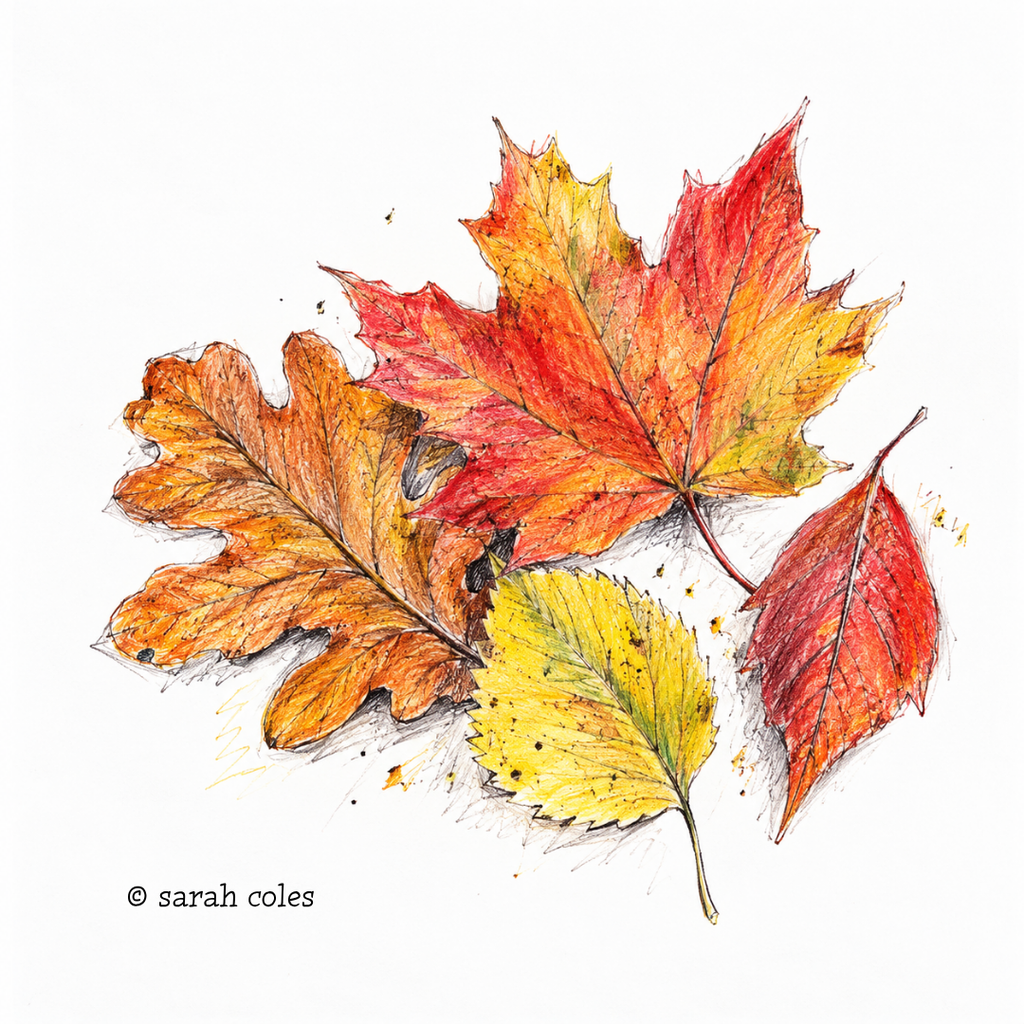
There’s something rather special about the British countryside in autumn. One morning, the trees are still wearing their familiar summer green, and seemingly overnight, the landscape begins to change. The hedgerows take on warmer tones, the woods glow with shades of amber and gold, and the garden becomes a patchwork of russet, copper and crimson.
It’s one of nature’s loveliest annual displays, and one that never seems to lose its charm.
Whether it’s the golden leaves of a silver birch catching the afternoon sunshine, the rich copper tones of a beech woodland or a magnificent maple turning scarlet, autumn has a wonderful way of making us stop and look.
But have you ever wondered why leaves change colour in autumn? What makes some trees turn brilliant yellow while others become fiery red? And why is the autumn display so much better in some years than others?
Behind all that beauty is some rather clever science. And, as with so many things in nature, there’s much more going on than first meets the eye.
Why Do Leaves Change Colour in Autumn?
The simple answer is that trees are preparing themselves for winter.
Throughout spring and summer, deciduous trees are busy growing, producing leaves and making the food they need to survive. Their leaves act rather like tiny solar panels, capturing energy from sunlight and using it to produce sugars through a process called photosynthesis.
But as summer draws to a close, the days become shorter and temperatures begin to fall.
For many of our familiar British trees, including oak, beech, birch and field maple, the shortening days are an important seasonal signal. Alongside changes in temperature, they help trigger the preparations for the colder months ahead.
Rather than continuing to maintain thousands of leaves through winter, these trees gradually reduce their leaf activity, recover valuable nutrients and prepare to shed their foliage.
And it’s during this process that those beautiful autumn colours begin to appear.
Interestingly, many of the colours we admire in autumn have been present in the leaves throughout the growing season. They’ve simply been hidden beneath the green.
The Secret Behind Green Leaves: Chlorophyll
To understand why leaves change colour, we need to start with something called chlorophyll.
Chlorophyll is the green pigment found in leaves. It plays an essential role in photosynthesis, helping plants absorb sunlight and use that energy to make sugars from water and carbon dioxide.
During spring and summer, chlorophyll is continually being produced and replaced, keeping leaves looking fresh and green.
However, as autumn approaches and daylight hours decrease, trees begin producing less chlorophyll. The chlorophyll already present gradually breaks down, and the green colour starts to fade.
As it disappears, other pigments become visible.
It’s a little like removing a green curtain to reveal the colours that have been waiting behind it all summer.
And that’s when the real autumn spectacle begins.
Why Do Leaves Turn Yellow and Orange?
Have you ever noticed how silver birches seem to glow golden yellow in autumn, while some maples turn beautiful shades of orange?
These colours come from natural pigments known as carotenoids.
Carotenoids are present in many leaves throughout spring and summer, but they’re usually overshadowed by the much stronger green of chlorophyll.
As chlorophyll breaks down, these pigments become easier to see.
Two important groups are:
- Xanthophylls, which produce yellow colours.
- Carotenes, which contribute orange and golden tones.
If the name carotene sounds familiar, that’s because similar pigments give carrots their distinctive orange colour.
In autumn, the balance of these pigments helps determine whether a leaf turns pale lemon yellow, rich gold or warm orange.
Silver birch is a particularly lovely example. Its delicate leaves turn buttery yellow before drifting to the ground, often creating a golden carpet beneath the tree.
Beech trees, meanwhile, can develop wonderful shades of yellow, bronze and copper, giving our woodlands that unmistakable autumn warmth.
It’s remarkable to think that much of this colour has been there all along, quietly hidden beneath the green.
Why Do Some Leaves Turn Red?
The brilliant reds and purples of autumn have a slightly different explanation.
Unlike the yellow and orange pigments already present in many leaves, the red pigments, known as anthocyanins, are often produced as autumn progresses.
Anthocyanins are responsible for some of the most striking colours we see in trees such as Japanese maples, liquidambars and certain ornamental cherries.
Their production is influenced by several factors, including sunlight, temperature and the sugars remaining in the leaves.
Bright autumn days and cool nights can encourage particularly vivid red colouring in species capable of producing these pigments.
Scientists believe anthocyanins may also help protect ageing leaves from damage caused by strong light and low temperatures, allowing trees a little more time to recover valuable nutrients before the leaves fall.
So those spectacular scarlet leaves aren’t simply putting on a show for our enjoyment. They may be playing a useful part in the tree’s preparations for winter.
Although, from a gardener’s point of view, they’re certainly lovely to look at.
Why Are Autumn Colours Better in Some Years?
Anyone who enjoys walking through the countryside in October will have noticed that no two autumns are quite the same.
Some years, the trees seem to burst into colour almost overnight. In others, the leaves gradually turn brown and fall before we’ve had much chance to enjoy them.
The weather has a great deal to do with it.
Bright, sunny autumn days help leaves continue producing sugars, which can encourage the development of red pigments.
Cool nights, particularly when temperatures remain above freezing, can also favour the production of anthocyanins, creating richer reds and purples.
Adequate rainfall during spring and summer helps trees remain healthy and reduces the likelihood of drought stress. A healthy tree is generally better placed to produce a good autumn display.
Once autumn arrives, a spell of relatively dry, sunny weather with cool, frost-free nights can be particularly favourable for vivid red colours in trees capable of producing them.
However, prolonged drought can cause trees to become stressed and shed their leaves prematurely, sometimes before their full autumn colours have developed.
Strong winds and early hard frosts can also bring the display to an abrupt end.
Of course, the species of tree matters just as much as the weather. Some naturally produce stronger autumn colours than others, and even individual trees of the same species can vary.
This helps explain why a familiar woodland walk can look completely different from one October to the next.
And perhaps that’s part of autumn’s appeal. We never know quite what we’re going to get.
Why Do Trees Lose Their Leaves in Autumn?
Watching leaves tumble from the trees is such a familiar part of autumn that it’s easy to overlook just how important the process is.
For deciduous trees, losing their leaves is an effective way of surviving winter.
Leaves lose water through tiny openings called stomata. During the colder months, when water may be less readily available and there is insufficient sunlight for efficient photosynthesis, maintaining a full canopy of leaves becomes less worthwhile.
Before shedding them, trees recover useful nutrients from their foliage and store reserves in their woody tissues and roots.
But a leaf doesn’t simply fall because the wind blows a little harder.
Before a leaf finally falls, the tree has already begun preparing for its departure.
A specialised area of cells, known as the abscission zone, develops near the base of the leaf stalk while the leaf is growing. As autumn approaches, changes in plant hormones trigger processes within this zone that gradually weaken the connection between the leaf and the branch.
Meanwhile, the tree recovers valuable nutrients from its leaves, storing them for the growing season ahead.
Eventually, the leaf separates and drifts to the ground, leaving the tree better prepared for winter.
It’s worth remembering that not all trees follow this pattern. Evergreens, such as holly, yew and many conifers, retain their foliage throughout winter, although they still replace older leaves or needles over time.
And some deciduous trees, particularly young beeches and oaks, may hold on to their dead brown leaves well into winter. This is known as marcescence.
So if you spot a young beech hedge still wearing its copper-coloured leaves in January, there’s nothing necessarily wrong with it. It’s simply doing what beech hedges often do.
Which British Trees Have the Best Autumn Colours?
One of the pleasures of autumn is learning to recognise trees by their changing leaves.
You don’t need to travel far to enjoy a beautiful display. Many of our native trees provide wonderful colour, while ornamental species bring even more variety to parks and gardens.
Here are some particularly lovely trees to look out for.
Silver Birch – Golden Yellow
The silver birch (Betula pendula) is one of our most graceful native trees.
Its small, delicate leaves turn a beautiful clear yellow in autumn, contrasting wonderfully with its pale, silvery bark.
On a bright October morning, a silver birch can look almost luminous, particularly when the sun catches its foliage.
Beech – Copper, Bronze and Gold
Few sights are quite as atmospheric as a beech woodland in autumn.
The common beech (Fagus sylvatica) is generally considered native to southern England and parts of southern Wales, although it’s now a familiar sight in parks, gardens and woodlands across Britain.
Its leaves gradually change from green to yellow, bronze and rich copper-brown, creating a beautiful display before they fall.
And there’s another little autumn curiosity. Young beech trees and neatly clipped beech hedges often hold on to their dry, copper-coloured leaves well into winter.
Even after the leaves eventually fall, they create a wonderfully crisp carpet across woodland paths.
Field Maple – Rich Golden Yellow
Our native field maple (Acer campestre) is often overlooked, but it deserves far more attention.
Its distinctive lobed leaves turn lovely shades of yellow and occasionally orange, bringing warmth to hedgerows, woodland edges and gardens.
It’s also a valuable tree for wildlife.
Oak – Yellow, Russet and Brown
The mighty oak may not always produce the brightest autumn display, but its leaves develop wonderfully earthy shades of yellow, russet and brown.
Oaks are also among our most valuable native trees for wildlife, supporting an extraordinary variety of insects, birds and other creatures.
Ginkgo – Brilliant Golden Yellow
The maidenhair tree (Ginkgo biloba) is one of autumn’s great showstoppers.
Although not native to Britain, it’s grown in many parks and gardens.
Its unusual fan-shaped leaves turn an astonishing shade of golden yellow, sometimes dropping within a relatively short period and creating a beautiful golden carpet beneath the branches.
Ginkgo is also an ancient survivor, with a lineage stretching back more than 200 million years.
There’s something rather wonderful about admiring autumn leaves on a tree with such an extraordinary history.
Japanese Maple – Fiery Red and Orange
For spectacular autumn colour in a smaller garden, Japanese maples (Acer palmatum) are difficult to beat.
Depending on the variety, their finely shaped leaves can turn shades of scarlet, crimson, orange and gold.
They are particularly effective in sheltered gardens, where their delicate foliage is protected from strong winds.
Can You Encourage Better Autumn Colour in Your Garden?
Although we can’t control the weather, we can make thoughtful planting choices that give our gardens a better chance of looking beautiful in autumn.
Start by choosing trees and shrubs known for their seasonal colour, making sure they’re suitable for your soil, available space and growing conditions.
Japanese maples, amelanchiers, dogwoods, spindle and ornamental cherries can all bring wonderful autumn interest.
Many plants develop their strongest colours when grown in a position with sufficient light, although some, particularly Japanese maples, appreciate shelter from harsh afternoon sunshine and drying winds.
Healthy growing conditions matter too. Mulching, watering during prolonged dry spells and avoiding unnecessary damage to roots can help trees cope with environmental stresses.
It’s also worth thinking beyond trees.
Ornamental grasses, late-flowering asters, sedums and shrubs with colourful berries can extend the season’s interest long after the summer flowers have faded.
A garden designed with autumn in mind can be every bit as beautiful as one in full summer bloom.
What Happens to Fallen Leaves?
Once the leaves have completed their colourful display, their usefulness is far from over.
In woodland, fallen leaves gradually break down, returning organic matter and nutrients to the soil.
They also provide shelter for countless small creatures, including beetles, woodlice and other invertebrates, while helping protect the soil beneath.
In our gardens, we can make good use of them too.
Rather than clearing every last leaf, consider leaving some beneath hedges, around established shrubs or in quieter corners where they won’t smother delicate plants.
You can also collect fallen leaves to make leaf mould, a wonderfully useful soil improver that helps improve soil structure and moisture retention.
Simply gather leaves into a wire enclosure or a loosely filled, ventilated bag and allow them to break down naturally.
It takes patience, often a year or two depending on the leaves and conditions, but the result is well worth waiting for.
Just remember to keep lawns, paths and the crowns of vulnerable plants clear of thick, wet layers of leaves.
A little autumn untidiness can be a very good thing for the garden.
A Few Questions About Autumn Leaves
When Do Leaves Start Changing Colour in the UK?
Autumn colour can begin appearing in September, particularly in cooler areas or on stressed trees, but October is usually one of the best months to enjoy it.
In some parts of Britain, especially during mild autumns, the display continues well into November.
The timing varies with location, tree species and weather conditions.
Why Do Some Leaves Turn Brown Instead of Red or Yellow?
Not every autumn leaf turns a glorious shade of gold or crimson.
As leaves age, their green chlorophyll breaks down and other pigments gradually change too. The breakdown and oxidation of leaf compounds, including tannins, contribute to the familiar brown shades of autumn.
Sometimes, however, leaves turn brown earlier than expected because of drought, frost, scorching or other environmental stresses.
So while brown leaves are often simply part of the natural autumn cycle, unusually early browning can sometimes be a sign that a tree has experienced difficult growing conditions.
Do All Trees Change Colour in Autumn?
No. Most deciduous trees change colour to some degree before shedding their leaves, although the display can be subtle.
Evergreen trees generally retain their foliage throughout winter, replacing older leaves gradually rather than losing them all at once.
Does a Cold Autumn Mean Brighter Leaves?
Not necessarily. Cool nights combined with bright days can encourage stronger red colouring, but severe frost may damage leaves or cause them to fall early.
The best autumn displays usually depend on a combination of suitable weather, healthy trees and the natural pigments of each species.
Taking Time to Enjoy Autumn’s Colours
Perhaps the loveliest thing about autumn is that it encourages us to notice the world around us.
A tree we barely gave a second glance to in July suddenly becomes the most beautiful thing in the garden. A familiar walk feels completely different beneath golden branches, and even the simplest fallen leaf can be a little work of art.
Knowing the science behind autumn colour doesn’t make it any less magical. If anything, it makes the whole spectacle even more remarkable.
Every golden birch leaf, every copper beech and every scarlet maple is part of a carefully timed natural process, helping trees prepare for the colder months ahead.
And while the trees are busy getting ready for winter, we get to enjoy one of nature’s finest displays.
So next time you’re out in the garden or enjoying a walk through the woods, take a moment to look a little closer.
Notice the colours, the patterns and the differences between the trees. Pick up a fallen leaf and admire its shape. Watch how the sunlight brings the colours to life.
Autumn doesn’t last forever, and perhaps that’s one of the reasons it’s so special.
After all, there’s something rather lovely about a season that reminds us just how beautiful change can be.
Further Reading: My Garden Journal & Notes
