


There are few greater pleasures in a winter garden than catching an unexpected fragrance on the cold air. When the borders are quiet, the trees are bare and much of the garden is still asleep, Winter Daphne fills the air with a perfume so wonderfully rich that it can stop you in your tracks.
Some plants make their presence known through spectacular flowers or magnificent foliage. Others have a quieter sort of beauty, revealing themselves only when you take the time to look closely.
Winter Daphne (Daphne odora) manages to do both.
This elegant evergreen shrub produces clusters of delicate pink and white flowers during late winter and early spring, but it is the fragrance that makes it truly unforgettable. Sweet, rich and gently spicy, its perfume can drift across the garden on the lightest breeze, often reaching you long before you’ve spotted the flowers themselves.
And at a time of year when we are longing for the first signs of spring, that unexpected scent feels particularly welcome.
For anyone hoping to create a garden with interest throughout the seasons, Winter Daphne is a lovely plant to consider. It asks for a little thought when choosing its position, but once happily established, it can become one of the most treasured shrubs in the garden.
What Is Winter Daphne?
Winter Daphne, botanically known as Daphne odora, is a compact, evergreen shrub belonging to the Thymelaeaceae family.
Native to East Asia, including China, it has been admired and cultivated for its wonderfully fragrant flowers for centuries.
Unlike some winter-flowering shrubs that lose their leaves before blooming, Winter Daphne keeps its foliage throughout the year, providing a welcome touch of green even in the depths of winter.
Its leaves are glossy, leathery and deep green, arranged along slender, gently arching branches. The plant naturally develops a rounded, somewhat spreading shape, giving it an attractive appearance even when it isn’t in flower.
Most established plants reach approximately 1–1.5 metres in height and spread, although growth is relatively slow and the eventual size depends on the variety and growing conditions.
This makes Winter Daphne particularly useful in smaller gardens, where every plant needs to earn its place.
It is equally at home in a sheltered mixed border, beside a garden path or in a carefully chosen container.
But the real magic begins as winter draws towards its close.
The Wonderfully Fragrant Flowers of Daphne odora
There is something rather extraordinary about a shrub that produces such an intense fragrance from such modest flowers.
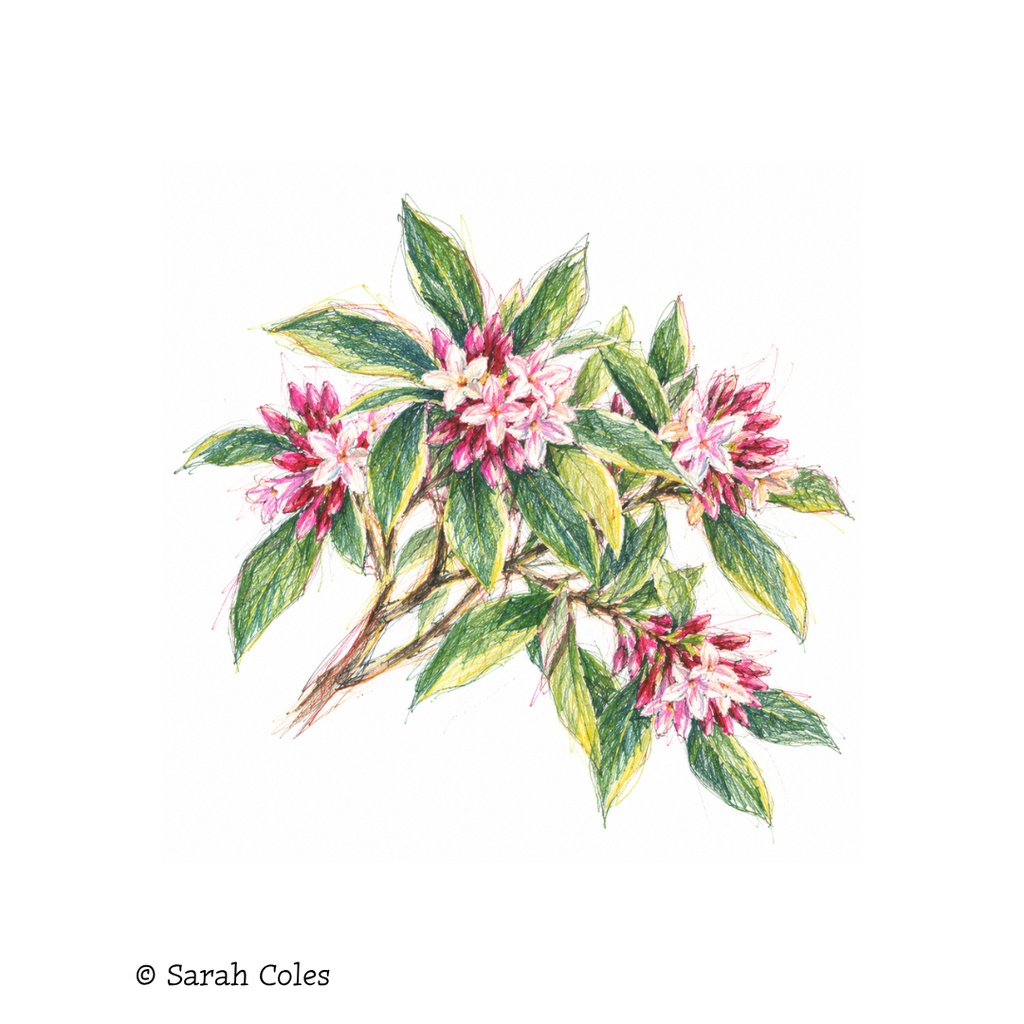
During late winter, clusters of small, rounded buds begin to develop at the tips of the branches. Often deep pink or rosy purple, they gradually open into delicate, star-like flowers with pale interiors and deeper colouring on the outside.
Each individual flower is small, yet gathered together they create beautiful clusters that stand out against the glossy evergreen leaves.
Look closely and you’ll discover that the flowers have four petal-like lobes. Botanically, these belong to the flower’s calyx rather than being true petals.
But it is their perfume that makes Winter Daphne so special.
The fragrance is rich, sweet and wonderfully distinctive, sometimes described as having hints of citrus, spice and floral sweetness.
On a still winter morning, a single flowering shrub can scent the surrounding air.
And unlike the fragrance of summer flowers, which often mingles with dozens of other scents, Winter Daphne has the garden almost entirely to itself.
There is something quite memorable about stepping outside on a cold February morning and discovering that unmistakable perfume drifting through the air.
It is one of those small gardening pleasures that makes winter feel a little less bleak.
When Does Winter Daphne Flower in the UK?
In British gardens, Daphne odora usually flowers between February and March, although flowering can begin earlier during mild winters or continue into April in cooler conditions.
The exact timing depends on the weather, the variety and the plant’s position.
A sheltered shrub growing against a warm wall may begin flowering before one planted in a more exposed part of the garden.
The flowers can remain attractive for several weeks, particularly when temperatures stay relatively cool.
This makes Winter Daphne a valuable addition to the late-winter garden, providing interest alongside snowdrops, hellebores, winter aconites and early-flowering crocuses.
These plants make particularly lovely companions, creating a gentle progression of colour as winter gradually gives way to spring.
And because Winter Daphne is evergreen, it continues to contribute structure and foliage long after its flowers have faded.
The Best Winter Daphne Varieties to Grow
Although the species itself is beautiful, several cultivated forms offer different foliage colours and flower characteristics.
Daphne odora ‘Aureomarginata’
One of the most popular varieties for British gardens, ‘Aureomarginata’ has glossy green leaves edged with narrow bands of creamy yellow.
The variegated foliage provides year-round interest, while clusters of pink buds open into beautifully fragrant, pale flowers during late winter.
It is a particularly attractive choice for smaller gardens, where its evergreen leaves help brighten a border even when the plant is not flowering.
Daphne odora ‘Alba’
For those who prefer a softer colour palette, ‘Alba’ produces white flowers with the same delightful fragrance associated with Winter Daphne.
Its elegant blooms look especially lovely in sheltered woodland-style planting or amongst other early-flowering shrubs.
Daphne odora ‘Rebecca’
‘Rebecca’ is another attractive variegated selection, with green foliage edged in creamy yellow and richly fragrant flowers.
Its colourful leaves make it a useful plant for adding brightness to a sheltered border throughout the year.
Whichever variety you choose, it is worth buying a healthy, well-established plant from a reputable nursery.
Daphnes can be slow-growing and sometimes rather particular about their conditions, so beginning with a strong specimen gives you the best chance of success.
Where to Plant Winter Daphne in the Garden
Choosing the right position is perhaps the most important part of growing Winter Daphne successfully.
These shrubs have a reputation for being a little temperamental, but much of that comes down to their dislike of unsuitable soil conditions and root disturbance.
Once established in a position they enjoy, they can grow happily for many years.
Light and Shelter
Winter Daphne generally prefers a sheltered position in partial shade or gentle sunlight.
Morning sunshine followed by light afternoon shade can work particularly well, especially in warmer, drier gardens.
Although it tolerates some sun, prolonged exposure to intense summer heat can place the plant under stress, particularly where the soil becomes very dry.
A position protected from cold, drying winds is also beneficial.
In coastal gardens, including those along the Norfolk coast, shelter is especially important. Strong salt-laden winds and exposed conditions can damage the evergreen foliage, so a protected courtyard or sheltered border is preferable to an open, windswept position.
The Best Soil for Winter Daphne
Good drainage is essential.
Winter Daphne dislikes sitting in cold, waterlogged soil, particularly during the wetter months of the year.
It generally grows best in fertile, humus-rich soil that retains some moisture without becoming saturated.
A slightly acidic to neutral soil is often suitable, although some plants will tolerate mildly alkaline conditions where drainage is good.
If your garden has heavy clay soil, consider improving the structure with organic matter and choosing a naturally well-drained position.
Where drainage is particularly poor, growing Winter Daphne in a raised bed or large container may be a better option.
Avoid planting in areas where water collects after heavy rain.
Choose Its Position Carefully
One of the most useful things to know about Winter Daphne is that it dislikes being moved.
Its roots can be sensitive to disturbance, and established plants may struggle if transplanted.
For this reason, it is worth taking a little extra time to decide where your shrub will grow.
Think about its eventual size, the amount of light it will receive and, most importantly, where you will be able to enjoy its fragrance.
A sheltered position beside a regularly used garden path, near a doorway or close to a window can be particularly rewarding.
After all, there is little point growing one of the most beautifully scented shrubs of winter if its fragrance is hidden away in a forgotten corner.
How to Plant Daphne odora
Spring or early autumn can be suitable times to plant Winter Daphne in the UK, provided the soil is workable and conditions are not excessively cold, hot or wet.
Spring planting is often a good choice in colder or wetter gardens, giving the shrub time to establish before its first winter.
Begin by watering the plant thoroughly while it is still in its nursery pot.
Dig a planting hole approximately twice the width of the rootball, but no deeper than the rootball itself.
Gently remove the plant from its container, taking care not to damage or excessively disturb the roots.
Position it so that the top of the rootball sits level with the surrounding soil.
Backfill with the excavated soil, firming gently to remove large air pockets without compacting the ground.
Water thoroughly after planting.
A light mulch of well-rotted organic matter around the base can help conserve moisture and improve the soil, but keep it clear of the stems to avoid encouraging rot.
During the first growing season, water during prolonged dry spells while the roots become established.
Once the plant is growing well, it will usually need less attention.
How to Care for Winter Daphne
One of the appealing things about Winter Daphne is that it doesn’t require constant pruning, feeding or fussing.
In fact, it is often happiest when left largely undisturbed.
The key is to provide suitable growing conditions and avoid unnecessary interference with its roots.
Watering
Newly planted daphnes need regular attention during dry weather until their roots become established.
The soil should remain lightly moist but never waterlogged.
Established plants can tolerate some short dry periods, particularly when growing in moisture-retentive soil, but prolonged drought may cause stress.
Container-grown plants need more frequent checking, as compost dries out more quickly than garden soil.
During winter, avoid unnecessary watering when the soil is already wet.
Feeding
Winter Daphne generally requires little additional feeding when grown in reasonably fertile garden soil.
An annual mulch of well-rotted organic matter can help maintain soil condition and provide a gentle supply of nutrients.
Container-grown plants may benefit from a modest application of balanced fertiliser during spring, following the manufacturer’s instructions.
Avoid excessive feeding, which can encourage soft growth rather than healthy, balanced development.
Pruning
Winter Daphne naturally forms an attractive rounded shape and rarely needs regular pruning.
Heavy pruning is best avoided, as older wood may not regenerate reliably.
If necessary, remove dead, damaged or crossing stems, and lightly trim any untidy growth immediately after flowering.
Avoid cutting deeply into old, leafless branches.
For the most part, allowing the shrub to develop its natural shape is the simplest and most successful approach.
Can You Grow Winter Daphne in a Pot?
Winter Daphne can be grown successfully in a container, making it a useful choice for patios, courtyards and smaller gardens.
The important thing is to choose a sufficiently large, stable pot with generous drainage holes.
Use a good-quality, free-draining, peat-free compost, incorporating suitable drainage material such as perlite or fine grit where necessary.
Position the container somewhere sheltered, away from strong winds and intense afternoon sunshine.
Because container-grown plants are more exposed to fluctuations in temperature and moisture, they require slightly more attention than those growing in the ground.
Check the compost regularly during warm weather, and avoid leaving the pot standing in water.
During periods of severe frost, protect the container from prolonged freezing conditions, particularly around the roots.
Repot only when necessary, and disturb the rootball as little as possible.
A potted Winter Daphne placed near a doorway can be particularly lovely during February and March, greeting anyone who passes with its wonderful fragrance.
Is Winter Daphne Good for Wildlife?
Although Winter Daphne is primarily grown for its fragrance and ornamental value, its flowers can also provide nectar for insects active during mild spells in late winter and early spring.
On warmer days, early-emerging bees and other pollinating insects may visit the flowers when relatively few other nectar sources are available.
However, Winter Daphne is not a substitute for a diverse selection of wildlife-friendly plants.
A garden that provides flowering plants across the seasons will support a much wider range of pollinators.
Combining Winter Daphne with early crocuses, hellebores, snowdrops and native spring-flowering plants can help create a garden that is both beautiful and useful to wildlife.
Is Winter Daphne Poisonous?
All parts of Daphne odora should be regarded as poisonous if eaten.
The plant contains toxic compounds that can cause irritation and potentially serious illness, particularly if the berries or other plant material are swallowed.
Although fruit production is not always common in cultivated plants, any berries that do develop should be treated with particular caution.
Winter Daphne may not be the best choice for areas where young children or pets are likely to chew plants.
The sap can also irritate the skin, so wearing gardening gloves when pruning or handling damaged stems is sensible.
If ingestion is suspected, seek appropriate medical or veterinary advice promptly.
The shrub can still be enjoyed safely in many gardens, but it is important to understand these risks when deciding where to plant it.
Common Winter Daphne Problems
Even when planted carefully, Winter Daphne can occasionally encounter problems.
Understanding the most common causes can help prevent unnecessary losses.
Why Are My Daphne Leaves Turning Yellow?
Yellowing leaves may indicate poor drainage, overwatering, root stress or unsuitable growing conditions.
Some older leaves naturally yellow and fall as the plant produces new growth, but widespread yellowing should prompt a closer look at the soil.
If the ground remains wet for long periods, root damage may be developing.
Why Is My Winter Daphne Not Flowering?
A young plant may need time to establish before producing a substantial display.
Insufficient light, excessive shade or damage to developing flower buds can also affect flowering.
Avoid unnecessary pruning during late summer and autumn, as this may remove the shoots that would otherwise carry flowers.
Why Has My Daphne Suddenly Died?
Daphnes have an unfortunate reputation for occasionally declining unexpectedly, even after several years of apparently healthy growth.
Poor drainage, root diseases, drought stress and environmental damage can all contribute.
Sometimes the precise cause is difficult to determine.
The best preventative measures are careful planting, good drainage, suitable shelter and avoiding root disturbance.
Although this unpredictability can be frustrating, it needn’t discourage gardeners from growing such a rewarding shrub.
The History and Garden Heritage of Winter Daphne
Winter Daphne has a long history of cultivation in East Asia, where fragrant flowering plants have traditionally been valued for their beauty and their contribution to gardens designed for quiet enjoyment.
Its Chinese name, ruixiang, is often associated with auspicious fragrance, reflecting the plant’s long-standing cultural appreciation.
Over time, Winter Daphne became established in European horticulture, attracting the attention of gardeners who valued plants capable of providing scent and colour during the colder months.
In Britain, its compact evergreen habit and remarkable fragrance made it particularly appealing for sheltered gardens and conservatories.
It fitted beautifully into the tradition of planting gardens for seasonal interest, where a carefully chosen shrub could provide a moment of pleasure at a time when relatively little else was flowering.
That appreciation continues today.
While modern gardens may be smaller and gardening styles have changed, the appeal of a wonderfully fragrant winter shrub remains much the same.
Planting Companions for Winter Daphne
Winter Daphne is particularly effective when planted amongst other shrubs and perennials that bring interest to the garden during the quieter months.
Snowdrops make lovely companions, their delicate white flowers appearing beneath the evergreen branches.
Hellebores offer beautiful winter and early-spring flowers in shades of white, pink, plum and green, while early crocuses provide welcome splashes of colour.
Small evergreen ferns can add contrasting foliage, particularly in sheltered, lightly shaded borders.
For a longer season of fragrance, consider combining Winter Daphne with other winter-scented shrubs, such as Sarcococca confusa or winter-flowering honeysuckle (Lonicera fragrantissima).
These plants have different growing habits and requirements, so give each enough space and choose positions suited to their individual needs.
Together, they can create a winter garden that offers far more than bare branches and dormant borders.
A Fragrant Reminder That Spring Is Coming
There is something wonderfully reassuring about Winter Daphne.
It asks us to venture into the garden when the days are still short, the air is cold and spring feels some distance away.
And then, quite unexpectedly, there it is.
A little cluster of flowers, a breath of fragrance on the breeze and a reminder that the garden is never entirely asleep.
Perhaps that is what makes this shrub so special. Its beauty isn’t loud or showy, and its flowers are modest compared with the great displays of summer.
But in February, when colour and scent are in short supply, those small flowers can feel like one of the greatest treasures in the garden.
Plant it somewhere sheltered, give it the conditions it enjoys and, most importantly, choose a place where you’ll pass it often.
Because some of the loveliest moments in gardening are the ones we weren’t expecting, and few plants capture that feeling quite like Winter Daphne.
Further Reading: Putting the garden to bed for winter, Poinsettia Care: How to Keep Your Christmas Poinsettia Looking Beautiful
For Inspiration Follow Me on Instagram, Facebook, Bluesky and Threads
