


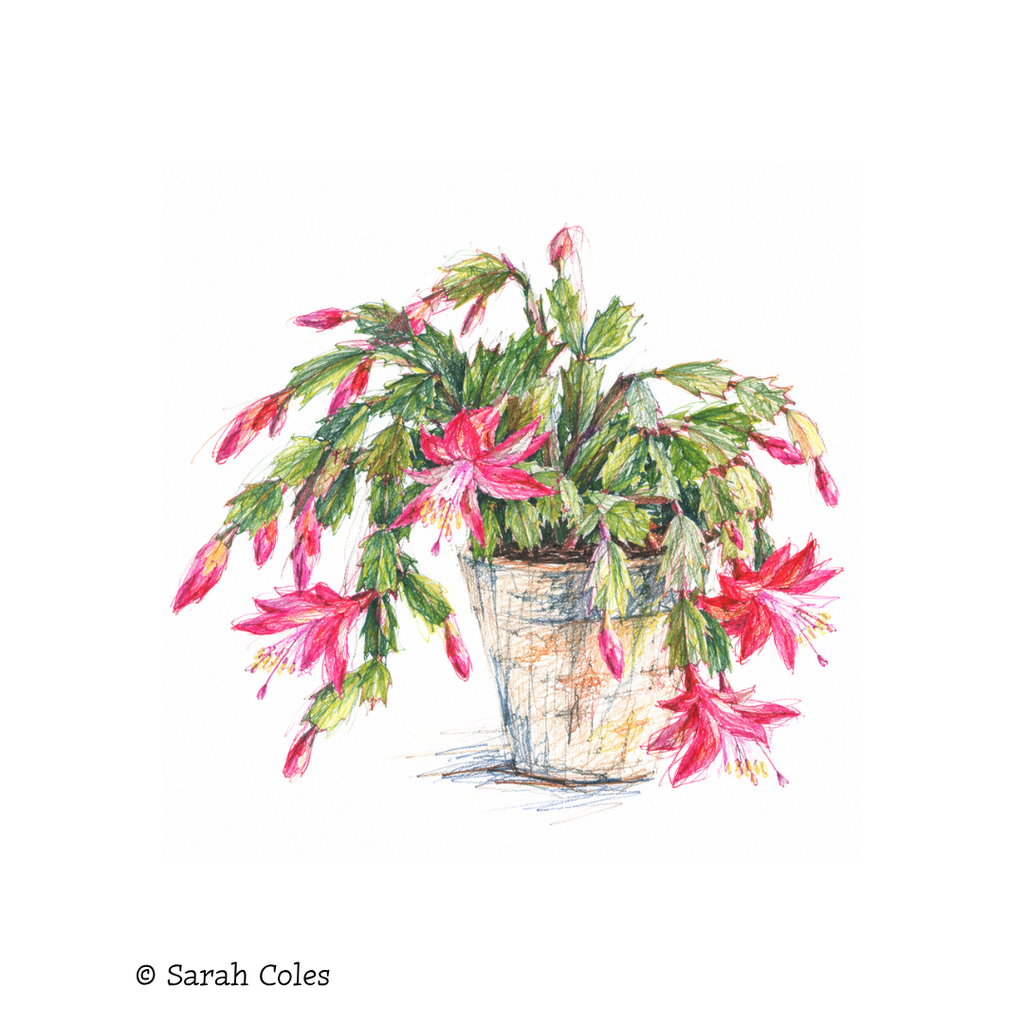
There is something rather wonderful about a plant that saves its finest display for the darkest days of the year. While the garden outside settles into its winter rest, the Christmas cactus quietly prepares to flower, covering its arching green stems with delicate blooms in shades of pink, red, white and purple.
The Christmas cactus is one of those houseplants that becomes more treasured with time. It may begin as a small plant on a windowsill, but given the right care, it can grow into a magnificent specimen, flowering year after year and sometimes living for several decades.
Unlike the familiar prickly cacti of dry desert landscapes, the Christmas cactus comes from the humid forests of Brazil, where it grows amongst moss-covered branches and rocky crevices, sheltered beneath the leafy canopy of taller trees.
Its unusual origins explain much about the way it grows and, more importantly, how to look after it.
Despite its exotic appearance, the Christmas cactus is surprisingly easy to care for once you understand its natural growing habits. And with a little patience, it can become one of the most rewarding plants in your home, bringing colour and life to the winter months when we appreciate it most.
What Is a Christmas Cactus?
The Christmas cactus belongs to the genus Schlumbergera, a small group of tropical cacti native to the coastal mountains of south-eastern Brazil.
The traditional Christmas cactus is generally known botanically as Schlumbergera × buckleyi, a hybrid that has been cultivated for generations. However, many plants sold as Christmas cacti today are varieties of Schlumbergera truncata, commonly called the Thanksgiving cactus, or hybrids derived from it.
Although closely related, there are some useful differences between them.
The traditional Christmas cactus has gently scalloped stem segments and flowers that tend to hang downwards, while Schlumbergera truncata has more sharply pointed edges and often flowers a little earlier.
Both are beautiful plants, and their care requirements are very similar.
One of the most distinctive features of a Christmas cactus is its flattened, jointed stems. These green segments look rather like leaves, but they are actually modified stems that carry out photosynthesis.
As the plant matures, the stems become longer and begin to arch gracefully over the sides of the pot, making it particularly attractive on a shelf, plant stand or in a hanging basket.
In its natural habitat, the Christmas cactus is an epiphyte, meaning it often grows upon trees rather than rooting into the ground. It isn’t parasitic and takes no nourishment from the tree itself. Instead, its roots settle into pockets of decaying leaves, moss and other organic material, gathering moisture and nutrients from its surroundings.
This is an important distinction, because it explains why Christmas cacti prefer a more moisture-retentive, organic growing medium than their desert-dwelling relatives, while still needing excellent drainage.
The Fascinating Origins of the Christmas Cactus
It is rather lovely to imagine the ancestors of our familiar Christmas houseplants growing high amongst the branches of Brazilian forest trees.
In the mountainous Atlantic Forest of south-eastern Brazil, Schlumbergera species inhabit sheltered, humid environments where sunlight filters through the canopy and moisture is often plentiful.
Their natural growing conditions are very different from the hot, dry landscapes we usually associate with cacti.
During the nineteenth century, European plant collectors became increasingly interested in the extraordinary diversity of South American plants, and Schlumbergera was amongst the botanical discoveries introduced into cultivation.
The genus was named in honour of Frédéric Schlumberger, a French collector with a particular interest in cacti.
By the Victorian period, these unusual plants were being grown in European glasshouses and conservatories, where their elegant stems and brilliantly coloured flowers attracted considerable attention.
The traditional Christmas cactus, Schlumbergera × buckleyi, arose from nineteenth-century hybridisation involving Schlumbergera truncata and Schlumbergera russelliana.
Over the generations, growers developed an increasingly varied collection of flowering hybrids, eventually giving us the colourful plants that fill garden centres and florists during the festive season.
Today, Christmas cacti are familiar houseplants across Britain, although their extraordinary journey from the Brazilian rainforest to our winter windowsills is easily overlooked.
When Does a Christmas Cactus Flower?
One of the greatest pleasures of growing a Christmas cactus is its unusual flowering season.
While many houseplants put on their best growth during spring and summer, Christmas cacti generally begin developing flower buds as autumn progresses and the days grow shorter.
Depending on the species, variety and growing conditions, flowering can occur from late autumn into winter.
The traditional Christmas cactus often flowers around December and January, while Schlumbergera truncata and its hybrids may begin flowering earlier, sometimes during October or November.
The flowers themselves are quite remarkable.
They emerge from the tips of the segmented stems, gradually developing into elegant tubular blooms with layers of curved petals and prominent stamens.
Colours range from soft pink and delicate white to deep crimson, purple, salmon and orange, with some modern varieties displaying particularly striking combinations.
Individual flowers may last several days, but because buds often open in succession, a healthy plant can remain colourful for several weeks.
Occasionally, a Christmas cactus may produce another smaller display in spring, particularly when growing conditions encourage a second round of bud formation.
There is something especially satisfying about seeing those first tiny buds appear at the ends of the stems, knowing that the plant is preparing to brighten the approaching winter.
How to Care for a Christmas Cactus Indoors
Although Christmas cacti have a reputation for being a little temperamental, they are generally forgiving plants.
The secret is to remember where they come from.
Rather than treating them like desert cacti, think of them as woodland plants that appreciate gentle light, moderate warmth, good drainage and a little more moisture in the air.
Finding the Right Position
Christmas cacti grow best in bright, indirect light.
An east-facing windowsill is often ideal, providing gentle morning sunshine without the intense heat of strong afternoon sun.
A bright position near a south- or west-facing window can also work well, provided the plant is protected from prolonged, scorching sunlight.
Too much direct sunshine can cause the green stems to develop reddish or purple tones, which may indicate stress, particularly if accompanied by shrivelling or scorching.
Too little light, meanwhile, can lead to weak growth and fewer flowers.
During the summer, a position with filtered light is particularly beneficial.
In winter, when daylight is limited, a brighter position is usually welcome.
The Best Temperature for Christmas Cactus
Christmas cacti are happiest in moderate household temperatures.
During active growth, somewhere around 18–24°C is generally suitable.
They dislike sudden temperature changes, particularly when developing flower buds.
Avoid placing them immediately beside radiators, frequently opened external doors or cold windows where temperatures fluctuate dramatically.
A slightly cooler position during autumn can help encourage flowering, although the plant should always be protected from frost.
Once flower buds have formed, keeping conditions reasonably consistent can help prevent them from dropping before they open.
How Often Should You Water a Christmas Cactus?
Watering is perhaps the most important part of Christmas cactus care.
Despite being a cactus, this is not a plant that enjoys remaining completely dry for long periods during active growth.
Equally, its roots dislike sitting in waterlogged compost.
The simplest approach is to check the compost regularly and water when the upper couple of centimetres begin to feel dry.
Water thoroughly, allowing the excess to drain away, then empty any water collecting in the saucer or decorative outer pot.
During spring and summer, when the plant is actively growing, it will generally need more frequent watering.
In cooler conditions or during periods of slower growth, watering can be reduced.
The important thing is to respond to the plant and its surroundings rather than following a rigid weekly schedule.
Shrivelled stem segments can indicate that the plant is too dry, although damaged roots caused by overwatering can produce similar symptoms.
If your Christmas cactus begins to look unhappy, checking the condition of the compost and roots is often the best place to start.
The Best Compost for Christmas Cactus
Because Christmas cacti naturally grow amongst organic material on trees and rocks, they appreciate a growing medium that holds some moisture without becoming heavy or waterlogged.
A good-quality peat-free houseplant compost, improved with perlite, fine orchid bark or horticultural grit, can provide a suitable balance.
The aim is to create an open, airy mixture that allows water to drain freely while retaining enough moisture for the roots.
A pot with drainage holes is essential.
Christmas cacti often flower well when their roots are relatively snug, so there is no need to move them into a much larger container every year.
Repotting every two or three years is usually sufficient, preferably in spring after flowering has finished.
Choose a pot only slightly larger than the previous one, and handle the stems gently, as the joints can break if knocked.
How to Encourage a Christmas Cactus to Flower
One of the most common questions gardeners ask is why their Christmas cactus produces plenty of healthy green growth but no flowers.
The answer often lies in the changing seasons.
In their natural habitat, Schlumbergera plants respond to seasonal changes in daylight and temperature. These environmental signals help initiate flower bud formation.
As autumn approaches, shorter days and longer nights encourage the plant to prepare for flowering.
Cooler temperatures can also play an important role.
Give Your Christmas Cactus Longer Nights
For approximately six to eight weeks during autumn, allow your plant to experience long periods of uninterrupted darkness.
Around 12–14 hours of darkness each night can help encourage bud formation, particularly when temperatures remain moderately cool.
In many British homes, this happens naturally if the plant is kept in a room that isn’t brightly illuminated throughout the evening.
However, a Christmas cactus positioned beneath artificial lighting late into the night may struggle to receive the darkness it needs.
Moving it into a room with a more natural day-and-night rhythm can make a considerable difference.
A Little Autumn Coolness Helps
Cooler autumn temperatures can also encourage flowering.
A bright, unheated room where temperatures remain around 12–16°C can provide favourable conditions for bud development.
Avoid exposing the plant to frost or prolonged very low temperatures.
Once buds appear, return to consistent, comfortable growing conditions and continue watering carefully.
Why Do Christmas Cactus Buds Fall Off?
It can be disappointing to see a Christmas cactus covered in promising buds, only for them to fall before opening.
This is often caused by environmental stress.
Sudden changes in temperature, irregular watering, excessively dry air or a dramatic change in light conditions can all contribute.
Moving the plant from one position to another may also cause problems if the new conditions are very different.
Once buds begin forming, try to keep the plant somewhere with steady temperatures, suitable light and reasonably consistent moisture.
With a little luck, those small buds will gradually swell and open into the beautiful flowers you’ve been waiting for.
What to Do With a Christmas Cactus After Flowering
When the last flowers have faded, your Christmas cactus may look rather quiet for a while.
This is perfectly natural.
After flowering, many plants benefit from a short period of reduced watering while growth slows.
Remove spent flowers gently and allow the compost to dry a little more between waterings, without leaving the plant completely parched.
As spring approaches and fresh stem segments begin to appear, gradually increase watering again.
This is also a good time to begin feeding.
Use a balanced liquid houseplant fertiliser, diluted according to the manufacturer’s instructions, during the active growing season.
Regular but moderate feeding helps encourage healthy stems and supports the plant as it prepares for future flowering.
Avoid excessive fertiliser, which can lead to unwanted salt build-up in the compost and damage the roots.
Can Christmas Cactus Grow Outside in the UK?
Although Christmas cacti are not hardy enough to remain outdoors throughout a British winter, they can enjoy spending the warmer summer months in the garden.
Once the risk of frost has passed and night-time temperatures are reliably mild, move your plant outside to a sheltered position.
A lightly shaded patio, courtyard or spot beneath a tree can be ideal.
Avoid placing it in strong midday sunshine, particularly if it has spent the winter indoors.
Introduce the plant gradually to outdoor conditions over a week or two.
The fresh air, natural humidity and gentle changes in temperature can encourage healthy summer growth.
Keep an eye on watering, as pots may dry more quickly outdoors, particularly during warm or windy weather.
Bring your Christmas cactus back indoors before autumn nights become too cold.
A summer spent outdoors can be particularly beneficial for established plants, and the natural shortening of the days as autumn approaches may help encourage the following season’s flowers.
How to Take Christmas Cactus Cuttings
One of the loveliest things about a Christmas cactus is how easily it can be shared.
A small cutting from an established plant can grow into a new specimen, making it a thoughtful gift for friends and family.
And because these plants can live for many years, a cutting may eventually become a treasured reminder of the person who gave it.
Taking a Cutting
Spring or early summer is usually a good time to propagate a Christmas cactus, when the plant is actively growing.
Choose a healthy stem and gently twist off a section containing two or three joined segments.
Allow the cutting to rest somewhere dry and shaded for a day or two so the broken end can begin to heal.
Then insert the lower segment into a small pot of lightly moist, free-draining compost.
Place the pot somewhere warm and bright, away from strong direct sunlight.
Keep the compost only lightly moist while roots develop.
With suitable conditions, the cutting should begin forming roots over the following weeks.
Once established, it can be cared for in much the same way as the parent plant.
It is a simple and rewarding way to increase your collection, and there is something rather special about knowing that a plant growing on your windowsill began life as a small piece of another.
Common Christmas Cactus Problems
Even well-established Christmas cacti occasionally encounter problems, but most can be traced back to watering, light or temperature.
Why Are the Stems Turning Red or Purple?
Reddish or purple colouring can develop when the plant is exposed to strong sunlight, cool temperatures or other environmental stresses.
Some varieties naturally develop a degree of reddish pigmentation, particularly on younger growth.
However, if the stems also appear shrivelled or damaged, consider moving the plant somewhere with gentler light and more stable conditions.
Why Is My Christmas Cactus Wilting?
Wilting or shrivelling may indicate that the compost has become too dry.
However, overwatering can also cause similar symptoms if the roots have been damaged by rot.
Check the compost before adding more water.
If it remains wet and the plant continues to deteriorate, carefully inspect the roots and remove any soft, decaying material before repotting into fresh, free-draining compost.
Why Isn’t My Christmas Cactus Flowering?
A lack of flowers is often linked to insufficient darkness during autumn, overly warm conditions or inadequate light during the growing season.
Try providing a cooler autumn position with long, uninterrupted nights.
Also make sure the plant receives enough light and appropriate feeding during spring and summer.
What Pests Affect Christmas Cactus?
Christmas cacti can occasionally attract mealybugs, scale insects and spider mites.
Inspect the joints between stem segments, where pests may hide.
Small infestations can often be managed by carefully removing insects and using an appropriate houseplant treatment if necessary.
Good growing conditions and regular inspection help prevent minor problems from becoming serious.
Are Christmas Cacti Safe for Cats and Dogs?
Unlike several other popular Christmas plants, the true Christmas cactus (Schlumbergera) is generally considered non-toxic to cats and dogs.
This makes it a particularly appealing choice for households with pets.
However, eating any plant material may still cause an upset stomach, particularly if large quantities are consumed.
It is sensible to discourage pets from chewing houseplants and to seek veterinary advice if they develop concerning symptoms.
A Christmas Plant That Can Last for Generations
Perhaps the most remarkable thing about the Christmas cactus isn’t its beautiful flowers, but its extraordinary longevity.
With suitable care, these plants can live for decades, growing larger and more impressive with each passing year.
Some become family treasures, passed from one generation to another through carefully rooted cuttings.
There is something rather touching about that idea.
A plant that once flowered on a grandparent’s windowsill might eventually find its way into the homes of children and grandchildren, carrying with it memories of Christmases past.
Unlike decorations that are packed away each January, a Christmas cactus remains part of everyday life throughout the year.
It grows quietly through spring, enjoys the warmth of summer, responds to the shortening days of autumn and finally rewards its owner with another display of flowers as winter arrives.
And in a world where so many things are temporary, there is a certain comfort in growing something that can remain with us for so long.
A Little Colour When We Need It Most
The Christmas cactus has a quiet charm that goes far beyond its festive associations.
Its delicate flowers appear at a time when the garden has slowed, daylight is scarce and the simple pleasure of something growing can feel particularly welcome.
Yet for all its beauty, it asks for very little. A bright position, thoughtful watering, a little seasonal care and the opportunity to follow its own natural rhythm.
Perhaps that is why these plants become such favourites.
They remind us that gardening doesn’t end when winter arrives. Life continues on our windowsills, in our conservatories and in the small green corners of our homes.
And sometimes, the plants we treasure most are not those that demand constant attention, but those that quietly grow alongside us, returning with their flowers year after year.
Further Reading: Putting the garden to bed for winter, Amaryllis: How to Grow and Care for These Beautiful Winter-Flowering Bulbs, Poinsettia Care: How to Keep Your Christmas Poinsettia Looking Beautiful
For Inspiration Follow Me on Instagram, Facebook, Bluesky and Threads
