


There is something rather special about a garden in winter. Without the abundance of summer flowers and foliage, we begin to notice the things that might otherwise go overlooked. The shape of bare branches against a pale sky, the rich colour of stems in the low afternoon sunlight, and the unexpected fragrance of a flower opening in the cold.
A winter garden needn’t be a collection of empty borders and dormant plants waiting for spring. With a little thoughtful planting, it can be every bit as interesting as the garden we enjoy during the warmer months, although its beauty is often quieter and more subtle.
Some of the loveliest winter moments come from shrubs that have saved their finest display for this time of year. There are dogwoods whose stems glow crimson after their leaves have fallen, witch hazels that produce delicate ribbons of colour on bare branches, and wonderfully fragrant daphnes whose perfume can drift across the garden on a still February morning.
Evergreen shrubs bring structure and shelter, while berries provide both colour and food for visiting birds. And as the garden gradually moves towards spring, these plants help bridge the gap between one growing season and the next.
The secret to creating a beautiful winter garden is choosing plants that offer something different, whether that’s flowers, fragrance, foliage, colourful stems or an interesting shape.
Here are ten of the best shrubs and small trees for winter interest in UK gardens, each with something rather lovely to offer when much of the garden is resting.
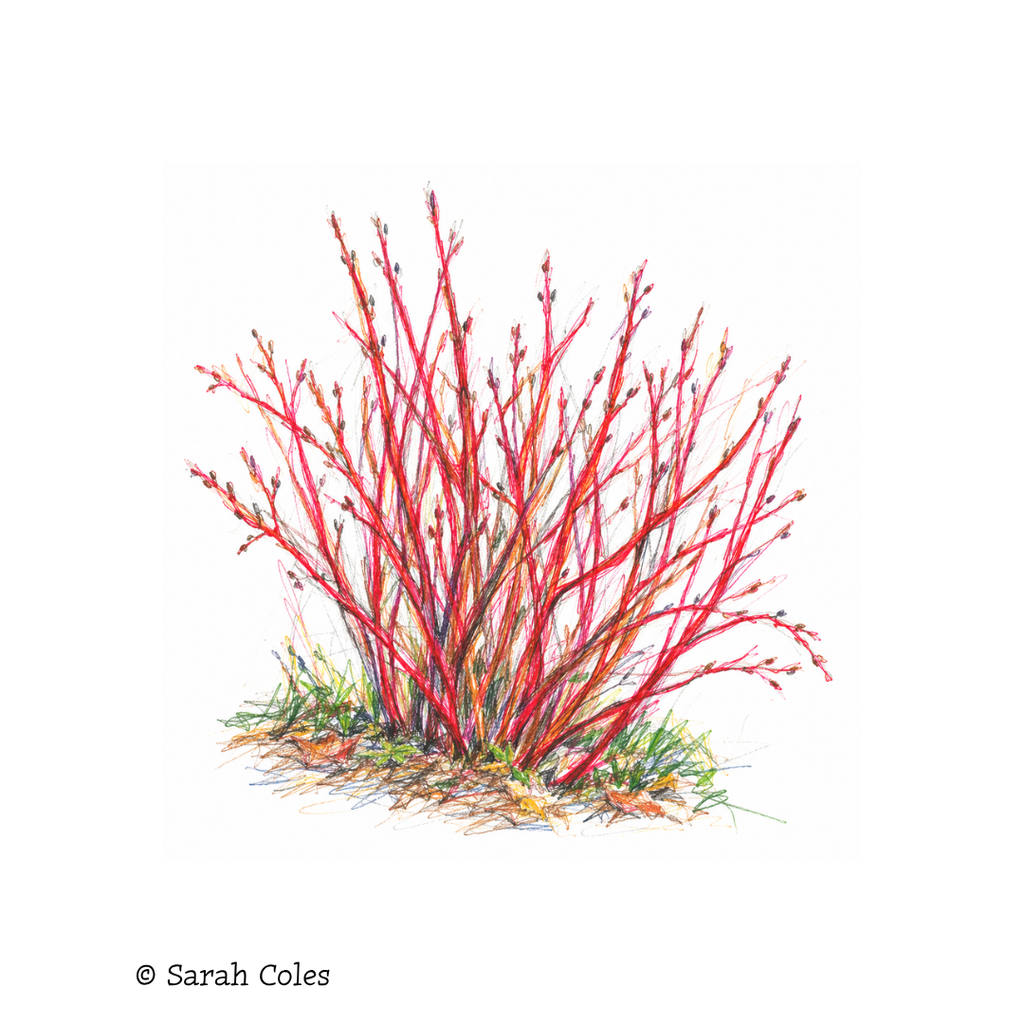
1. Cornus alba ‘Sibirica’ – Siberian Dogwood
Few shrubs make quite such a striking contribution to the winter garden as the Siberian dogwood.
Throughout spring and summer, Cornus alba ‘Sibirica’ is a relatively modest deciduous shrub, producing fresh green leaves and small clusters of creamy-white flowers. But as autumn draws to a close and the last leaves fall, its most remarkable feature is finally revealed.
The bare stems are a brilliant coral red, standing out beautifully against winter’s softer colours.
On a frosty morning, particularly when caught by the low winter sunshine, they can appear almost luminous. Planted in groups, the upright stems create a wonderful display of colour that remains long after the summer borders have faded.
The brightest colouring develops on young stems, which is why regular pruning is important. Established plants can be cut back hard in early spring to encourage a fresh crop of vigorous, colourful growth.
However, this does mean sacrificing some of the shrub’s size and summer flowers, so it is worth deciding whether winter stem colour or a more natural, mature shape matters most to you.
Siberian dogwood is a hardy, adaptable shrub that grows well in full sun or partial shade. It particularly appreciates moisture-retentive soil, although good drainage is beneficial.
It can reach around 2–3 metres if left unpruned, making it more suitable for medium to large borders unless regularly managed.
For a particularly lovely winter combination, try planting it alongside white-stemmed birches, evergreen ferns or early snowdrops.
The contrast between brilliant red stems and the quieter greens and whites of winter can be quite beautiful.
2. Hamamelis × intermedia ‘Jelena’ – Witch Hazel
There are few sights more unexpected in a winter garden than a witch hazel in full flower.
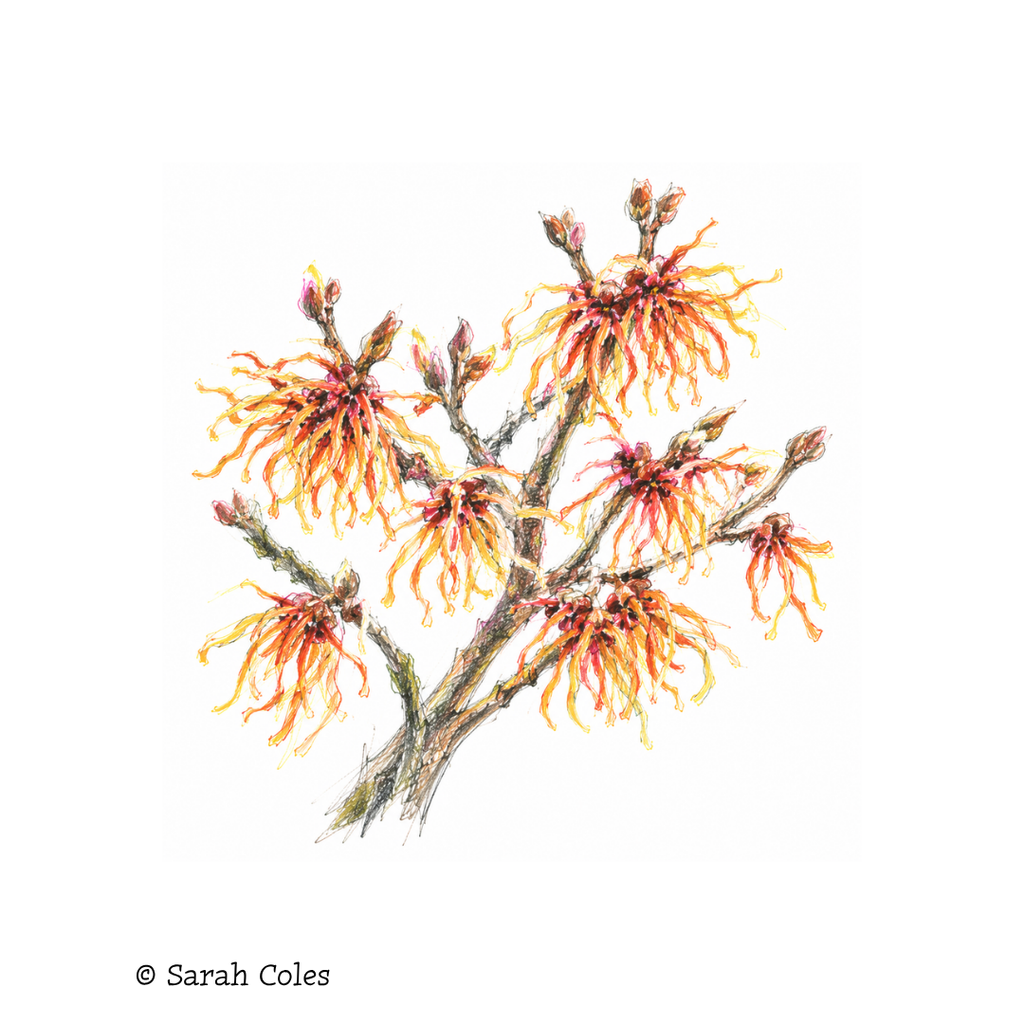
While many shrubs are still little more than bare branches, Hamamelis × intermedia ‘Jelena’ produces clusters of unusual, ribbon-like flowers in warm shades of copper, amber and burnt orange.
The narrow petals curl and twist along the branches, giving the flowers an almost delicate, spidery appearance.
And yet, despite their fragile looks, they are remarkably well adapted to winter.
During severe cold, the petals may curl inwards, helping protect them from frost, before unfurling again as temperatures rise.
‘Jelena’ typically flowers between January and March in British gardens, depending on the weather and location.
Its flowers are often described as fragrant, although the scent is generally lighter and less pronounced than that of some other witch hazel varieties.
The shrub also provides beautiful autumn colour, with its leaves turning shades of orange, red and yellow before falling.
Witch hazels prefer fertile, moisture-retentive but well-drained soil, ideally acidic to neutral. They appreciate a sheltered position in sun or partial shade, away from strong, drying winds.
Given time, ‘Jelena’ can develop into a substantial, spreading shrub or small tree, often reaching around 3–4 metres in height and width.
It isn’t a plant for squeezing into a cramped corner.
Instead, give it room to develop its naturally elegant shape, somewhere the winter sunlight can illuminate those extraordinary flowers.
A position near a regularly used path or visible from a window allows you to enjoy its display without having to venture too far into the cold.
3. Mahonia × media ‘Charity’ – Winter-Flowering Mahonia
If you are looking for a shrub that brings both architectural structure and cheerful winter colour, Mahonia × media ‘Charity’ is difficult to overlook.
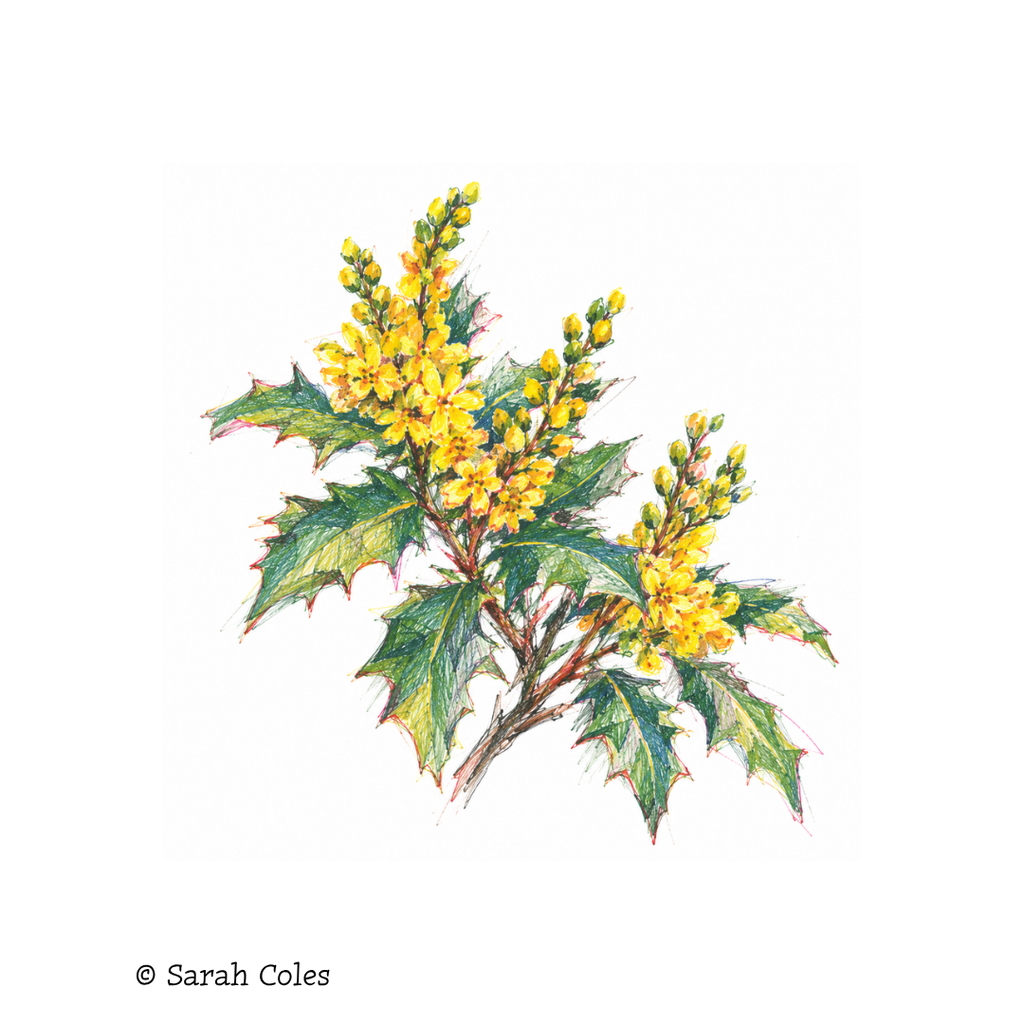
Its bold evergreen leaves form dramatic whorls around upright stems, creating a striking silhouette throughout the year.
The leaves are long, glossy and sharply toothed, giving the shrub an almost tropical appearance despite its ability to withstand a British winter.
But its greatest moment comes when the flowers appear.
From late autumn into winter, tall sprays of small, bright yellow flowers emerge above the foliage, bringing a welcome burst of colour to the garden.
The flowers have a gentle fragrance, sometimes compared with lily of the valley, and can attract bees and other insects during mild winter days.
After flowering, the plant may produce clusters of blue-black berries, which can provide food for birds.
‘Charity’ is particularly useful in sheltered, partially shaded gardens, although it can tolerate a range of conditions once established.
It prefers reasonably fertile, well-drained soil and can grow in sun or shade, provided it has sufficient moisture during establishment.
Mature plants may reach 3–5 metres, so this is a shrub that deserves some space.
Its sharply pointed leaves also make it worth positioning away from narrow paths or places where people regularly brush past.
Mahonia works beautifully as a backdrop to smaller winter plants, particularly hellebores, snowdrops and evergreen ground cover.
Its strong shape and bright flowers bring a welcome sense of life to the garden when many other plants have retreated underground.
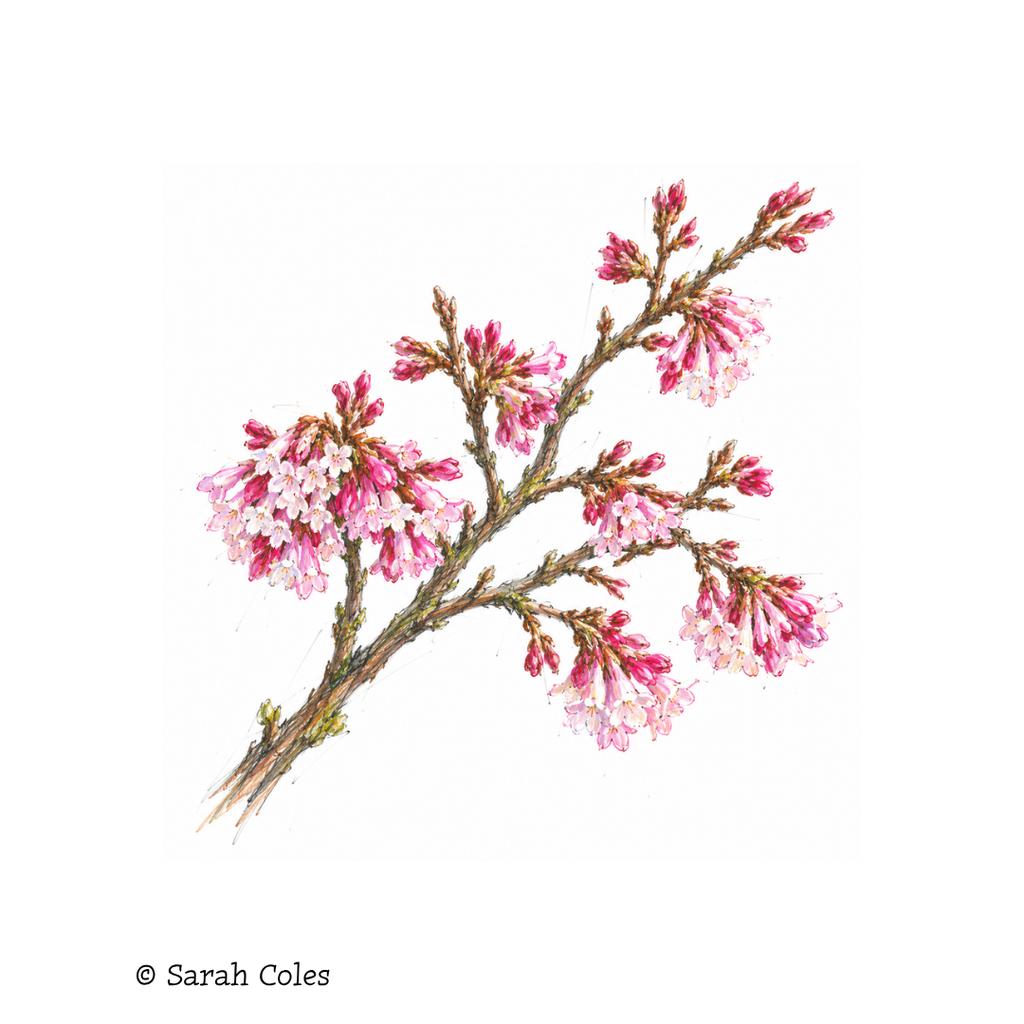
4. Viburnum × bodnantense ‘Dawn’ – Winter-Flowering Viburnum
Some winter shrubs are so wonderfully fragrant that you notice them before you see them.
Viburnum × bodnantense ‘Dawn’ is one of them.
This beautiful deciduous shrub produces clusters of small, tubular pink flowers on its bare branches, often beginning in November and continuing intermittently until March.
The buds are a deeper rosy pink, gradually opening into paler flowers that stand out against the winter sky.
During mild spells, the perfume can be particularly lovely, sweet and rich, with a fragrance that carries surprisingly well through the cold air.
‘Dawn’ has a fascinating connection with British gardening history.
The hybrid was developed at Bodnant Garden in North Wales, where generations of gardeners have cultivated plants chosen for their beauty throughout the seasons.
Its parent species are Viburnum farreri and Viburnum grandiflorum, both valued for their winter-flowering qualities.
Although the flowers can occasionally be damaged by severe frost, the shrub often produces further blooms as conditions improve.
It grows best in fertile, moisture-retentive but well-drained soil, in full sun or partial shade.
Over time, it can reach around 2.5–3 metres or more, developing an upright, somewhat open shape.
This is not necessarily a shrub to admire from a distance.
Plant it near a doorway, garden path or seating area where you can enjoy the fragrance as you pass.
There is something quite lovely about opening the back door on a cold winter morning and catching that first breath of perfume.
5. Sarcococca confusa – Sweet Box
Not every beautiful winter plant needs spectacular flowers.
Sometimes the most memorable garden experiences come from the smallest, least conspicuous blooms.
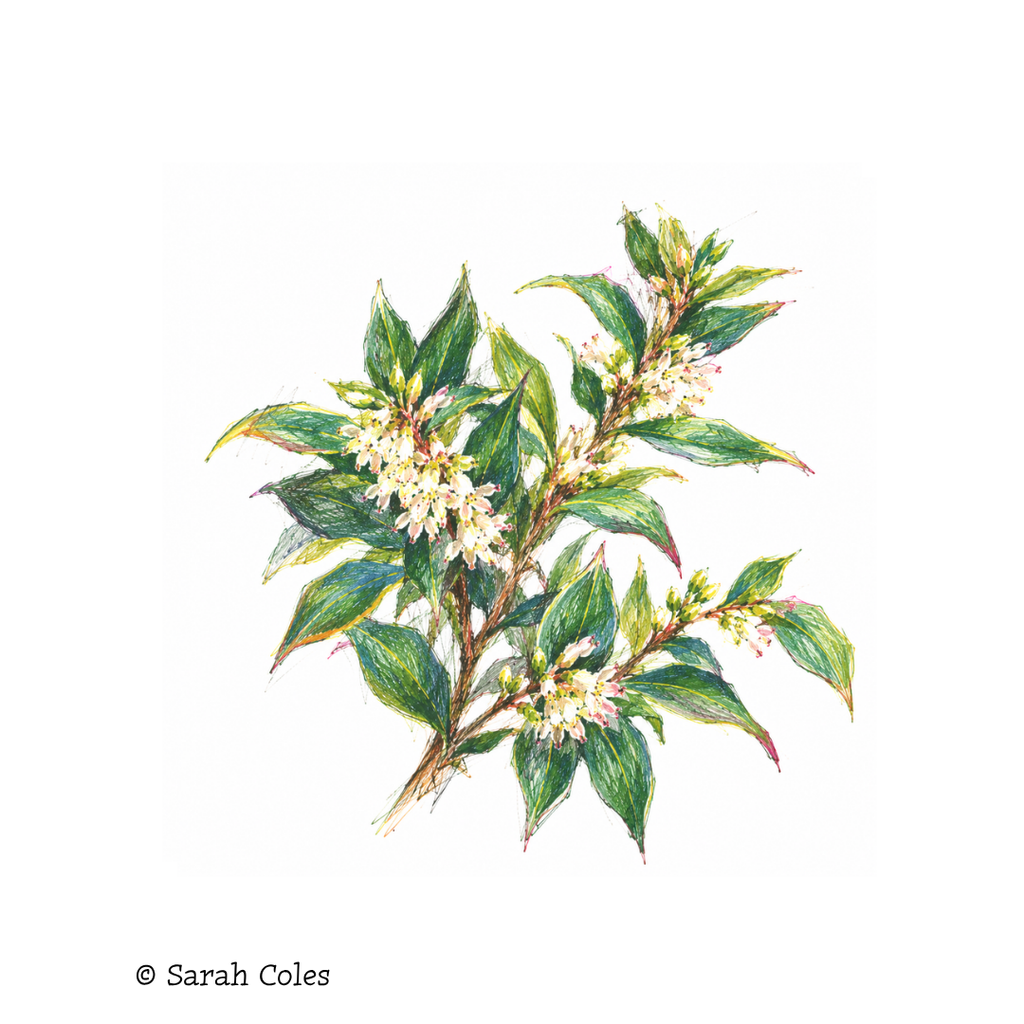
Sarcococca confusa, commonly known as sweet box, is a perfect example.
This compact evergreen shrub has neat, glossy, dark green leaves and a naturally bushy habit, making it a useful plant for shaded corners and sheltered borders.
During winter, usually between December and March, tiny creamy-white flowers appear amongst the foliage.
They are so small that you might easily walk past without noticing them.
But the fragrance is another matter entirely.
Sweet, rich and almost honey-like, it can fill the surrounding air, particularly on still days.
Sweet box is especially useful because it tolerates shade, including positions where many flowering shrubs would struggle.
It grows well in humus-rich, reasonably well-drained soil and can cope with some dryness once established, although prolonged drought is best avoided.
Mature plants usually reach around 1–1.5 metres, making them suitable for smaller gardens.
The flowers are often followed by glossy dark berries, adding another small detail of interest.
Try planting sweet box near a shaded entrance, beside a north-facing path or beneath the light canopy of established trees.
It is one of those shrubs that quietly earns its place in the garden, offering structure throughout the year and a wonderful surprise in winter.
6. Corylus avellana ‘Contorta’ – Corkscrew Hazel
Winter has a wonderful way of revealing the shapes and structures of plants that are hidden beneath leaves for much of the year.
Few shrubs demonstrate this more beautifully than the corkscrew hazel.
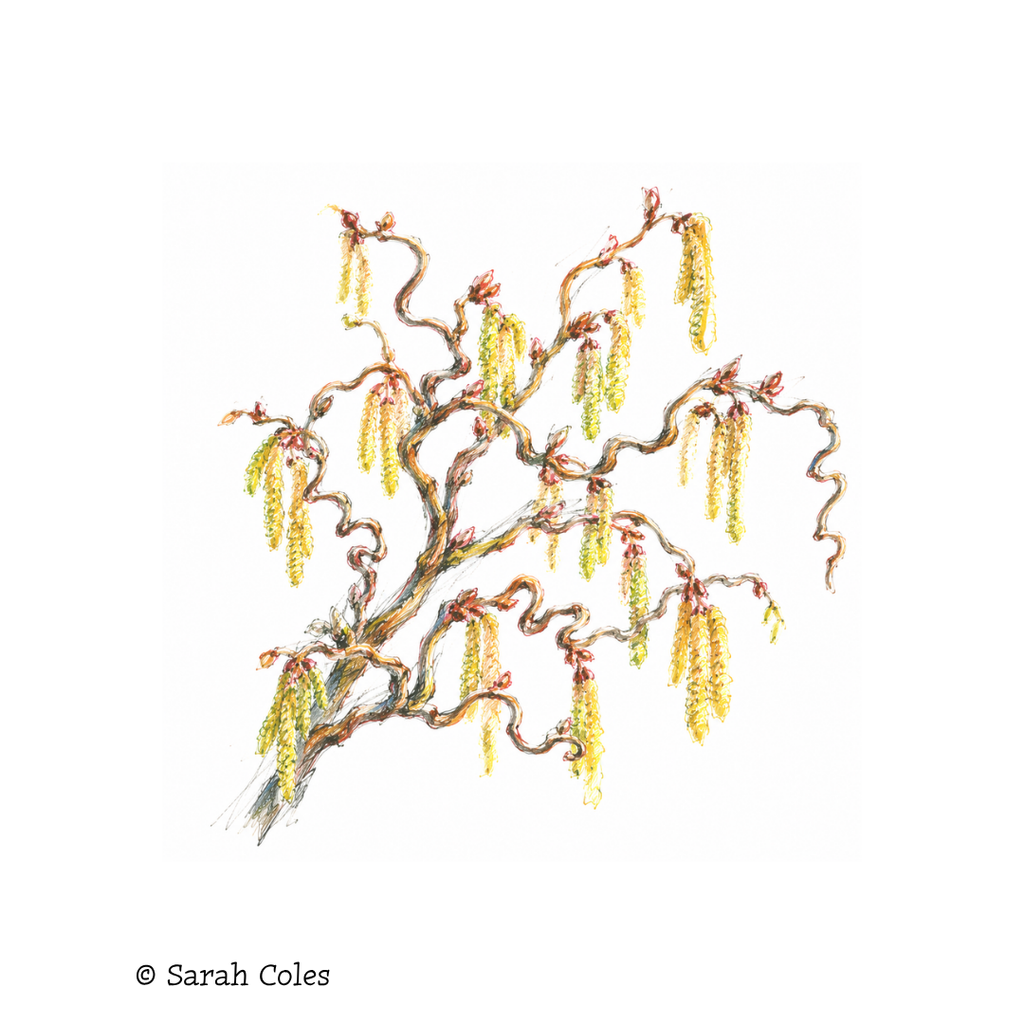
Corylus avellana ‘Contorta’ is a remarkable form of our native hazel, with branches that twist, curl and spiral in every direction.
During summer, its foliage partly conceals the unusual stems, but once the leaves have fallen, the full character of the plant emerges.
Against a pale winter sky, the bare branches look almost like a piece of living sculpture.
Then, towards the end of winter, long yellow catkins begin to hang from the twisted stems, bringing a softer texture and a hint of the approaching spring.
This distinctive cultivar was discovered in a Gloucestershire hedgerow during the nineteenth century and has remained a favourite of gardeners ever since.
It is sometimes known as Harry Lauder’s walking stick, a reference to the Scottish entertainer whose crooked walking stick became part of his familiar appearance.
Corkscrew hazel grows best in full sun or partial shade, in fertile, reasonably well-drained soil.
It is generally hardy and adaptable, although it can become a substantial shrub over time, reaching approximately 2–4 metres.
Many plants are grafted onto ordinary hazel rootstock, so keep an eye out for straight shoots emerging from below the graft.
These should be removed promptly, otherwise they may eventually dominate the slower-growing twisted branches.
For the greatest effect, give corkscrew hazel a position where its winter silhouette can be appreciated.
It looks particularly striking against a plain wall, evergreen hedge or open stretch of sky.
And even on the greyest winter day, its wonderfully tangled branches bring a little character and interest to the garden.
7. Skimmia japonica ‘Rubella’ – Japanese Skimmia
There is something particularly appealing about plants that hold their colour through the darker months without needing to flower.
Skimmia japonica ‘Rubella’ is one of the most reliable examples.
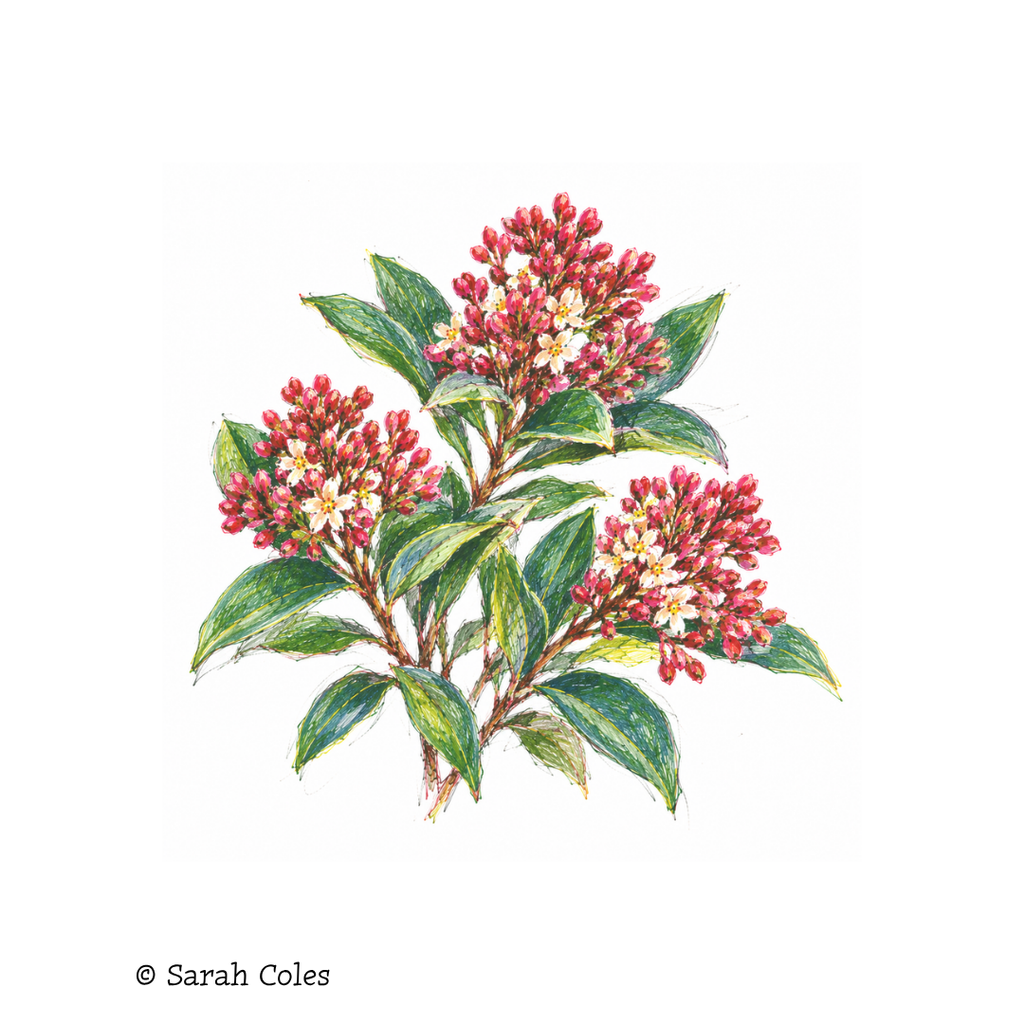
This compact evergreen shrub produces dense clusters of deep red flower buds during autumn, which remain attractive throughout winter before opening into small, fragrant, creamy-white flowers in spring.
The contrast between the richly coloured buds and glossy green foliage is especially lovely.
Unlike some shrubs that provide only a brief seasonal display, ‘Rubella’ offers interest over several months.
It is a male cultivar, so it does not produce the bright red berries associated with female skimmias.
However, its colourful buds make it a particularly attractive choice for winter containers and smaller garden borders.
Skimmias generally prefer sheltered positions in partial shade, with humus-rich, moisture-retentive but well-drained soil.
They are best suited to acidic or neutral conditions, although tolerance varies according to the soil and cultivar.
Strong sunshine, particularly in dry conditions, can cause leaf yellowing or scorching.
‘Rubella’ usually grows to around 1–1.5 metres, making it useful where space is limited.
It combines beautifully with hellebores, ferns, heucheras and other shade-loving plants.
For a winter container, try pairing it with small evergreen grasses and early spring bulbs.
Its rich red buds provide a gentle hint of festive colour without looking out of place once Christmas has passed.
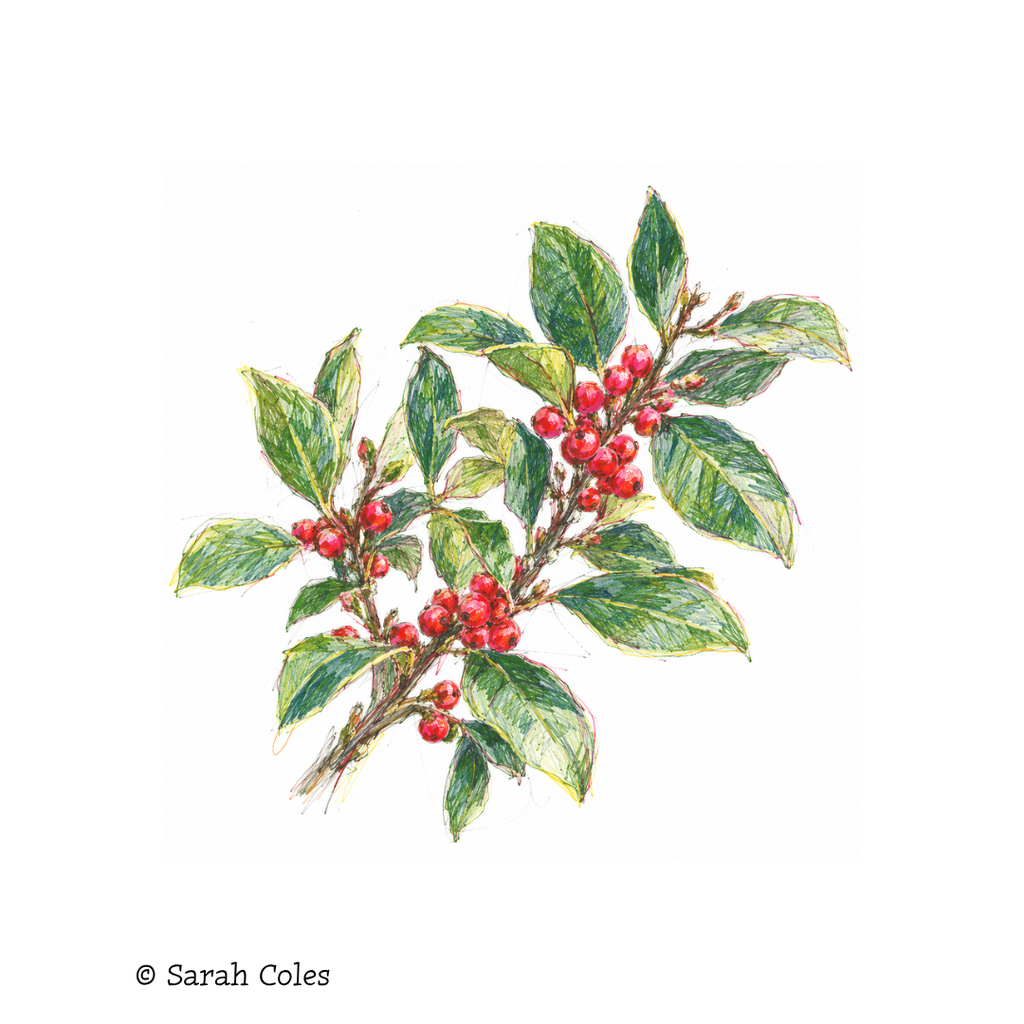
8. Ilex aquifolium ‘J.C. van Tol’ – English Holly
Few plants are as closely associated with the British winter as holly.
Its glossy evergreen leaves and bright red berries have been part of our seasonal traditions for centuries, appearing in winter decorations, folklore and garden planting.
But holly is far more than a Christmas plant.
It provides year-round structure, valuable shelter for birds and, when berries are present, an important food source during the colder months.
Ilex aquifolium ‘J.C. van Tol’ is a particularly useful cultivar for gardens where space is limited.
Unlike most hollies, which usually need a compatible male plant nearby for pollination, ‘J.C. van Tol’ is self-fertile and can produce berries without a separate pollinator.
Berry production may still vary with growing conditions and the season.
Its leaves are also relatively smooth-edged compared with the sharply spined foliage of many traditional hollies, making it a little easier to accommodate in garden borders.
This evergreen shrub or small tree can eventually reach several metres in height, although it responds well to careful pruning.
It grows in full sun or partial shade and tolerates a range of soil conditions, provided drainage is reasonable.
Holly is especially valuable in wildlife-friendly gardens.
Its dense branches provide shelter and potential nesting places for birds, while the berries are eaten by species including blackbirds and thrushes.
And during winter, when much of the garden has lost its colour, those bright red berries against deep green foliage remain one of the most familiar and welcome sights of the season.
9. Prunus × subhirtella ‘Autumnalis’ – Autumn-Flowering Cherry
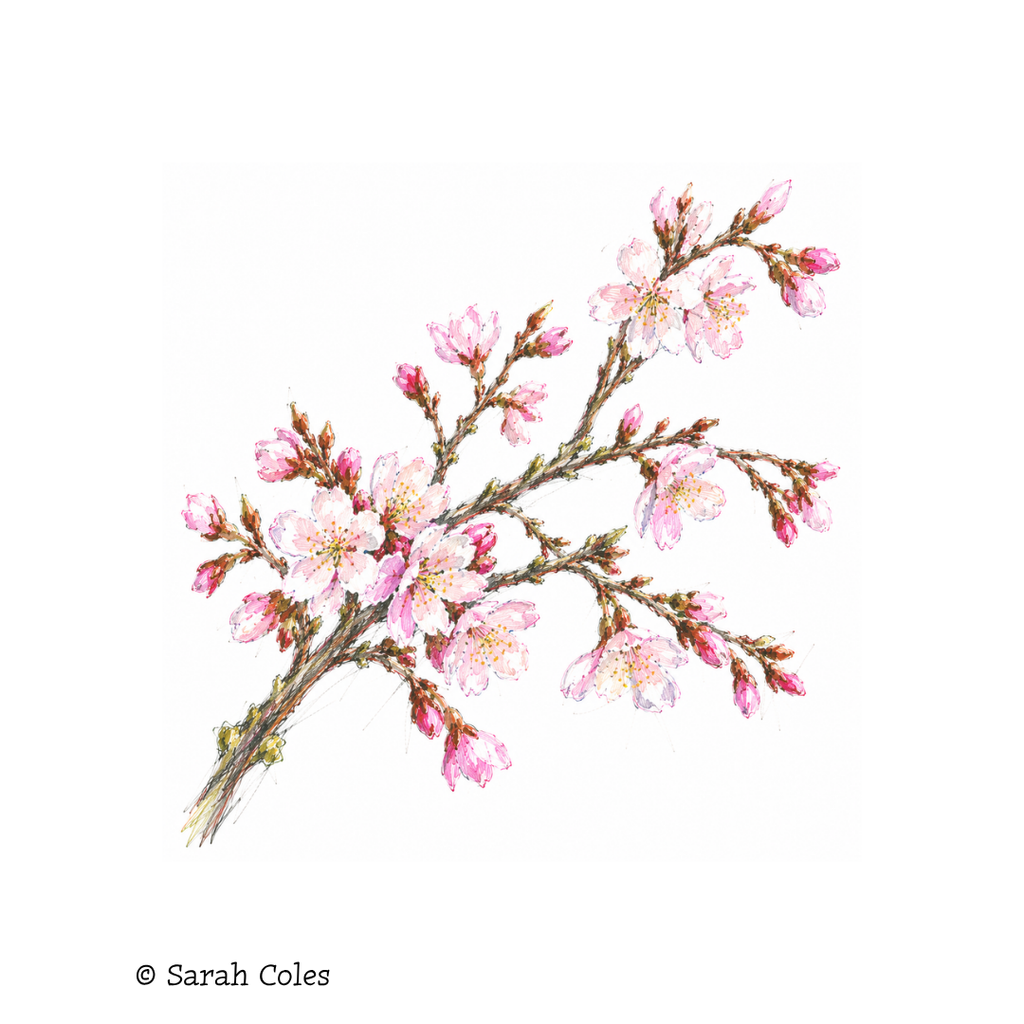
Strictly speaking, this is a small tree rather than a shrub, but it is far too lovely to leave out of a collection of plants for winter interest.
The autumn-flowering cherry, Prunus × subhirtella ‘Autumnalis’, has an unusual habit of producing delicate flowers during the colder months.
Rather than waiting until spring, it begins flowering in autumn and may continue intermittently through winter, particularly during mild spells.
The small, pale pink flowers open along otherwise bare branches, creating a beautifully delicate display against the winter sky.
There is something almost surprising about seeing cherry blossom in December or January.
The flowers are not produced in the same great abundance as those of spring-flowering ornamental cherries, but that is part of their charm.
A scattering of pale blossom amongst bare branches can be every bit as memorable as a tree covered in flowers.
This ornamental cherry also offers attractive autumn foliage, adding another season of interest.
It grows best in full sun, in fertile, well-drained soil, and appreciates a position sheltered from the strongest winds.
Mature trees can reach around 4–8 metres, depending on growing conditions, so it is important to allow enough space.
For smaller gardens, careful positioning is essential.
Plant it somewhere the winter blossom can be seen from the house or beside a path you use regularly.
On a bright January morning, when the sun catches those delicate pink flowers, it can feel as though spring has arrived just a little early.
10. Daphne bholua ‘Jacqueline Postill’ – Himalayan Daphne
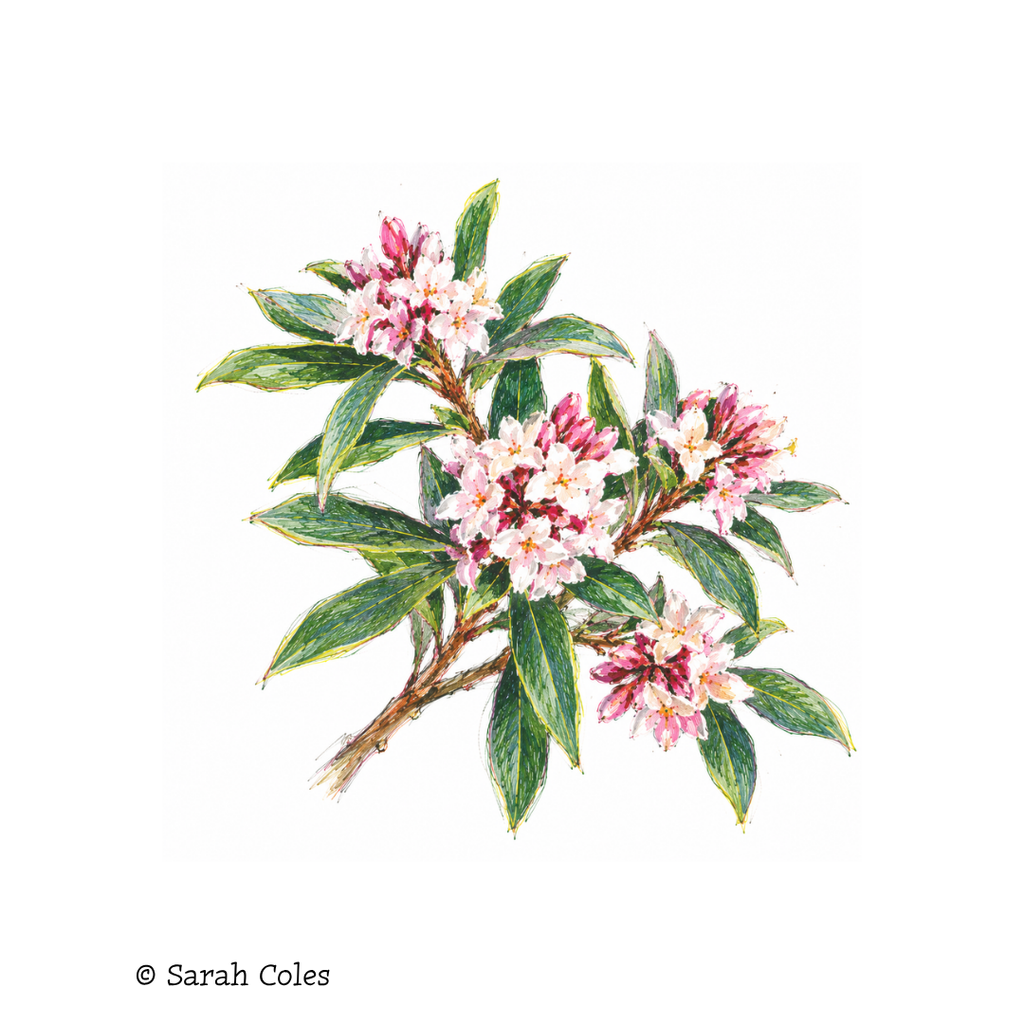
If there is one shrub capable of making a winter garden truly unforgettable, it is a beautifully fragrant daphne.
Daphne bholua ‘Jacqueline Postill’ is one of the loveliest.
This elegant shrub produces clusters of deep pink buds that open into pale pink and white flowers, often between January and March.
The flowers themselves are delicate and attractive, but the fragrance is extraordinary.
Rich, sweet and wonderfully penetrating, it can travel across the garden on the lightest breeze.
It is the sort of scent that makes you stop what you’re doing and look around for its source.
‘Jacqueline Postill’ was raised in Britain from Himalayan plant material and has become one of the most admired winter-flowering daphnes.
Its foliage is evergreen or semi-evergreen depending on winter conditions, and its upright habit makes it particularly useful in sheltered borders.
Given suitable conditions, it can grow to around 2–3 metres or more.
Like many daphnes, it can be rather particular about where it grows.
It prefers fertile, humus-rich, well-drained soil and a sheltered position with sun or partial shade.
Although it can tolerate some cold, harsh winds and waterlogged ground may cause problems.
Daphnes also dislike root disturbance, so choose the planting position carefully and avoid moving established plants unnecessarily.
A spot near a doorway, garden path or frequently used window is ideal.
And because all parts of daphne are poisonous if eaten, take care when planting in gardens used by young children or pets.
For all its occasional fussiness, ‘Jacqueline Postill’ is a shrub that rewards thoughtful planting.
Few things compare with the pleasure of stepping into the garden on a cold winter morning and discovering its fragrance drifting through the air.
How to Create a Garden with Winter Interest
The secret to a beautiful winter garden isn’t necessarily having a large collection of plants.
It is about choosing the right plants and allowing their different qualities to complement one another.
During summer, gardens are often filled with competing colours and abundant foliage. In winter, the simplest combinations can be the most effective.
A group of red-stemmed dogwoods planted against a dark evergreen hedge can create a striking display.
A fragrant shrub beside a path can turn an ordinary walk to the compost heap into a small pleasure.
And a scattering of snowdrops beneath a winter-flowering viburnum can bring a gentle sense of the changing seasons.
Think about the parts of your garden you see and use most during winter.
Perhaps it is the view from the kitchen window, the path to the greenhouse or the sheltered corner where you occasionally sit with a cup of tea when the sun makes an appearance.
These are often the best places to concentrate winter interest.
Combine Colour, Fragrance and Structure
A good winter garden benefits from variety.
Evergreen shrubs provide a sense of permanence, while deciduous plants reveal interesting stems, bark and branching patterns.
Winter-flowering shrubs bring colour and fragrance, and berry-bearing plants add seasonal interest while supporting visiting birds.
Try to include plants that offer something at different times, rather than relying on a single display.
Mahonia may begin flowering in late autumn, followed by sweet box and winter viburnum.
Witch hazel and daphne can then take over as the year progresses, with early bulbs gradually announcing the arrival of spring.
This succession of interest helps the garden feel alive throughout the colder months.
Make the Most of Winter Light
Winter sunlight has a quality all of its own.
Low in the sky and often beautifully soft, it can transform the appearance of stems, seedheads and bare branches.
Red dogwood stems become particularly striking when illuminated from behind, while the twisting branches of corkscrew hazel cast intricate shadows.
Even evergreen leaves take on a different character when touched by low winter sunshine.
When planning new planting, take a little time to observe how light moves through your garden during December and January.
A position that seems unremarkable in summer may become one of the loveliest corners of the garden in winter.
Remember the Wildlife
A garden with winter interest can also provide valuable support for wildlife.
Evergreen shrubs offer shelter from cold winds and heavy rain, while berries provide food for birds during periods when natural resources may be scarce.
Winter flowers can also offer nectar and pollen to insects that become active during milder weather.
However, it is worth remembering that not every ornamental shrub provides the same wildlife benefits.
For a more balanced garden, combine these winter favourites with native hedging, berry-bearing shrubs, trees and a variety of flowering plants that provide resources throughout the year.
Leaving some fallen leaves beneath shrubs, allowing seedheads to remain standing and avoiding unnecessary winter tidying can also create useful shelter for insects and other small creatures.
A garden doesn’t need to be perfectly tidy to be beautiful, and often the most interesting winter spaces are those where nature has been given a little room.
A Garden Worth Visiting in Every Season
There is a particular kind of beauty in the winter garden.
It isn’t always as immediate as the colour of a summer border or the abundance of a garden in June. Sometimes it asks us to look a little more closely.
To notice the shape of a bare branch, the first swelling buds, the colour of a stem against the frost or the faint perfume of flowers opening in the cold.
And perhaps that is part of its appeal.
A garden planted for winter interest gives us a reason to step outside when we might otherwise remain indoors. It reminds us that the natural world doesn’t simply stop when the days become shorter.
There is still growth, colour, fragrance and life, even in the quietest months.
With a thoughtful selection of shrubs, a winter garden can become somewhere to enjoy rather than simply a space to look after until spring returns.
Because a beautiful garden shouldn’t be something we experience for only half the year. There is something worth appreciating in every season, if we give ourselves the chance to notice it.
Further Reading: Putting the garden to bed for winter, Poinsettia Care: How to Keep Your Christmas Poinsettia Looking Beautiful
For Inspiration Follow Me on Instagram, Facebook, Bluesky and Threads
