


There’s something rather special about a wildflower meadow. From a distance, it’s a sweep of colour; step a little closer and you’ll find bees nosing into clover, butterflies resting on oxeye daisies and seed heads nodding in the breeze.
You don’t need rolling fields or acres of land to enjoy the same sense of wildness. A sunny corner, a strip of lawn or even a generous border can become a miniature meadow, bringing colour and movement to your garden while providing food and shelter for wildlife.
Creating one takes a little preparation and patience, but the result is worth waiting for.
What is a wildflower meadow?
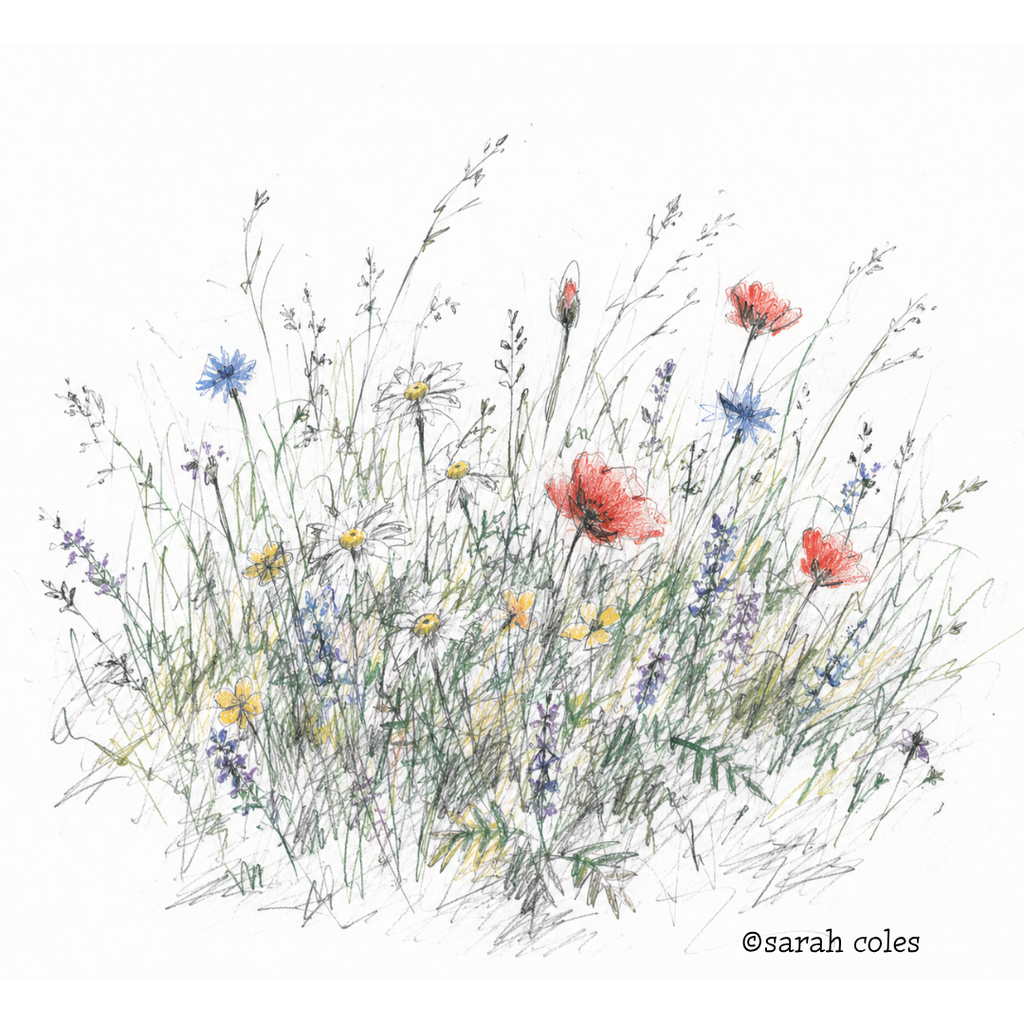
A wildflower meadow is a mixture of flowering plants and grasses grown together in a natural, informal way. Unlike a traditional border, where plants are carefully spaced and tended, a meadow is allowed to develop into a looser community.
Its appearance changes throughout the year. Spring may bring cowslips and red campion, followed by summer displays of knapweed, field scabious and oxeye daisies. Later, seed heads provide food and shelter long after the brightest flowers have faded.
A meadow will never look exactly the same from one season to the next—and that is part of its charm.
Why wildflower meadows matter
Wildflower-rich grasslands were once a familiar part of the British countryside, but many have disappeared. Creating even a small meadow at home can provide a valuable pocket of habitat.
Native wildflowers offer nectar and pollen to bees, butterflies, moths and other insects. Their leaves and stems provide food and shelter, while the seeds may attract birds later in the year.
A meadow also brings life to the garden in less obvious ways. Leave some hollow stems standing over winter and small insects may shelter inside them. Allow grasses to grow and you may find beetles, spiders and other creatures moving through the miniature landscape.
Are wildflower meadows low maintenance?
Wildflower meadows need less regular attention than a closely mown lawn, but they are not entirely maintenance-free.
The first year usually requires the most care, particularly while seedlings become established and unwanted plants are kept under control. Once the meadow is growing well, the main job is an annual cut followed by the removal of the cuttings.
It is a different kind of gardening: less about constant tidying and more about knowing when to step in and when to leave things alone.
Choosing the right type of meadow
Before buying seed, decide what sort of meadow will suit your space.
Perennial wildflower meadow
A traditional perennial meadow contains grasses and long-lived wildflowers. It takes time to establish but can return for many years when managed well.
Choose a mixture suited to your soil type and local conditions. Plants that flourish on chalky ground may struggle in heavy clay, so a locally appropriate seed mix will usually give the best results.
Annual wildflower display
Annual mixtures often include cornflowers, corn marigolds and poppies. They can produce plenty of colour in their first summer but generally need disturbed soil and may require resowing each year.
These displays are beautiful, though they are closer to the flowers once found in arable fields than to a permanent grass meadow.
Wildflower lawn
If space is limited, try allowing part of your lawn to grow longer. Plants such as daisies, clover, selfheal and bird’s-foot trefoil may already be present, waiting for the chance to flower.
A wildflower lawn can be a gentle first step and does not require the whole garden to be changed at once.
Does a wildflower meadow need grass?
A traditional meadow usually contains both grasses and wildflowers. The grasses provide structure and habitat, but vigorous varieties can overwhelm more delicate flowers.
Use a meadow seed mixture containing fine, slow-growing grasses rather than standard lawn seed. Yellow rattle can also be helpful because it draws some of its nutrients from grass roots, reducing their vigour and giving wildflowers more room to grow.
If you are creating an annual display, grass is not usually included.
Where to create your meadow
Most meadow flowers grow best in an open, sunny position. A level or gently sloping site with reasonable drainage will make establishment easier, although there are specialist seed mixtures for damp ground and partial shade.
Surprisingly, wildflowers often prefer relatively poor soil. Fertile ground encourages lush grasses, nettles and other vigorous plants that can crowd out the flowers.
Avoid adding fertiliser, rich compost or manure. When it comes to meadow-making, less fertile soil is often an advantage.
How to create a wildflower meadow from seed
Autumn is an ideal time to sow many wildflower mixtures because the soil is still warm and winter weather helps some seeds to germinate. Spring sowing can work well too, particularly if the ground is prepared carefully and kept from drying out.
1. Clear the ground
Remove the existing turf and as many perennial weeds as possible. Dig out deep-rooted weeds such as docks, thistles and couch grass rather than simply cutting off their leaves.
Avoid enriching the soil. If it is very fertile, removing the turf can help take away some of the nutrients held near the surface.
2. Prepare the seedbed
Rake the soil to create a fine, crumbly surface. Allow it to settle, then remove any new weeds that appear before sowing.
Wildflower seeds need good contact with the soil, so clear ground is more important than deep cultivation.
3. Choose an appropriate seed mixture
Look for responsibly sourced seed containing species suited to your soil and part of the country. A native perennial mixture will generally offer greater long-term value to local wildlife than a brightly coloured mixture containing ornamental species from elsewhere.
Check the recommended sowing rate on the packet. Using extra seed may sound generous, but overcrowded seedlings have to compete for light, water and nutrients.
4. Sow the seed
Wildflower seed can be surprisingly fine. Mix it with dry horticultural sand to make it easier to see where you have sown.
Scatter half the mixture while walking in one direction, then sow the rest at right angles to the first pass. Lightly firm the ground by walking over it or using a roller. Do not bury the seed deeply, as many wildflowers need light to germinate.
Water gently during prolonged dry weather, taking care not to wash the seed away.
What to expect in the first year
A newly sown meadow rarely becomes a haze of flowers straight away. Perennial wildflowers spend much of their first year developing roots, and some may not flower until their second season.
Weeds can also appear quickly wherever soil has been disturbed. If annual weeds begin to shade the young meadow plants, cut the area back to around 5–7cm and remove the clippings. This helps light reach the slower-growing seedlings.
Be patient and resist the temptation to start again too soon. A perennial meadow needs time to find its feet.
How to look after an established meadow
Cut it at the right time
Many traditional meadows are cut in late summer, once the flowers have finished and set seed. Leave the cut material in place for a few days so seeds can fall, then rake it away.
Removing the clippings is important. If they are left to rot, they gradually enrich the soil and encourage grasses at the expense of wildflowers.
Some meadows benefit from another short cut in autumn or early spring. The best routine will depend on the plants in your mixture and when they flower.
Control troublesome weeds
A few unexpected plants are part of a meadow’s natural character. However, vigorous perennial weeds can take over if left unchecked.
Pull or dig them out by hand, ideally before they set seed. This is usually more suitable for a wildlife-friendly meadow than using weedkillers, which may damage the plants and insects you are trying to encourage.
Leave some winter shelter
There is no need to make every corner neat. Leaving a small area of longer grass or a few standing stems over winter creates shelter for insects and other small creatures.
If you have room, nearby hedges, shrubs, ponds and log piles can add further layers of habitat.
The advantages and disadvantages of a wildflower meadow
A meadow can provide months of interest, support wildlife and reduce the amount of regular mowing required. It also changes beautifully with the seasons, from fresh spring growth to winter seed heads.
There are a few things to bear in mind. Establishment can be slow, weeds need managing and the meadow may look untidy at certain times of year. It will also evolve, with some species thriving while others gradually disappear.
For many gardeners, that unpredictability is part of the pleasure. A meadow is not a fixed display but a living community.
Take time to enjoy it
Once your meadow begins to flower, spend a little time simply watching. On a warm day, you may notice different insects favouring particular blooms. In the evening, moths may take over from daytime pollinators, while birds search among the stems for seeds and invertebrates.
A narrow mown path or a simple seat nearby will let you enjoy the meadow without trampling through it.
Creating a wildflower meadow is not about abandoning a patch of ground and hoping for the best. It is about preparing the soil thoughtfully, choosing suitable plants and allowing nature a little more freedom.
Begin with the space you have, whether that is a whole lawn or one sunny corner. With time and a light touch, it can become a shifting patchwork of flowers, grasses and wildlife—and one of the most rewarding parts of your garden.
“If I’m honest, the thing I am proudest of is my varieties of wild flowers in the hay meadow.”
Monty Don
- The Wildlife Trusts offers in-depth information on Yellow Rattle’s characteristics, habitat, and distribution across the UK.
- Royal Horticultural Society provides useful growing advice for Yellow Rattle, including its hardiness and preferred soil types.
Further Reading: Save the Bees – Protect the Planet, My Garden Journal & Notes
