


Even the smallest vegetable garden can produce a surprisingly generous harvest. The secret often lies beneath your feet: healthy, well-cared-for soil.
Crop rotation is a traditional way of keeping that soil productive. It simply means growing vegetables from different plant families in a different place each year. By moving crops around rather than returning them to the same patch, you can help prevent nutrients from becoming depleted and make life harder for pests and diseases.
You don’t need a large allotment or a collection of perfectly measured beds to give it a go. A few raised beds, or even a modest kitchen garden, are quite enough.
What is crop rotation?
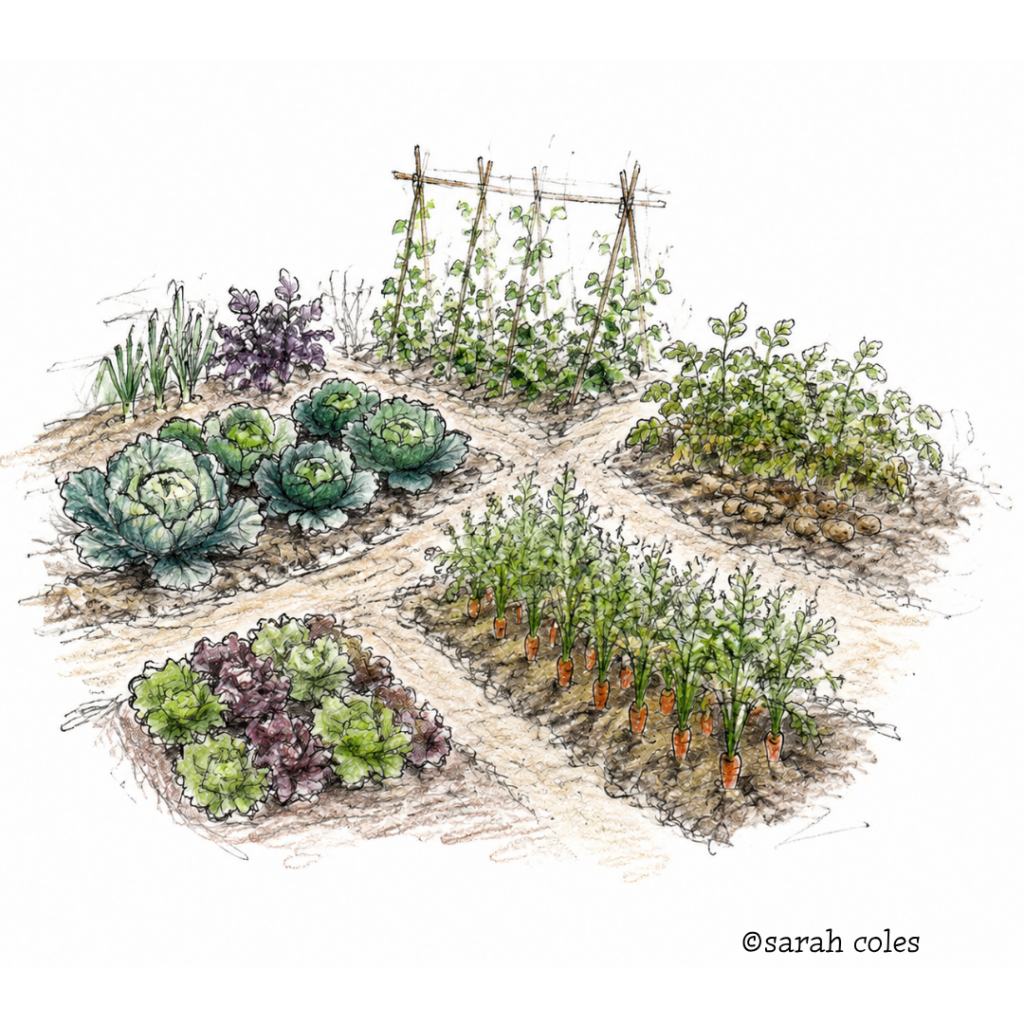
Crop rotation is the practice of moving groups of related vegetables around your garden from one growing season to the next.
Plants in the same family often need similar nutrients and can be troubled by the same pests and diseases. Cabbages, kale and broccoli, for example, are all brassicas and may be affected by clubroot. Potatoes and tomatoes belong to the nightshade family and can both suffer from blight.
Growing these crops in a new spot each year helps to break that cycle. It also gives the soil time to recover before the same plant family returns.
Why rotate crops in a small vegetable garden?
A simple crop rotation plan can bring several benefits.
Healthier soil
Different vegetables take different nutrients from the ground. Brassicas are hungry plants, while peas and beans work with soil bacteria that fix nitrogen around their roots. Moving crops between beds helps prevent one group of nutrients from being repeatedly exhausted.
Crop rotation won’t replace compost or well-rotted manure, but it can help you use these valuable materials more wisely.
Fewer pests and diseases
Many garden problems are linked to particular plant families. If the same vegetables are grown in the same soil year after year, pests and disease spores have an easy route back to their favourite plants.
Moving crops will not prevent every problem, especially when pests can fly, but it can reduce the build-up of soil-borne troubles such as clubroot and potato pests.
Stronger plants and better harvests
Plants growing in healthy soil are better equipped to cope with dry spells, pests and changing weather. Give them a good start and they are more likely to reward you with sturdy growth and a worthwhile harvest.
Begin by grouping your vegetables
Before drawing up a plan, make a note of what you would like to grow and place each vegetable into its plant family.
- Legumes: peas, broad beans, French beans and runner beans
- Brassicas: cabbage, broccoli, cauliflower, kale, Brussels sprouts, radishes and turnips
- Nightshades: potatoes, tomatoes, aubergines and peppers
- Alliums: onions, garlic, leeks and shallots
- Roots: carrots, parsnips and beetroot
Roots are often grouped together for convenience, although they do not all belong to the same botanical family. Salad leaves are equally flexible. Lettuce, rocket, spinach and other quick-growing leaves can usually be tucked into spare spaces rather than given a bed of their own.
A simple four-year crop rotation plan
For a small vegetable garden, a four-bed rotation is often the easiest to remember.
| Year | Bed 1 | Bed 2 | Bed 3 | Bed 4 |
|---|---|---|---|---|
| Year 1 | Legumes | Brassicas | Roots and alliums | Potatoes and tomatoes |
| Year 2 | Brassicas | Roots and alliums | Potatoes and tomatoes | Legumes |
| Year 3 | Roots and alliums | Potatoes and tomatoes | Legumes | Brassicas |
| Year 4 | Potatoes and tomatoes | Legumes | Brassicas | Roots and alliums |
After the fourth year, begin the sequence again.
This is a guide rather than a rulebook. If one bed is larger, sunnier or more sheltered than another, adapt the plan to suit your garden. Tomatoes, for instance, will appreciate the warmest spot, while salad leaves may be happier with a little afternoon shade.
Prepare the ground
Before planting, remove weeds and add garden compost or well-rotted manure where it is needed. Most vegetables prefer fertile soil that holds moisture without becoming waterlogged.
Think about the crop that is going into each bed. Brassicas and courgettes appreciate rich ground, while carrots can fork if they are planted in freshly manured soil. Potatoes benefit from plenty of organic matter, but it is best to avoid fresh manure.
A layer of organic mulch can help hold moisture, discourage weeds and gradually improve the soil as it breaks down.
Plant, watch and learn
Once your plan is in place, plant each crop in its allotted bed and keep an eye on it through the season. Check beneath leaves, water during dry weather and deal with pests before they have a chance to settle in.
Try not to worry if the garden doesn’t follow the plan exactly. A row of carrots may fail to germinate, the beans might produce more than expected or you may be given a tray of spare leeks by a neighbour. Gardens have a habit of changing our plans, and that is part of their charm.
Keep a simple garden record
By the end of summer, it can be surprisingly difficult to remember where everything grew. A notebook, sketch or photograph will save a good deal of head-scratching the following spring.
Record what was planted in each bed, when it was sown and how well it grew. Make a note of any pests, diseases or disappointing harvests too. Over time, these observations will help you create a crop rotation that suits your particular soil, conditions and way of gardening.
Make crop rotation work for you
Crop rotation needn’t be complicated. At its heart, it is simply a thoughtful way of caring for the soil and giving each new crop the best possible start.
Begin with the space you have, move the main plant families each year and keep a record of what grows where. With a little planning—and a willingness to adapt—you can build healthier soil, reduce recurring problems and enjoy more food from even the smallest kitchen garden.
Try SowItGrowItandFeast Grow Your Own Kits here
Further Reading: National Allotment Association, Save the Bees – Protect the Planet, My Garden Journal & Notes
