

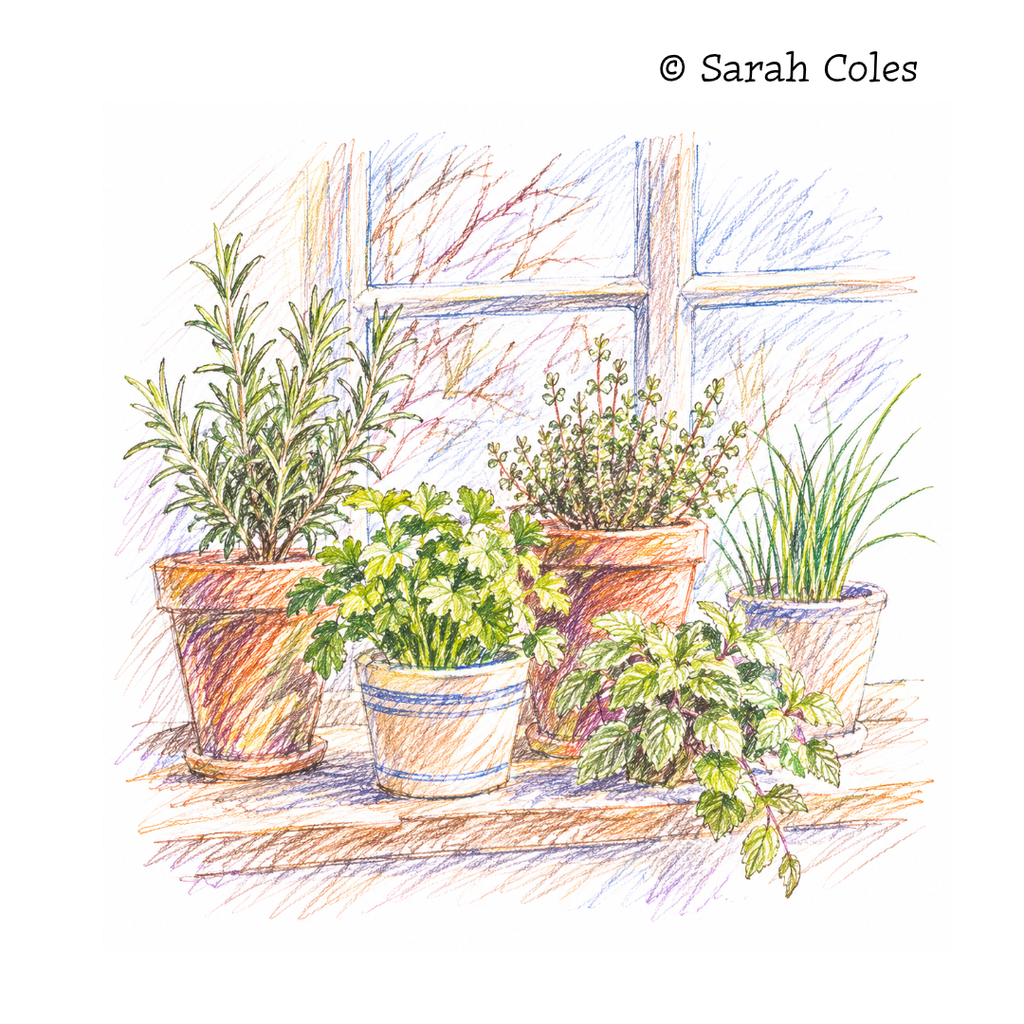
There is something rather comforting about a kitchen windowsill filled with herbs in the middle of winter. Outside, the garden may be resting beneath grey skies and frosty mornings, but indoors, a few pots of green leaves can bring a welcome reminder of warmer days.
The scent of rosemary brushed between your fingers, the fresh fragrance of mint or the sight of parsley growing beside the kitchen window can make even the darkest December afternoon feel a little brighter.
For generations, herbs have been valued in British kitchens, not only for their flavour but also for their usefulness throughout the year. Long before supermarkets offered packets of fresh herbs in every season, gardeners gathered, dried and preserved what they could, making the most of their harvests through the colder months.
Today, growing herbs indoors offers a simple way to continue that connection between garden and kitchen.
It does require a little understanding, however. Not every herb enjoys life indoors, particularly during a British winter when daylight is limited and central heating can create difficult growing conditions.
With the right plants, a suitable spot and a little patience, it is possible to enjoy fresh herbs even when the garden outside has settled into its winter sleep.
A Little Greenery for the Shortest Days
By December, the vegetable garden has become a quieter place. The last of the autumn crops may have been gathered, the herbaceous borders have faded, and many plants have slowed their growth as temperatures fall.
Herbs are no exception.
Some, such as mint and chives, naturally become dormant or grow very slowly during winter. Others, including rosemary and thyme, are evergreen and can retain their leaves throughout the colder months.
Bringing herbs indoors can protect tender plants from frost and provide convenient access to fresh leaves for cooking, but a warm room does not automatically mean vigorous growth.
Plants need light as well as warmth, and the short days of a British winter can be a greater challenge than the temperature.
A bright windowsill, preferably one receiving plenty of natural daylight, is often the best place to begin.
A south-facing window generally offers the strongest winter light, although east- and west-facing windows may also be suitable for some herbs. Where natural light is insufficient, a horticultural grow light can make a considerable difference.
There is no need to fill the kitchen with pots. A small collection of well-chosen herbs is often more successful, and certainly easier to care for, than an ambitious indoor herb garden struggling for space and light.
Parsley: A Reliable Kitchen Favourite
Parsley has been grown in British gardens for centuries and remains one of the most useful herbs in everyday cooking.
Its fresh, slightly peppery flavour works beautifully in soups, sauces, stews and vegetable dishes, while a handful of chopped leaves can brighten a simple winter meal.
Both curly and flat-leaved parsley can be grown in containers, although flat-leaved varieties are often preferred for cooking.
Parsley is a biennial plant, normally producing leaves in its first year before flowering and setting seed in its second. Plants established earlier in the year can sometimes be brought indoors for winter harvesting.
It is worth remembering that parsley grows slowly when light levels are low. A plant that provides generous harvests in summer may produce only a modest number of new leaves in December.
Place it somewhere bright and cool, away from the direct heat of radiators, and water when the surface of the compost begins to dry.
Harvest the outer stems near their base, leaving the younger central growth to develop.
With suitable conditions, a healthy parsley plant can provide small but welcome harvests through winter.
Chives: A Gentle Taste of Spring
Chives are amongst the most familiar herbs in a traditional kitchen garden.
Their slender, hollow leaves have a delicate onion flavour that is particularly good with potatoes, eggs, cheese and winter soups.
Outdoors, chives usually die back during the colder months before producing fresh growth in spring.
However, established clumps can be encouraged to produce leaves indoors, a process known as forcing.
Rather than digging up a plant at the first sign of autumn, it is generally better to allow it to experience a period of cold weather and dormancy.
A small, established clump can then be lifted, divided if necessary and planted into a pot of fresh compost.
Placed somewhere bright and moderately warm, it may begin producing new shoots that can be snipped for the kitchen.
This is not quite the same as keeping chives growing continuously throughout winter. The plant is drawing upon stored energy, and growth may eventually slow.
Once the harvest has finished, the clump can be allowed to rest and returned outdoors when conditions are suitable.
There is something rather satisfying about cutting a few fresh chives for a baked potato on a cold January evening, particularly when they have come from a plant that spent the summer growing happily in the garden.
Mint: Freshness in the Depths of Winter
Mint is one of those herbs that seems to belong equally in the garden and the kitchen.
Its fragrant leaves can be used for mint sauce, herbal teas, desserts and a surprising variety of savoury dishes.
In the garden, mint is famously vigorous, spreading through underground stems and quickly occupying more space than intended.
Indoors, it is generally much easier to manage in a pot.
Like chives, many hardy mints naturally die back during winter. Established plants can sometimes be encouraged into fresh growth indoors, particularly if they have already experienced a period of cold weather.
A young, healthy plant may also continue producing leaves in a bright indoor position, although growth will usually be slower than in summer.
Mint prefers compost that remains lightly moist rather than completely dry, but waterlogged roots can quickly cause problems.
It also appreciates good light and is unlikely to thrive for long in a dark corner of the kitchen.
A pot of mint can be a lovely addition to a windowsill, especially when its leaves are brushed gently and release that familiar, refreshing fragrance.
Even a few freshly picked leaves can make a pot of tea feel like a small luxury on a winter afternoon.
Rosemary: A Fragrance of the Mediterranean
Rosemary has a long and fascinating history in British gardens.
Although native to the Mediterranean region, it has been cultivated here for centuries and has become a familiar feature of cottage gardens, herb beds and sunny borders.
Its narrow evergreen leaves carry a distinctive, resinous fragrance that works particularly well with roast potatoes, root vegetables, bread and slow-cooked dishes.
Rosemary is also associated with remembrance in European folklore and literature, giving it a place in cultural history as well as the kitchen.
Unlike parsley and mint, rosemary does not generally enjoy the warmth and relatively low light of an ordinary centrally heated room.
It prefers excellent drainage, plenty of light and good air circulation.
A cool, bright conservatory, porch or frost-free windowsill may suit it better than a warm kitchen.
Rosemary growing outdoors in a sheltered, well-drained position can often remain there throughout winter, particularly in milder parts of Britain. Plants in containers are more vulnerable because their roots are exposed to colder temperatures.
If bringing rosemary indoors, avoid overwatering and ensure the pot drains freely.
It is also worth being realistic about harvesting. A small plant growing slowly through winter should not be stripped of large quantities of foliage.
A few carefully snipped sprigs are usually enough to bring a wonderful fragrance to a winter meal.
Thyme: Small Leaves, Wonderful Flavour
Thyme is another Mediterranean herb that has found a comfortable home in British gardens.
Its tiny leaves may appear modest, but they carry a wonderfully aromatic flavour, making thyme a favourite for soups, casseroles, roasted vegetables and traditional stuffing.
Many varieties are evergreen, retaining their foliage throughout much of the winter.
Like rosemary, thyme prefers a bright position and well-drained compost.
It dislikes sitting in wet soil, particularly during colder weather when growth is slow and the plant uses less water.
A sunny windowsill in a cool room can provide suitable conditions, although thyme often performs better outdoors in a sheltered position than inside a warm house.
For gardeners with a small courtyard or patio, keeping thyme in a pot near the kitchen door may be the simplest solution.
There is no need to bring every herb indoors simply because winter has arrived.
Sometimes the most successful winter herb garden is a combination of a few plants on the windowsill and hardy evergreens growing just outside.
What About Basil?
Basil is one of the most popular culinary herbs, but it is also one of the more difficult plants to grow successfully indoors during a British winter.
Unlike rosemary and thyme, basil is tender and dislikes cold conditions.
It needs warmth, strong light and protection from draughts. Unfortunately, the warmth of a kitchen is not enough to compensate for the short, dull days of December.
Without additional lighting, basil plants often become weak and leggy, producing pale leaves and disappointing growth.
For anyone determined to grow basil throughout winter, a suitable horticultural grow light and consistently warm conditions offer the best chance of success.
Otherwise, it may be more practical to enjoy preserved basil, such as homemade pesto stored safely in the freezer, and wait until spring to begin growing fresh plants again.
Gardening is often as much about recognising the limitations of the season as it is about finding ways around them.
Finding the Right Place for Your Herbs
One of the most common mistakes when growing herbs indoors is assuming that any kitchen windowsill will do.
During summer, even a moderately bright window may provide enough light for healthy growth. In December, however, daylight hours are short and the sun remains low in the sky.
A position that seemed ideal in July may be far too shaded by Christmas.
Most culinary herbs need as much natural light as possible during winter, particularly rosemary, thyme and basil.
A south-facing windowsill is often useful, provided the plants are not exposed to excessive heat from a radiator beneath it.
Cold glass can also cause problems. Leaves pressed against a freezing window may suffer damage, especially during severe frosts.
It is worth moving pots slightly away from the glass overnight if temperatures are expected to fall sharply.
Good air circulation is important, too. Crowded plants in a warm, humid corner may develop fungal problems, while dry indoor air can encourage pests such as spider mites on susceptible plants.
A little observation usually reveals whether a plant is comfortable.
Healthy, compact growth is encouraging. Long, weak stems, yellowing leaves or persistently wet compost suggest that something needs adjusting.
Watering Herbs During Winter
Indoor herbs often suffer more from overwatering than from occasional dryness.
During winter, growth slows and plants generally use less water than they would in summer.
Compost that remains constantly wet can deprive roots of oxygen and encourage decay.
Rather than watering according to a fixed timetable, check each pot individually.
Push a finger gently into the surface of the compost. If it still feels damp, wait before watering again.
Parsley and mint generally prefer more consistent moisture, while rosemary and thyme should be allowed to dry somewhat between waterings.
Always use containers with drainage holes and avoid leaving pots standing in water.
Feeding is rarely necessary for herbs making little growth during the darkest months. Once active growth resumes, a suitable diluted liquid feed may be helpful for plants that have exhausted the nutrients in their compost.
The aim is not to force plants into producing more than the season allows, but to keep them healthy until stronger light returns.
Making the Most of Small Winter Harvests
One of the pleasures of growing herbs indoors is being able to gather a few fresh leaves just when they are needed.
A sprig of thyme can transform a pot of vegetable soup, while a little chopped parsley adds freshness to a rich winter casserole.
Rosemary works beautifully with roasted parsnips and potatoes, and mint can bring a lighter flavour to peas or a warming herbal infusion.
Even a small harvest feels worthwhile when it has been grown at home.
The important thing is not to take too much.
Plants growing slowly in winter need enough foliage to continue photosynthesising and maintain their strength.
Harvest lightly, choosing healthy stems and allowing plenty of growth to remain.
If a plant begins to struggle, give it time to recover rather than continuing to cut from it.
Fresh herbs are a pleasure, but a healthy plant that survives until spring will be far more productive in the long run.
A Connection Between Garden and Kitchen
There is something deeply satisfying about growing even a little of our own food.
It need not involve a large vegetable plot, a greenhouse or an extensive collection of gardening equipment.
A pot of parsley beside the window or a small rosemary plant in a cool, bright porch can be enough to maintain that connection between the garden and the kitchen throughout winter.
Herbs also encourage us to appreciate the changing seasons.
Some flourish in the warmth of summer, others remain evergreen through winter, and a few can be persuaded into fresh growth when the garden outside is resting.
Learning to work with these natural rhythms is part of the pleasure of gardening.
As December gives way to January and the days slowly begin to lengthen, indoor herbs may start to show signs of renewed growth.
New leaves appear, stems strengthen and thoughts gradually turn towards the coming gardening year.
Before long, there will be seeds to sow, pots to move outside and fresh herbs to gather from the garden once again.
But for now, on a cold winter afternoon, there is something rather lovely about reaching towards the kitchen windowsill, brushing a few fragrant leaves between your fingers and bringing a little of the garden into the evening meal.
A small reminder that even in the quietest months of the year, there is still something green and growing.
Further Reading: The best chillies to grow at home, Transform Your Space with Vertical Veg and Edible Walls, How to Choose the Right Garden Planter, How to Choose the Right Garden Planter
