


I have never liked pansies.
There, I have said it. It feels a rather unkind admission about a flower that has done nothing more offensive than turn up cheerfully when almost everything else in the garden has gone to bed.
I cannot offer a properly horticultural reason for my dislike. Pansies simply take me back to a particular sort of 1970s garden: regimented bedding, municipal colour schemes and borders planted with the precision of a carpet. Their colours never quite sat comfortably with me, either. Too many purples beside yellows, perhaps, or burgundy blotches on petals of improbable orange. Each flower seemed to be wearing an outfit chosen during a power cut.
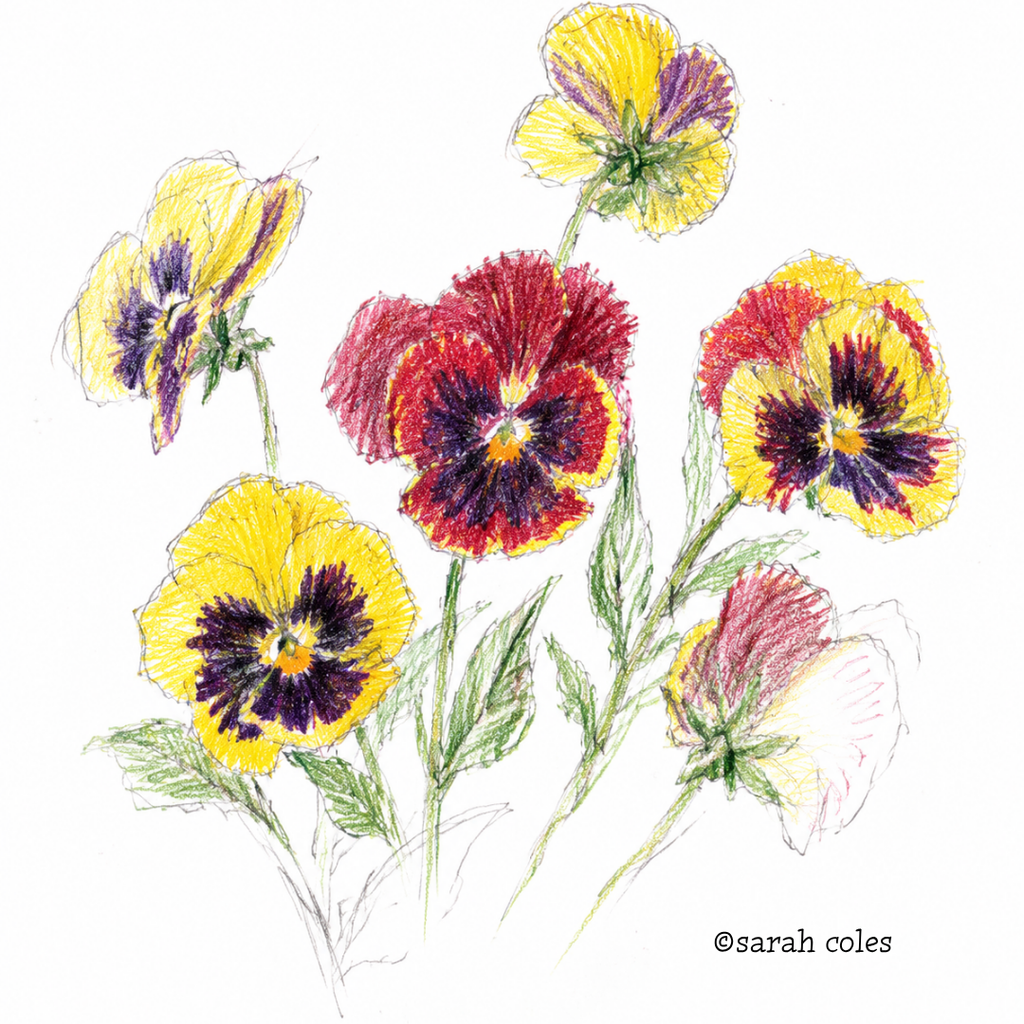
Then there is the shape of them. A pansy has a dainty little frame carrying an extraordinarily large head. It looks as though it has borrowed somebody else’s hat and is determined not to complain about it. On wet winter days, that oversized bloom can droop towards the soil with an expression of profound disappointment.
My father-in-law, however, was devoted to them. At the end of every summer, he would send me a batch for the garden. They were given generously and with such enthusiasm that refusal was impossible. I would plant them in the front border, where he could see them when he visited, and they would stare back at me with their many whiskered faces.
They were not me. They were not how I wanted the garden to be. But family diplomacy has been built on far less than a tray of bedding plants.
Now that he is no longer here, those annual deliveries have become part of the way I remember him. It is curious how a plant can gather meaning over time. A flower once planted reluctantly can come to represent a person, a season and a familiar ritual you did not realise you would miss.
Perhaps that is why I find myself softening. Or perhaps age simply makes us more forgiving of flowers and people alike. I now recognise what my father-in-law understood all along: winter is a long time to go without colour.
The modern garden can become rather solemn at this time of year. We admire seed heads, dark stems, bark and frost-silvered grasses—and rightly so—but sometimes a garden needs something that is simply pleased to be there. Winter pansies flower from autumn into spring, pausing during the harshest weather and lifting their heads again when conditions improve. They are tougher than their theatrical appearance suggests.
Early autumn is the ideal time to plant them. Putting established plants into borders and containers during September or October allows their roots to settle while there is still some warmth in the soil. Given good drainage and a reasonably sheltered position, they can provide colour through the darker months and gather pace again as spring approaches.
The secret, I think, is not to ask them to recreate the bedding displays of the past.
Rather than planting every colour in the packet, choose a restrained palette. Deep plum, soft cream, clear white or almost-black pansies can sit beautifully in a contemporary garden. A single colour repeated through a border feels thoughtful rather than busy. Smaller-flowered pansies and violas are particularly easy to place, their blooms resting more naturally among foliage.
Pansies also benefit from good company. Tuck them between ferns, grasses, heucheras or evergreen herbs, where their round flowers can punctuate softer shapes. In pots, combine them with small cyclamen, trailing ivy or emerging spring bulbs. The pansies provide colour now; later, tulips and narcissi rise through them and carry the display into spring.
They are especially useful around doorways, beside paths and in containers that can be seen from the kitchen window—the places where a little life matters most on a dark January morning. You do not need hundreds. A few well-placed plants can be more effective than a border filled edge to edge, and considerably less alarming.
Despite their willingness to flower in cold weather, pansies dislike sitting in waterlogged compost. Plant them in a free-draining position and remove faded flowers and yellowing leaves to keep the display going. Deadheading may feel like a fiddly task, but it is quite companionable work. Five quiet minutes spent pinching away old blooms is sometimes exactly the sort of gardening winter allows.
Their markings deserve a closer look, too. What once appeared loud to me now seems wonderfully intricate: fine lines run from the centre of each flower like ink applied with a delicate pen.
Even the winter garden is not entirely without visitors. On mild, bright days, a bumblebee may venture out in search of food. Pansies can make a small contribution, although nectar-rich winter flowers such as mahonia, winter heather, hellebores and winter honeysuckle provide a more dependable feast. A mixture of flowers is best, offering colour for us and something useful for wildlife too.
Perhaps that is how pansies belong in today’s gardens—not as massed bedding arranged by colour chart, but as small, resilient details woven into a broader planting. Used with a little restraint, they can soften containers, brighten bare patches and help bridge the awkward pause between autumn and spring.
I still cannot claim to love every pansy. Some colour combinations and I shall remain politely estranged. But I have come to admire their persistence. Beneath those extravagant faces are plants prepared to endure cold rain, short days and the occasional covering of snow, then flower again at the first opportunity.
When I see them in a front border now, I think of my father-in-law and those annual batches he sent at the end of summer, entirely certain that what my garden needed was more pansies.
It has taken me a while, but I think I finally understand what he saw in them.
Further Reading: My Garden Journal & Notes
