


There is something wonderfully satisfying about making your own compost. Kitchen peelings, fallen leaves, grass cuttings and garden clippings that might otherwise be thrown away can be transformed into something genuinely useful – a dark, crumbly material that helps improve the soil and gives plants the conditions they need to thrive.
A compost heap is also one of the simplest ways to make better use of the things your garden and household already produce. Rather than seeing leaves, vegetable peelings and plant material as waste, composting allows them to return to the soil as part of the natural cycle of growth and decay.
You don’t need a large garden or specialist equipment to get started. With the right balance of materials, a suitable position and a little patience, even a modest compost bin can produce valuable homemade compost.
Choose the Right Location for Your Compost Bin
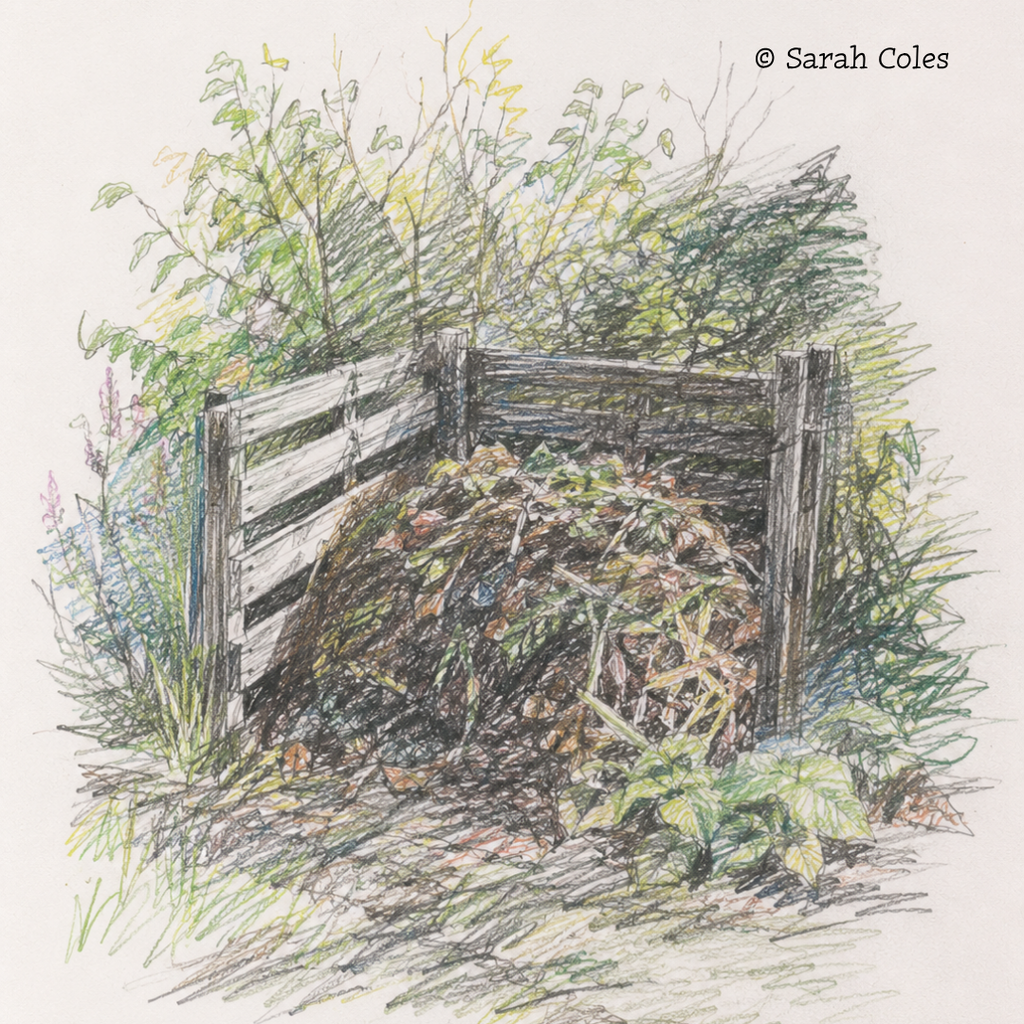
Where you put your compost bin can make a surprising difference to how well it works.
Choose a reasonably accessible spot so that adding vegetable peelings, grass cuttings and other materials doesn’t become a chore. A position on bare soil is particularly useful because it allows worms and other soil organisms to move into the compost, although compost bins can also be used successfully on hard surfaces when necessary.
A little sunlight is helpful, but your compost doesn’t need to sit in full sun all day. Partial shade is often a good compromise. Too much direct sunlight can cause the contents to dry out, while a very shaded, cold position may slow decomposition.
If possible, avoid placing your compost bin somewhere that becomes waterlogged. Compost needs moisture, but stagnant water and permanently soggy material can lead to anaerobic conditions, unpleasant smells and slow decomposition.
Think about convenience, too. A compost bin tucked away at the far end of the garden may look neat, but if it means carrying every handful of peelings halfway across the garden, you are less likely to use it regularly. Somewhere close to the kitchen or vegetable garden is often ideal.
Understanding the Balance Between Brown and Green Materials
Good compost depends on balance.
You will often hear composting materials described as ‘greens’ and ‘browns’. Greens are generally rich in nitrogen and include fresh, moist materials. Browns are generally rich in carbon and tend to be drier and more fibrous.
Green materials include:
Fruit and vegetable peelings
Grass cuttings
Young weeds before they have set seed
Fresh leaves and plant material
Tea leaves and tea bags, provided the bags are suitable for composting
Coffee grounds
Fresh garden prunings
Brown materials include:
Fallen leaves
Torn or shredded cardboard
Plain paper
Small woody stems
Straw
Sawdust from untreated timber
Dry plant material
You don’t need to measure everything precisely. Instead, aim for a mixture rather than allowing one type of material to dominate.
A compost heap made almost entirely from grass cuttings, for example, can become wet, compacted and unpleasantly smelly. Add plenty of dry, fibrous material such as shredded cardboard, fallen leaves or small twigs to create air spaces and improve the balance.
Likewise, a heap containing lots of dry leaves and woody material may take a very long time to break down unless some nitrogen-rich green material is added.
Don’t Forget Air
Compost needs oxygen as well as moisture and organic material.
When a compost heap becomes tightly compacted, air cannot circulate easily. The result can be slow decomposition and the familiar unpleasant smell associated with poorly managed compost.
This is one reason that a mixture of different materials is so useful. Chunky stems, torn cardboard and other fibrous ingredients help create small air pockets throughout the heap.
Turning the compost occasionally with a garden fork can also introduce oxygen and redistribute the material. You don’t need to turn it constantly. For a traditional compost heap, giving it a good turn every few weeks can help, particularly if decomposition seems to have slowed.
If you have a large or well-established heap, turning it can also bring the cooler material from the edges into the warmer centre, helping more of the contents to break down evenly.
Keep Your Compost Moist, But Not Wet
Moisture is essential because the organisms responsible for decomposition need water to thrive. However, compost should never be saturated.
A useful rule of thumb is that the contents should feel roughly like a well-squeezed sponge – damp but not dripping.
During a prolonged dry spell, your compost may need a little water. If it becomes excessively wet, add more dry, absorbent material such as shredded cardboard, dry leaves or straw and turn the heap to improve ventilation.
A lid can be useful for keeping excessive rain out while helping to retain moisture during dry weather. It can also discourage unwanted visitors.
What Can You Put in a Compost Bin?
A surprisingly large proportion of everyday garden and kitchen waste can be composted.
Fruit and vegetable peelings are excellent additions, as are grass cuttings, spent plants, autumn leaves and small amounts of untreated cardboard and paper.
Crushed eggshells can also be added. They break down slowly, so they won’t provide an instant source of nutrients, but they can become part of the mineral content of the finished compost.
Well-rotted herbivore manure, such as horse or cow manure, can also be a useful addition where it is available. Fresh manure can be very strong and is better composted or well rotted before being used around plants.
It is worth remembering that not everything labelled ‘natural’ belongs on a home compost heap. Avoid adding meat, fish, bones, dairy products and cooked food containing lots of oil or fat, particularly to an ordinary open garden compost bin. These materials can attract rats and other unwanted visitors.
Dog and cat waste should not be added to a normal home compost heap either, as it can contain pathogens that may survive the composting process.
Be cautious with weeds that have mature seed heads and plants that spread readily from small pieces of root or stem. A cool domestic compost heap may not reach temperatures high enough to destroy persistent weed seeds or plant material reliably.
Chop, Shred and Break Materials Down
If you want to speed up composting, one of the simplest things you can do is make the pieces smaller.
A whole cabbage stalk will eventually decompose, but chopped vegetable scraps have considerably more surface area for microorganisms to work on. Similarly, small garden prunings will break down more quickly than thick branches.
Shredding cardboard rather than adding large sheets helps it mix more easily with other materials and prevents it from forming soggy layers.
You don’t need to spend hours preparing every item. A rough chop here and there is enough to make a difference.
Do You Need Compost Accelerator?
Compost accelerator is not essential for a healthy compost heap.
A well-balanced mixture of green and brown materials, with sufficient moisture and oxygen, already contains the ingredients needed for decomposition. The microorganisms and other organisms that naturally colonise your compost will do much of the work.
If a heap is slow, look at its ingredients and conditions before reaching for an accelerator. Is it too dry? Too wet? Mostly grass cuttings? Packed tightly with leaves? Lacking nitrogen-rich green material?
Often, adjusting the balance is all that is needed.
Be Patient – Compost Takes Time
One of the hardest things about composting is accepting that nature works at its own pace.
Under favourable conditions, a well-managed compost heap can produce usable compost within several months. Other compost may take a year or longer to mature, particularly if the heap is small, cold or contains lots of woody material.
There is no need to worry if your compost doesn’t look like the rich, dark material you were hoping for straight away. Composting is a gradual process. First the fresh materials begin to break down, then the heap settles and changes in texture and colour as microorganisms, fungi and other decomposers do their work.
Eventually, the original ingredients become difficult to recognise.
How Do You Know When Compost Is Ready?
Finished compost should be dark brown and crumbly, with a pleasant earthy smell. Most of the original ingredients should have disappeared, although you may still find the occasional twig or piece of eggshell.
If the compost is still warm in the centre, contains recognisable food scraps or has a strong unpleasant smell, it needs more time.
Don’t be tempted to use unfinished compost as though it were mature. Return it to the heap, mix it with other material and give it longer to decompose.
You may find that your compost doesn’t all mature at once. This is perfectly normal. You can remove the finished material from the bottom of the heap while leaving newer material at the top to continue breaking down.
How to Use Homemade Compost in the Garden
Once your compost is ready, there are plenty of ways to put it to work.
Spread a layer over established borders in spring or autumn and allow rain and soil organisms to incorporate it gradually. It can also be used around plants as an organic mulch, helping to improve soil structure while contributing organic matter.
In a vegetable garden, homemade compost can be incorporated into the soil before planting. It is particularly useful where soil has become tired or lacks organic matter.
Compost can also be mixed into homemade potting mixtures, although it is best used as one component rather than as a complete substitute for a purpose-made growing medium. Garden compost can vary considerably in texture and nutrient content, and very young compost may be too strong for delicate seedlings.
Perhaps most importantly, compost improves the condition of the soil, rather than simply acting as a source of plant food. Adding organic matter can help sandy soils hold moisture and improve the structure of heavier soils, creating a better environment for roots and soil life.
Composting Is Good for the Garden and Good for the Environment
Making compost is a small habit with a surprisingly useful outcome.
Instead of sending suitable kitchen and garden waste away, you can return much of it to your own garden. The finished compost helps build healthy soil, supports plants and reduces the amount of organic material going into the household waste stream.
There is also something rather lovely about the cycle involved. The leaves that fall from your trees can eventually help feed next year’s plants. Vegetable peelings can become compost for the vegetable patch. Grass cuttings can return nutrients and organic matter to the soil.
Nothing has really been wasted. It has simply changed form.
A Compost Heap Is a Living Part of the Garden
A successful compost heap is more than a container full of discarded garden waste. It is a small, busy ecosystem.
Microorganisms begin breaking down the organic matter, fungi help decompose tougher materials and larger organisms such as worms and other invertebrates contribute to the process. Together, they turn a mixture of everyday organic materials into something that can improve the soil beneath our feet.
The secret isn’t complicated. Choose a suitable position, provide a good mixture of green and brown materials, keep the heap moist, allow air to circulate and give it time.
You don’t need perfect composting conditions from the very beginning. Start with what you have, learn how your compost behaves and make small adjustments as you go.
Before long, what once looked like a pile of peelings, leaves and garden clippings will become a dark, earthy material ready to return to the garden – completing a simple and rewarding cycle of growing, harvesting, eating and growing again.
Further Reading: My Garden Journal & Notes
