


There is something rather special about discovering a garden within the walls of an old estate, and Oxburgh Hall in Norfolk has plenty to tempt anyone who enjoys plants and garden design.
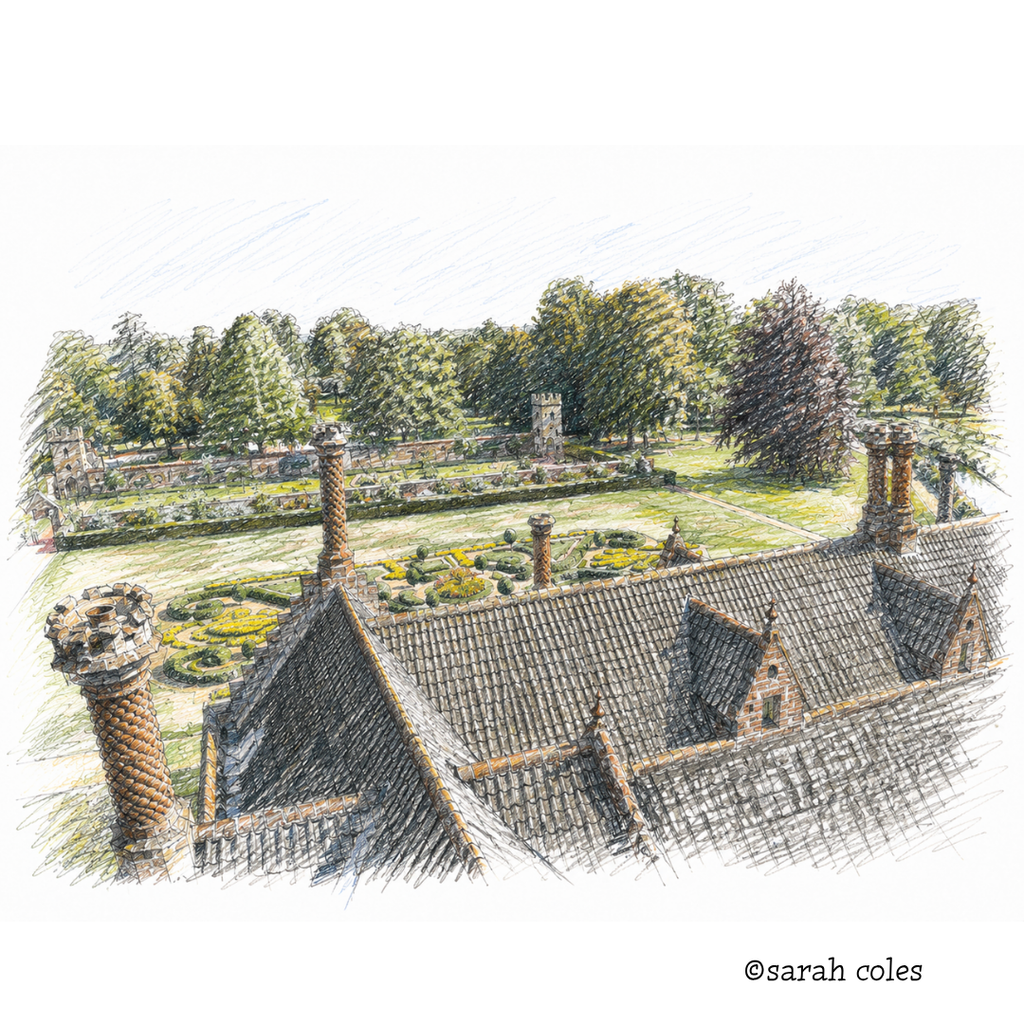
The magnificent moated Hall may be what first catches your eye, but for me, much of the pleasure is found beyond the house. There are formal gardens and productive spaces, clipped hedges and overflowing borders, old fruit trees and quiet paths that invite you to wander just a little further.
What I particularly enjoyed was the contrast.
One moment you’re looking across the wonderfully precise patterns of the French-inspired parterre; the next you’re peering into the greenhouse or walking beside a border where the planting feels altogether more relaxed.
For gardeners, there are ideas everywhere.
The Walled Garden
I’m always drawn to a walled garden.
Perhaps it’s the sense of stepping into a garden within a garden, or simply the promise that something interesting is growing on the other side of the gate.
At Oxburgh, the Walled Garden contains the Kitchen Garden and Orchard, continuing the area’s long association with productive gardening. Fruit, vegetables and salads are still grown here, including heritage varieties, and some of the produce makes its way to the estate’s tea-room.
It’s a lovely reminder that productive gardens don’t need to be purely practical.
Rows of vegetables, fruit trees, trained plants and flowers can create a garden every bit as attractive as an ornamental border – with the considerable advantage that you eventually get to eat some of it.
For anyone with a vegetable patch at home, this is the sort of place where you’ll probably find yourself slowing down to see what’s being grown.
The Greenhouse
Then, of course, there’s the greenhouse.
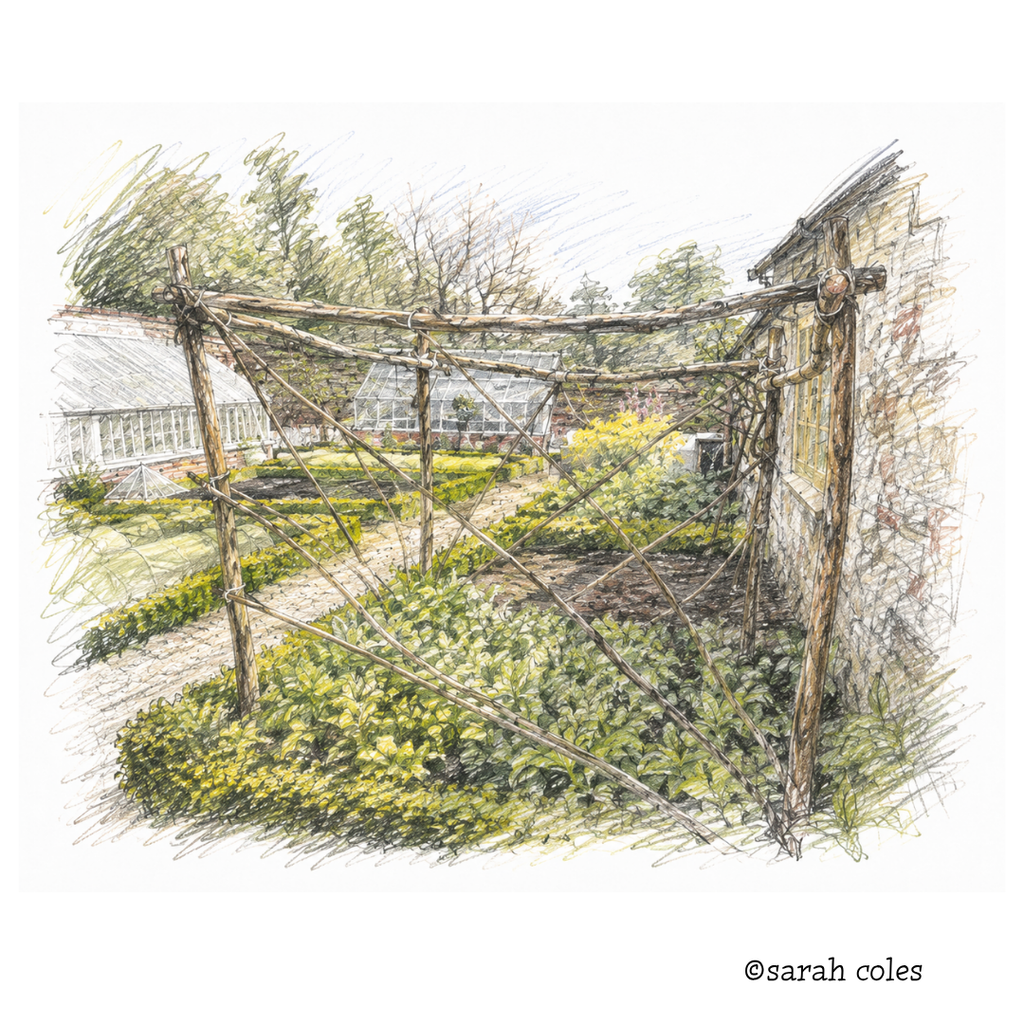
The present glasshouse was rebuilt by volunteers in 2010 to reflect an earlier Victorian glasshouse and is used by the garden team to nurture young plants before they’re planted outside. Rainwater from the roof is collected for watering, while an air-source heat pump provides heat.
I rather like the combination of old-fashioned appearance and modern practicality.
A greenhouse always feels like the working heart of a garden to me. It’s where the next season begins while the current one is still underway – seedlings coming on, tender plants being protected and pots waiting for their turn outside.
And you certainly don’t need an estate-sized greenhouse to borrow the idea. Even a small greenhouse or cold frame can completely change what you’re able to grow.
The French Garden and Parterre
The French Garden, or parterre, provides quite a change of mood.
Here everything becomes much more controlled.
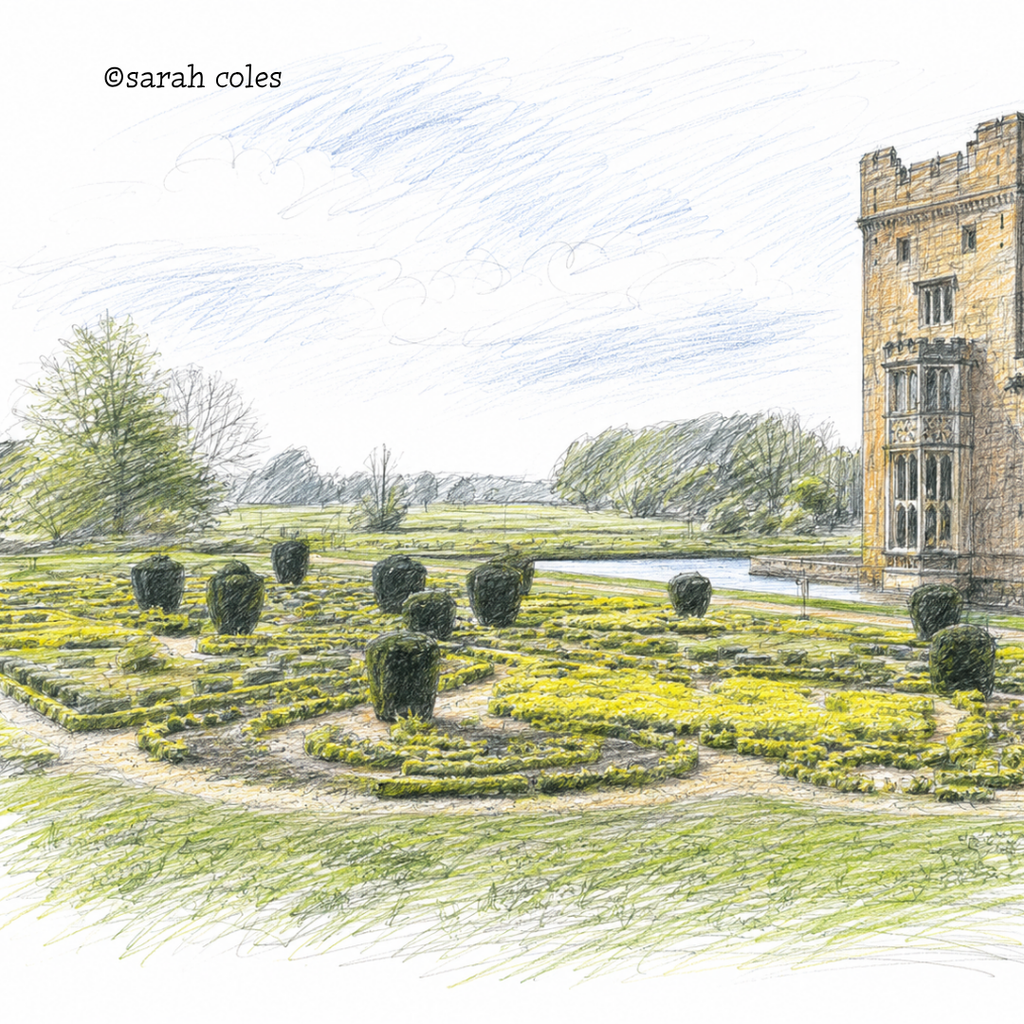
Low clipped hedges create elaborate patterns across the ground, enclosing areas of planting and dividing the garden with pale paths. Viewed from above, the whole design begins to resemble embroidery.
It’s an appropriate comparison. Margaret Paston-Bedingfeld described her planned parterre as a “pretty embroidered garden”, while National Trust records date the French Garden to the mid-19th century and connect its design with the work of French garden writer Antoine-Joseph Dezallier d’Argenville.
But you don’t need to know its history to appreciate the gardening lesson.
The structure does much of the work.
Strong shapes, repeated planting and clipped evergreens hold the garden together, while flowers provide the changing colour.
It’s something that can be borrowed on a much smaller scale at home. Repeating a plant several times through a border, adding a neatly clipped evergreen or simply giving a bed a stronger edge can make surprisingly informal planting feel much more considered.
A Parterre That Hasn’t Stood Still
Although it looks wonderfully established, Oxburgh’s parterre hasn’t remained unchanged.
During the Second World War, its ornamental planting gave way to something considerably more useful: potatoes were grown here as part of the war effort. The parterre was later returned to ornamental use and completely refurbished in 1972.
Today, restoration work continues as the garden team responds to disease, changing growing conditions and what research has revealed about the historic garden.
I find that rather reassuring.
Even gardens on this scale need replanting, rethinking and occasionally starting again.
Gardens are never really finished.
The Orchard
The Orchard offers another change of pace.
Here you’ll find fruit trees with connections to East Anglia, including heritage varieties from Norfolk. The orchard itself is being re-established, with apples and pears planted alongside established medlar and quince.
But don’t only look upwards at the fruit trees.
The grass beneath them is managed as a wildflower meadow and traditionally cut with scythes, creating a much softer landscape than closely mown grass would provide.
It’s a simple idea worth taking home.
If you have fruit trees, allowing some of the grass beneath them to grow longer can completely alter the feel of the area while providing flowers and shelter for insects and other wildlife.
An orchard doesn’t have to look immaculate to be beautiful.
In fact, sometimes it’s better when it doesn’t.
The Long Herbaceous Border
If formal parterres appeal to the orderly side of gardening, a generous herbaceous border satisfies the part of us that wants plants to spill into one another.
Oxburgh’s long border is planted with repeating patterns, helping to give such a large stretch of planting rhythm and continuity.
It’s another useful trick for our own gardens.
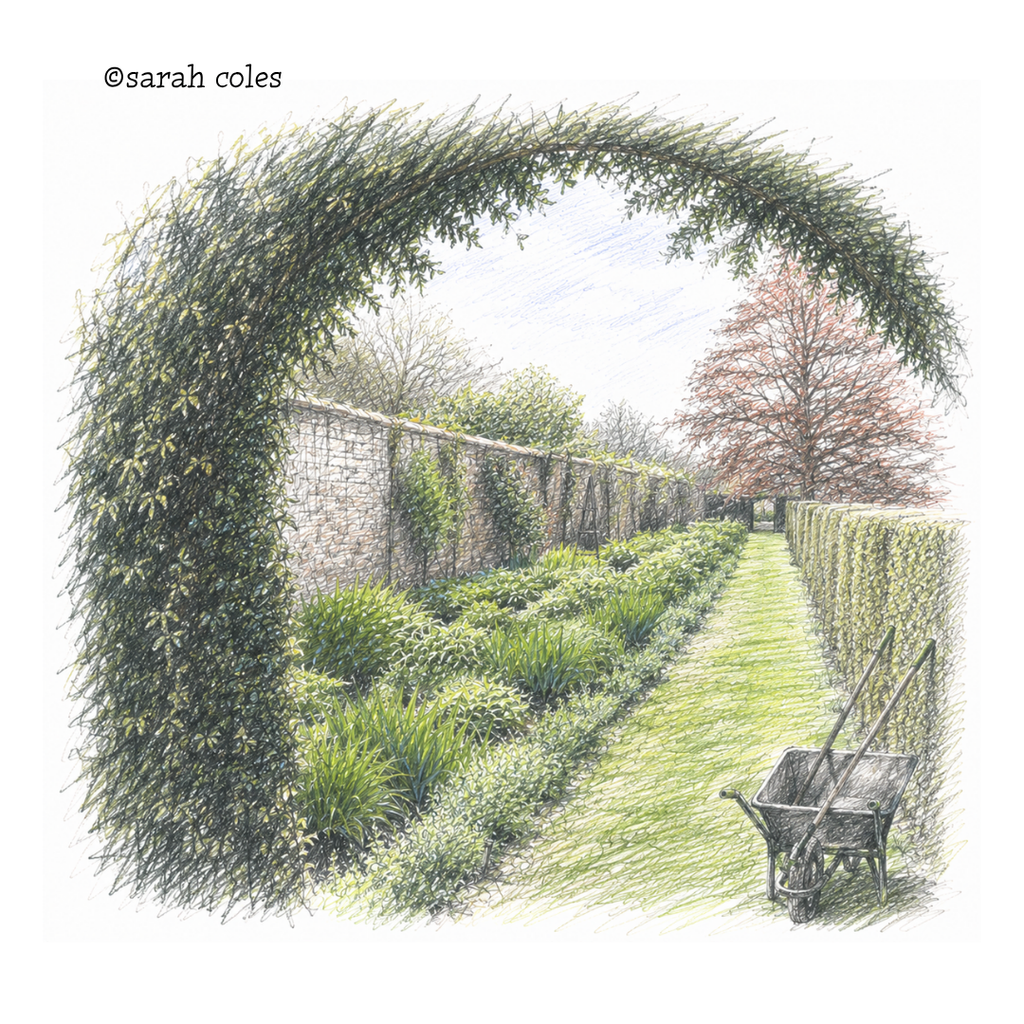
It’s tempting when visiting a nursery to buy one of everything that catches your eye. But repeating favourite plants through a border often creates a much stronger effect.
You still get all the colour and movement, but there’s a thread running through it.
Against the wall, the different heights, leaf shapes and flower colours really come into their own. Taller plants create the backdrop, while softer planting fills the middle and lower-growing plants blur the edges.
It’s the sort of border that makes you stop looking at individual flowers and start looking at how plants work together.
The Yew and Evergreen Structure
The clipped evergreen planting around Oxburgh provides an important counterpoint to all that seasonal growth.
Dark yew and other structural planting create walls, frames and passages through the garden. Walk beneath or alongside them and you get those wonderful moments when the view ahead is partly hidden.
Then suddenly the garden opens again.
It’s a clever piece of garden design because it makes you curious.
You want to know what’s beyond the hedge or at the end of the path.
Evergreens also give the garden something that flowers can’t: permanence.
Flowers come and go, herbaceous plants disappear underground and fruit trees change completely through the seasons. A good evergreen framework keeps the bones of the garden visible throughout the year.
Even one clipped yew, holly or other suitable evergreen can perform the same job in a smaller garden.
From Formal Garden to Wilderness
One of my favourite things about Oxburgh is that the formality doesn’t continue indefinitely.
Move away from the parterre and productive gardens and the landscape gradually becomes softer.
The area known as the Wilderness was deliberately created to contrast with the more formal gardens, using trees, evergreen planting and scented shrubs to create something that feels more natural.
Of course, gardeners know that making a garden look natural often involves quite a lot of work.
But the contrast is what makes it successful.
After clipped hedges and precise paths, looser planting feels even more relaxed. And when you look back towards the formal garden, its geometry seems stronger too.
That’s perhaps one of the easiest ideas to borrow from Oxburgh.
Don’t make every part of your garden behave in the same way.
Let one area be neat and another a little wild. Allow plants to tumble over an edge beside something carefully clipped. Put soft grasses beside a solid hedge.
Contrast is often what gives a garden character.
A Garden Full of Ideas
What I enjoyed most about Oxburgh Hall’s gardens wasn’t any single grand feature.
It was the changing character as I wandered through them.
The precision of the parterre. The practical pleasures of the Kitchen Garden. Young plants growing away in the greenhouse. Fruit trees rising from meadow grass. The exuberance of a long border and the dark green structure of clipped evergreens.
There is history here, of course, but it doesn’t overwhelm the garden.
Instead, you’re left looking at plants.
And, inevitably, thinking about your own garden.
Perhaps you’ll come home wanting to grow an old variety of vegetable. Maybe you’ll allow the grass beneath a fruit tree to grow longer, repeat a favourite perennial through a border or finally add that clipped evergreen you’ve been considering.
That’s the pleasure of visiting a really good garden.
You don’t need to recreate it.
You just need to come home with one good idea.
For practical information such as current opening times, access and what’s open in the garden, I’d direct readers to the National Trust’s official Oxburgh Estate page rather than putting changeable visitor information into the blog.
Further Reading: My Garden Journal & Notes
