


A little late-summer sunshine
Just when the garden begins to look a little tired, goldenrod arrives with armfuls of yellow. It is bright without being brash, wonderfully easy-going and usually busy with bees. On a warm afternoon, that alone is reason enough to stop and take notice.
Worth a closer look
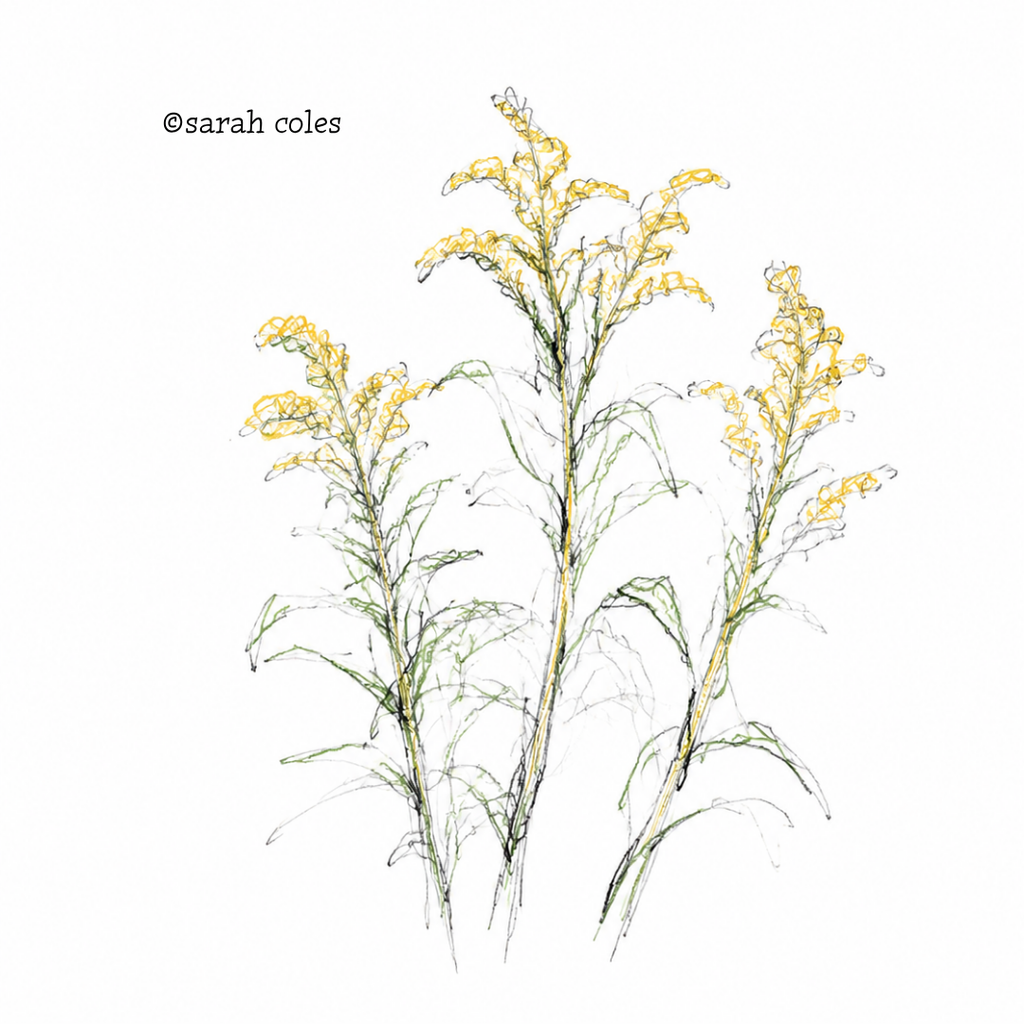
Goldenrod is the familiar name for Solidago, a group of perennial plants in the daisy family. Britain has its own native species, Solidago virgaurea, or European goldenrod. It is a fairly neat plant, often around 50cm tall, with upright stems, narrow toothed leaves and slender spikes of yellow flowers.
What looks like one soft plume is really made up of many tiny flower heads. Seen close to, they resemble miniature daisies packed together along the stem. They open from late summer into autumn, catching the lower light beautifully and carrying the border into its next season.
Why grow goldenrod?
First, there is the colour. Goldenrod brings warmth at a time when the garden can begin to fade. It looks especially lovely beside purple asters, blue salvias, smoky sedums and ornamental grasses. The yellow lifts all of them, while the grasses stop it feeling too stiff or formal.
Then there are the visitors. Bees, hoverflies, butterflies and other insects come to its many small, open flowers for pollen and nectar. The RHS includes European goldenrod on its Plants for Pollinators list, so it is a useful late source of food as well as a cheerful garden plant.
It is practical, too. Goldenrod is hardy, usually untroubled by pests and happy in an ordinary sunny border. Its stems are good for cutting, and a few sprays loosen up a vase of dahlias or late roses. Leave some flower heads standing and they will soften to warm brown, adding a little winter texture.
The right place – and the right goldenrod
Give it plenty of sun and soil that drains reasonably well. It does not need rich feeding; in fact, too much goodness can produce tall, floppy growth. Plant it among sturdy neighbours, divide the clump in spring if it becomes crowded, and cut back the old stems before fresh growth starts.
It is worth checking the label before buying. Some goldenrods spread more enthusiastically than others, particularly certain North American species. For a smaller garden, choose a named, clump-forming variety. Solidago rugosa ‘Fireworks’ is a lovely example: its fine yellow sprays arch outwards like sparks, and the RHS describes it as slowly clump-forming and non-invasive.
Notebook tip
If you do not want seedlings, snip off the faded flower stems before they set seed. If your plant is well behaved, leave a few standing for winter interest and cut them down in late winter.
Can goldenrod be eaten?
This is where the notebook needs a careful margin note. Some goldenrod species have a history of culinary use, and young leaves or flowers are sometimes made into tea. European goldenrod has also been used in traditional herbal preparations and tinctures.
That does not mean every goldenrod in every garden belongs in the teapot. Solidago is a large group, ornamental plants may be hybrids, and correct identification matters. If you are curious about trying it, use a properly identified plant and seek advice from a qualified herbal practitioner rather than experimenting with an unknown garden variety.
What about herbal remedies?
Goldenrod has a long reputation as a healing herb. The flowering parts of Solidago virgaurea have traditionally been used in preparations intended to increase urine flow in minor urinary complaints. The European Medicines Agency recognises this traditional use, but the word traditional is important: it is not the same as strong proof that homemade tea will treat an illness.
Tinctures are concentrated, so they deserve particular care. Goldenrod preparations are not suitable for everyone, especially where a doctor has advised limiting fluids or where heart, kidney or urinary problems are present. Fever, painful urination, spasms or blood in the urine need medical advice, not a garden remedy. Safety during pregnancy, breastfeeding and for younger people is not well established.
A useful plant beyond the border
Goldenrod is at its best in the garden and the vase, but its flowers have also been used to make natural dyes in shades of yellow and green. Results vary with the fabric and method, which is part of the pleasure for anyone who enjoys slow, slightly unpredictable crafts.
There are claims for homemade skincare and cleaning products, but these uses are not well established. People sensitive to the daisy family may also find that handling the plant irritates their skin. For most of us, its safest and most convincing household use is simply a few glowing stems in a jug on the kitchen table.
A final note
Goldenrod is sometimes blamed for hay fever because it flowers at the same time as ragweed. In fact, its pollen is heavy and sticky and is carried mainly by insects rather than the wind. Individual reactions are still possible, but goldenrod is not usually the great airborne culprit it is made out to be.
Choose a well-behaved variety and it is a generous plant: a splash of gold for the border, a late feast for pollinators and a gentle reminder that the garden still has plenty to offer as summer turns towards autumn.
Sources and further reading
Royal Horticultural Society: Solidago virgaurea – https://www.rhs.org.uk/plants/17496/solidago-virgaurea/details
Royal Horticultural Society: Solidago rugosa ‘Fireworks’ – https://www.rhs.org.uk/plants/101910/solidago-rugosa-fireworks/details
Royal Horticultural Society: Plants for Pollinators – https://www.rhs.org.uk/science/pdf/conservation-and-biodiversity/wildlife/rhs-perfect-for-pollinators-wildflowers
This article offers general gardening information, not medical advice. Correct plant identification and individual health circumstances matter.
Goldenrod: a little late-summer sunshine
Further Reading: My Garden Journal & Notes
