


With their rich red bracts and deep green foliage, poinsettias have become as much a part of Christmas as holly, ivy and the scent of fresh pine. Yet behind this familiar festive plant lies a remarkable story, one that begins in the warm landscapes of Mexico, long before the poinsettia found its way onto our windowsills.
There is something rather lovely about bringing a little living colour into the house during the darkest months of the year. When the garden has settled into its winter rest and daylight is in short supply, the poinsettia (Euphorbia pulcherrima) offers a welcome splash of colour.
Although we tend to think of poinsettias as Christmas plants, they are actually tropical shrubs, quite at home growing outdoors in the warmer regions of Mexico and Central America. In their natural surroundings, they can reach several metres in height, a rather surprising thought when looking at the neat, compact plants we bring home each December.
And while poinsettias have a reputation for being rather difficult to keep, understanding a little about where they come from makes caring for them much easier.
The Fascinating History of the Poinsettia
Long before the poinsettia became associated with Christmas, it was valued by the Aztecs of Mexico, who knew the plant as cuetlaxōchitl. Its colourful bracts were used to produce red dyes, while its milky sap had a place in traditional remedies.
The plant’s association with Christmas developed in Mexico during the colonial period, where its striking red and green colouring made it a natural part of festive celebrations. One traditional Mexican story tells of a child who, having no gift to offer at a Christmas service, gathered a handful of roadside plants. According to the legend, these humble offerings transformed into beautiful red poinsettias.
The poinsettia’s familiar English name came much later.
In the 1820s, Joel Roberts Poinsett, the first United States minister to Mexico, encountered the plant and helped introduce it to cultivation in the United States. Although he is often credited with discovering the poinsettia, it had, of course, been known and cultivated in Mexico for centuries.
Today, millions of poinsettias are grown for the Christmas market, and their colourful bracts have become one of the most recognisable signs of the festive season.
Why Are Poinsettias Red?
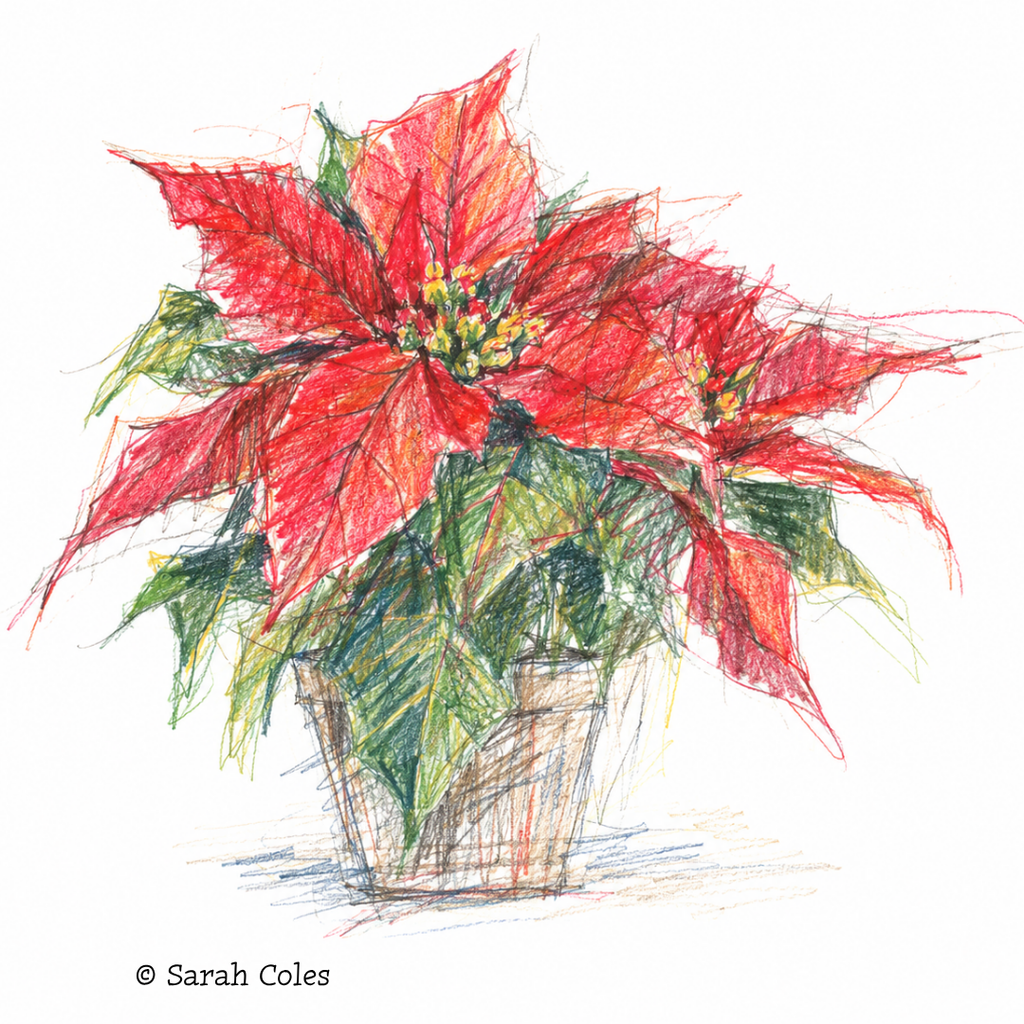
One of the most interesting things about a poinsettia is that the bright red parts we admire aren’t actually flowers.
They are bracts, specialised leaves that develop their colour as the plant responds to the shortening days of autumn.
The true flowers are the tiny yellowish structures clustered at the centre of the colourful bracts. Look closely and you’ll discover that they are quite intricate, although easily overlooked amongst the surrounding red foliage.
Red remains the traditional Christmas favourite, but poinsettias are also available in shades of cream, white, soft pink, salmon and beautifully marbled combinations.
The change in colour is triggered by the longer periods of uninterrupted darkness that come with autumn. This natural response, known as photoperiodism, explains why poinsettias develop their colourful display as winter approaches.
How to Care for a Poinsettia Indoors
A healthy poinsettia can remain colourful for many weeks, sometimes well beyond Christmas. The secret is to remember that, despite its winter associations, this is a plant that originates from a warm climate.
Find a Bright, Warm Position
Poinsettias appreciate plenty of natural light, particularly during the shorter days of a British winter.
A bright windowsill or a position close to a window is usually ideal. Gentle winter sunshine is generally welcome, although harsh, direct sunlight through glass can sometimes scorch the foliage.
Temperature is equally important.
Aim to keep your poinsettia somewhere between 16°C and 22°C, away from cold draughts, open doorways and the drying heat of radiators.
One of the most common reasons poinsettias lose their leaves is sudden exposure to cold. Even the short journey from a garden centre to a chilly car can cause problems, so make sure your plant is properly wrapped when bringing it home.
Water Carefully, but Don’t Overdo It
Watering is probably the part of poinsettia care that causes the most confusion.
These plants dislike sitting in wet compost, but they don’t appreciate being allowed to dry out completely either.
The simplest approach is to check the compost regularly with your finger. When the upper couple of centimetres feel dry, give the plant a thorough watering using room-temperature water, then allow any excess to drain away.
Never leave the pot standing in water for long periods.
Many poinsettias are sold in decorative foil wrapping or attractive outer pots without drainage holes. These look lovely, but water can collect unnoticed around the roots. Remove the plant from its decorative covering when watering, allow it to drain, and then return it to its display.
Yellowing leaves, wilting and leaf drop can all be signs of watering problems, although cold temperatures and draughts can produce similar symptoms.
The important thing is to check the compost rather than watering automatically on a particular day.
Should You Feed Your Poinsettia?
During the Christmas period, your poinsettia is already displaying the results of months of careful commercial growing. It doesn’t usually need additional fertiliser while its bracts are at their most colourful.
If you decide to keep the plant beyond Christmas, feeding becomes more useful when fresh growth begins in spring.
A balanced liquid houseplant fertiliser, diluted according to the manufacturer’s instructions, can be applied during the active growing season.
Avoid overfeeding, particularly during winter when growth is naturally slower.
Can You Keep a Poinsettia After Christmas?
Absolutely, and there is something rather satisfying about keeping a Christmas plant alive long after the decorations have been packed away.
Poinsettias are perennial plants, which means they can live for several years with the right care.
As winter turns towards spring, the colourful bracts will gradually fade and fall. This is a natural part of the plant’s growing cycle, rather than necessarily a sign that something has gone wrong.
Once the colourful display has finished and the plant begins producing new growth, you can start preparing it for another year.
Pruning Your Poinsettia in Spring
Spring is a good time to prune an established poinsettia, particularly if it has become tall or rather straggly.
Cutting back the stems encourages fresh shoots to develop and helps maintain a bushier shape.
For a typical indoor plant, stems can often be shortened to around 10–15cm above the compost, provided the plant is healthy and established.
Wear gloves when pruning, as poinsettias produce a milky latex sap that can irritate the skin and eyes.
If the roots have filled the pot, spring is also a suitable time to repot into a slightly larger container using a free-draining houseplant compost.
As new leaves appear, resume regular watering and occasional feeding.
Can Poinsettias Grow Outside in the UK?
Although poinsettias grow as substantial shrubs in their native climate, they are not hardy enough to survive an ordinary British winter outdoors.
However, they can enjoy spending the warmer summer months outside.
Once the risk of frost has passed and night-time temperatures are reliably mild, a poinsettia can be moved into a sheltered position in the garden.
Choose somewhere bright but protected from strong winds and intense afternoon sunshine. Introduce the plant gradually to outdoor conditions over a week or two, rather than moving it straight from the house into full sunlight.
A sheltered patio or courtyard can be ideal.
Bring the plant back indoors before autumn temperatures begin to fall, preferably while nights are still comfortably above 12°C.
For most UK gardeners, poinsettias are best regarded as houseplants that can enjoy a summer holiday outdoors rather than permanent garden plants.
How to Make a Poinsettia Turn Red Again for Christmas
One of the more interesting challenges for anyone who enjoys growing houseplants is encouraging a poinsettia to develop its colourful bracts for a second Christmas.
It is possible, although it does require patience and a little planning.
Poinsettias are short-day plants, meaning they need long, uninterrupted periods of darkness to initiate their colourful display.
From around late September or early October, provide approximately 14 hours of complete darkness each night for eight to ten weeks.
This can be achieved by placing the plant in a completely dark cupboard or covering it with a lightproof box each evening, then returning it to a bright position during the day.
Even artificial light from a nearby lamp can interrupt the process, so consistency is important.
Continue watering carefully and maintain a comfortably warm temperature throughout.
With a little luck, the upper leaves will gradually begin to change colour as Christmas approaches.
It may not produce quite the perfectly shaped display of a commercially grown plant, but there is considerable pleasure in seeing those first hints of red appear on something you’ve cared for throughout the year.
Are Poinsettias Poisonous to Pets?
Poinsettias are members of the spurge family, Euphorbiaceae, and contain a milky latex sap.
Despite their sometimes alarming reputation, poinsettias are generally considered to have relatively low toxicity. However, chewing the leaves or stems can cause irritation, drooling, vomiting or an upset stomach in cats and dogs.
The sap may also irritate sensitive skin.
It’s sensible to keep poinsettias out of reach of curious pets and young children, and to seek veterinary advice if an animal develops symptoms after eating the plant.
Choosing a Healthy Poinsettia
A little care when buying your poinsettia can make a real difference to how long it looks its best.
Look for a plant with strong stems, healthy green foliage and evenly coloured bracts. Avoid plants with yellowing leaves, drooping stems or compost that feels excessively wet.
Take a closer look at the tiny flowers in the centre of the bracts. Plants with tight, fresh-looking flower structures will often have more of their display still to come than those whose flowers are already shedding.
And perhaps most importantly, avoid plants that have been displayed outside in cold weather or close to draughty shop entrances.
A poinsettia may look perfectly healthy when purchased but begin dropping its leaves a few days later if it has been exposed to low temperatures.
A Little Colour for the Darkest Days
There is a particular charm to the poinsettia. While the garden outside rests beneath grey skies and winter rain, this remarkable plant brings a little warmth and colour into our homes.
Its story stretches from the ancient cultures of Mexico to the Christmas traditions we recognise today, while its seasonal transformation is a lovely reminder of how closely plants respond to the changing rhythms of daylight.
And perhaps that is what makes growing a poinsettia so rewarding.
It isn’t simply about keeping a Christmas decoration looking lovely for a few weeks. With a little understanding and care, it becomes another plant to nurture through the seasons, watching it grow, rest and, hopefully, colour up again when winter returns.
After all, some of the greatest pleasures of gardening come from learning to work with nature, rather than expecting everything to happen at once.
Further Reading: Putting the garden to bed for winter
For Inspiration Follow Me on Instagram, Facebook, Bluesky and Threads
