


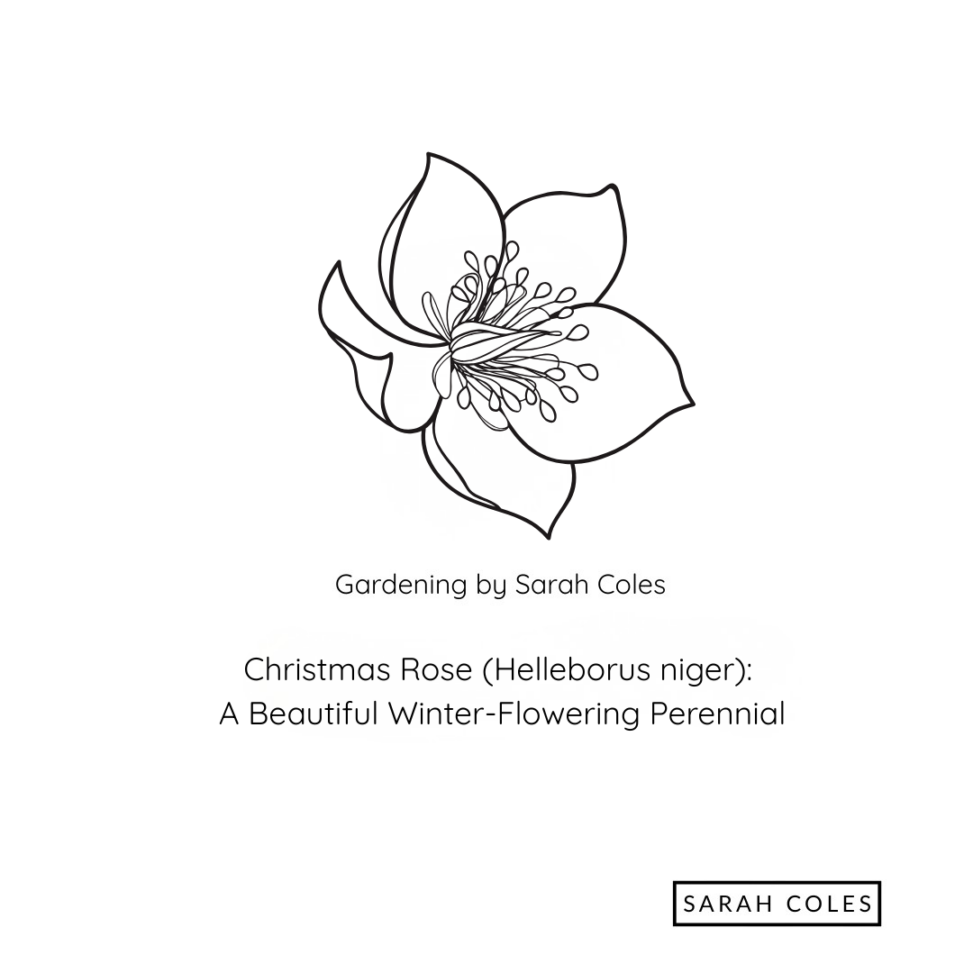
There is something rather wonderful about discovering a flower in the garden when almost everything else has settled into its winter rest. The borders have quietened, the trees stand bare against the sky, and the days are often too cold and damp to encourage much gardening. Yet, tucked beneath the shelter of a shrub or amongst the fallen leaves, a cluster of white flowers may be quietly opening.
This is the Christmas Rose, Helleborus niger, one of the loveliest winter-flowering perennials we can grow in British gardens.
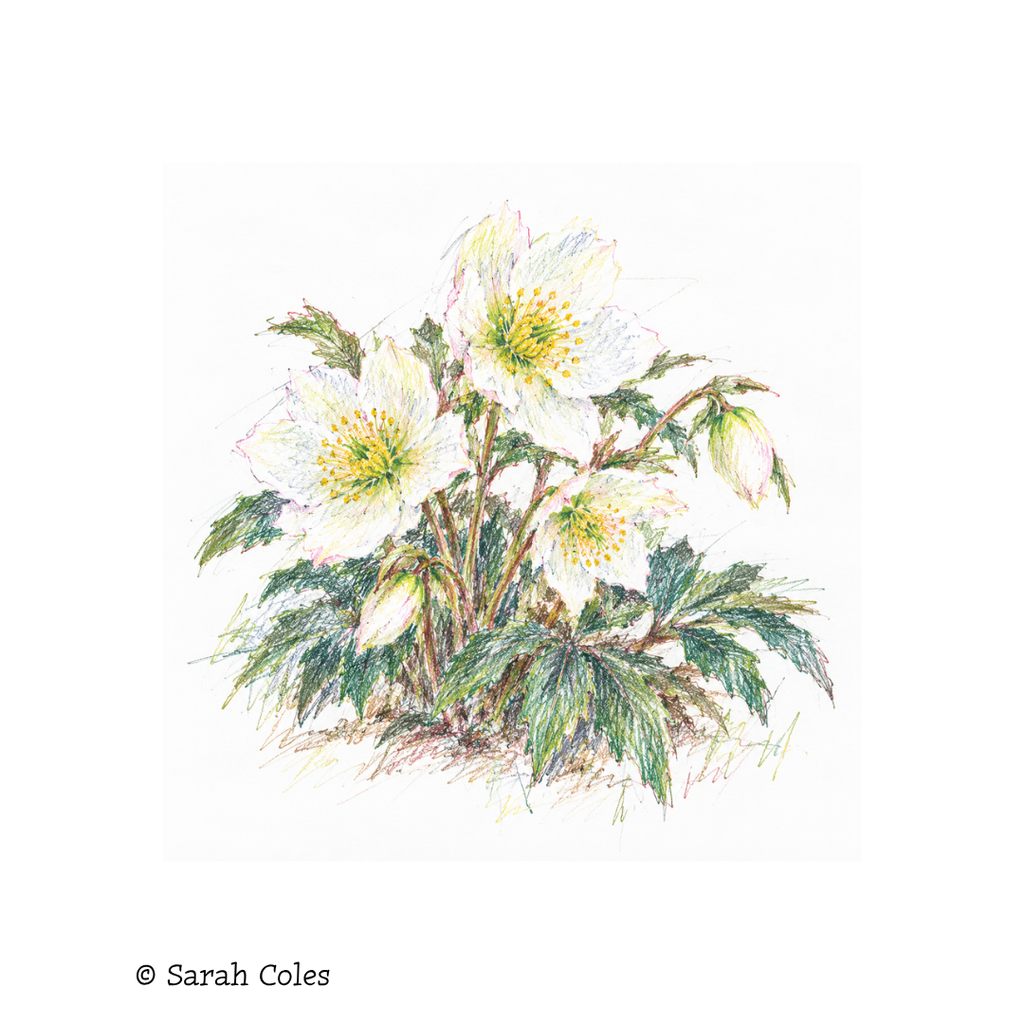
Its flowers seem almost too delicate for the season. Creamy white petals surround a centre of golden stamens, held above handsome, dark evergreen foliage. And yet, despite their appearance, these are remarkably resilient plants, capable of flowering through some of the coldest weeks of the year.
There is no great showiness about the Christmas Rose. Its beauty is quieter than that of a summer border, but perhaps that is what makes it so special. When flowers are scarce, even a handful of blooms can transform a little corner of the garden.
For anyone looking to bring more colour, interest and life into their garden during winter, Helleborus niger is certainly a plant worth getting to know.
The Christmas Rose: A Flower with an Interesting History
Despite its common name, the Christmas Rose is not a rose at all. It belongs to the buttercup family, Ranunculaceae, alongside plants such as clematis, anemones and delphiniums.
Its botanical name, Helleborus niger, offers a rather curious contrast. While the flowers are usually white, the word niger means black, referring to the plant’s dark roots.
The Christmas Rose is native to mountainous parts of central and southern Europe, particularly the Alps and surrounding regions. Here, it grows in woodland and scrub, often in soils rich in limestone, where it experiences cold winters and the changing light beneath deciduous trees.
This natural habitat tells us much about how to grow it successfully in our own gardens.
Although the plant is hardy, it is not simply a case of planting it anywhere and expecting it to flourish. It appreciates good drainage, suitable soil and a position sheltered from the worst of the summer sunshine.
Its association with Christmas has developed over centuries, although the name can be a little misleading in British gardens.
While some Christmas Roses flower in December, many do not reach their best until January, February or even early March. Flowering depends on the weather, growing conditions and the particular plant.
And perhaps that is part of their charm. Rather than flowering to a calendar, they appear when conditions suit them, bringing a welcome surprise to the garden.
What Makes Helleborus niger So Special?
The Christmas Rose is a relatively low-growing evergreen perennial, usually reaching around 20–30 cm in height, although its spread can be greater once established.
Its dark green leaves are leathery and divided into several broad leaflets, forming attractive clumps that remain in the garden throughout the year.
But it is the flowers that make this plant so memorable.
Unlike the nodding blooms of many other hellebores, the flowers of Helleborus niger tend to face outwards or upwards, allowing us to appreciate their delicate details without having to lift them.
The flowers are generally around 5–8 cm across, although some cultivated forms may be larger. Their broad, white, petal-like sepals surround a generous cluster of golden-yellow stamens.
Interestingly, those white structures are not true petals at all.
They are sepals, which remain attractive long after the flower has been pollinated. Rather than dropping away quickly, they gradually change colour, often developing soft shades of pink or green as the seedheads mature.
This means a single flower can provide interest for far longer than we might expect.
Against the darker colours of a winter garden, these pale blooms seem to catch every little bit of available light.
On a bright, frosty morning, they can be particularly beautiful.
How to Grow Christmas Roses in a UK Garden
One of the pleasures of growing Christmas Roses is that, once established in suitable conditions, they can remain in the same place for many years.
They are not particularly demanding plants, but getting their position right from the beginning makes a considerable difference.
Choosing the Best Position
Helleborus niger generally grows best in partial shade, particularly somewhere that receives gentle winter and spring sunshine but is protected from strong afternoon sun during summer.
A position beneath a deciduous shrub or small tree can work beautifully.
During winter, when the branches are bare, light reaches the plants below. As the leaves return in spring and summer, they provide welcome shelter from the strongest sunshine.
However, it is important not to confuse partial shade with deep shade.
Christmas Roses need sufficient light to flower well, and plants growing in very dark positions may produce healthy foliage but disappointingly few blooms.
In cooler parts of the UK, they can tolerate a sunnier position if the soil remains sufficiently moist.
The ideal spot is somewhere sheltered, lightly shaded and not prone to becoming waterlogged.
Getting the Soil Right
Christmas Roses appreciate fertile, humus-rich soil that retains some moisture while allowing excess water to drain away.
They generally prefer neutral to alkaline soil, particularly conditions with some lime content.
If you garden on naturally alkaline soil, you may already have suitable conditions.
Before planting, incorporate well-rotted garden compost or leaf mould to improve the soil’s structure. This is particularly helpful on sandy soils that dry quickly and heavy soils that become compacted.
Good drainage is essential, especially during winter.
Although Christmas Roses tolerate cold weather, their roots can suffer in soil that remains saturated for long periods.
If your garden has very heavy clay, consider improving the planting area with organic matter or growing your Christmas Rose in a raised bed where drainage is better.
On acidic soil, it is worth checking the pH before making changes. Garden lime can raise soil pH where appropriate, but it should be used according to the results of a soil test rather than added routinely.
Planting Your Christmas Rose
Autumn and spring are generally good times to plant Christmas Roses, provided the ground is neither frozen nor waterlogged.
Dig a hole slightly wider than the rootball and plant at approximately the same depth as the plant was growing in its nursery pot.
Avoid burying the crown beneath a deep layer of soil, as this can encourage problems with rotting.
Firm the soil gently around the roots and water thoroughly.
A light mulch of garden compost or leaf mould will help retain moisture and improve the soil, but keep it clear of the crown.
One thing worth remembering is that established hellebores generally dislike unnecessary disturbance.
Choose their position carefully, allow them time to settle, and resist the temptation to move them every time you rearrange a border.
They often become more rewarding with age.
Caring for Christmas Roses Throughout the Year
Once established, Helleborus niger requires relatively little attention.
The most important thing is to provide reasonably consistent growing conditions rather than fussing over the plant.
Watering
Newly planted Christmas Roses should be watered regularly during dry weather until their roots have established.
Mature plants are more resilient, but prolonged summer drought can still cause stress, particularly in lighter soils or beneath trees where roots compete for moisture.
Water during extended dry spells, allowing the soil to remain lightly moist without becoming saturated.
Feeding and Mulching
An annual mulch of well-rotted compost or leaf mould in spring can help maintain healthy soil and support steady growth.
On reasonably fertile garden soil, Christmas Roses rarely need heavy feeding.
If growth appears weak, a modest application of a balanced fertiliser in spring may help, but avoid excessive feeding, which can encourage foliage at the expense of flowers.
Removing Old Leaves
As winter approaches, inspect the foliage for leaves that have become damaged, diseased or badly marked.
These can be removed carefully with clean secateurs, allowing more light and air to reach the developing flowers.
Unlike some deciduous hellebores, Helleborus niger is evergreen, so there is no need to remove all its healthy leaves as a matter of routine.
Its foliage is part of the plant’s year-round appeal.
Pests and Diseases
Christmas Roses are generally robust, although they can occasionally suffer from aphids, slugs, snails and fungal leaf diseases.
Hellebore leaf spot may cause dark markings on the foliage. Removing affected leaves and avoiding overcrowded conditions can help limit its spread.
Like other hellebores, Christmas Roses can also be affected by hellebore black death, a serious disease associated with a virus. Plants showing characteristic black streaking and severe distortion should be removed rather than propagated.
Healthy plants growing in suitable conditions are generally less troublesome than those struggling in poorly drained or unsuitable soil.
Growing Christmas Roses in Pots
Not everyone has a woodland border or a sheltered garden bed, but Christmas Roses can also make lovely container plants.
In fact, a pot placed near the back door or on a sheltered patio can be one of the nicest ways to appreciate their winter flowers.
Choose a reasonably deep container with plenty of drainage holes and fill it with a good-quality, peat-free compost suited to the plant’s needs. A loam-based compost can provide useful stability and moisture retention, with added drainage material where necessary.
Position the pot somewhere bright but sheltered from strong summer sunshine.
Container-grown plants need more attention to watering than those growing in the ground, particularly during summer when compost can dry out quickly.
During prolonged freezing weather, protect the pot from becoming completely frozen for extended periods, especially if it is small or exposed.
A larger container provides more insulation for the roots.
Christmas Roses can also be brought close to the house while flowering, where their blooms can be enjoyed every day.
However, they are outdoor perennials rather than permanent houseplants. Warm, centrally heated rooms are not ideal for their long-term health.
Beautiful Companion Plants for Christmas Roses
One of the most satisfying things about winter gardening is discovering how a few carefully chosen plants can complement one another.
Rather than relying on great sweeps of colour, winter borders often work best through subtle contrasts of shape, texture and flowering time.
Christmas Roses are particularly lovely when planted amongst other plants that enjoy similar conditions.
Snowdrops
Few combinations are more charming than Christmas Roses and snowdrops.
The small, nodding white flowers of Galanthus emerge around the same time as the hellebores, creating a gentle carpet of white beneath shrubs and trees.
Snowdrops are especially effective when allowed to naturalise in small groups, gradually spreading through a border.
Cyclamen coum
For a little more colour, Cyclamen coum is a wonderful companion.
Its delicate pink, magenta or white flowers appear in winter and early spring, often above beautifully patterned leaves.
The contrast between the small, swept-back cyclamen flowers and the larger, open blooms of the Christmas Rose is particularly attractive.
Both appreciate humus-rich soil and a position that offers some shade.
Evergreen Ferns
Ferns bring a different kind of beauty to winter planting.
The Hart’s-tongue fern, Asplenium scolopendrium, has glossy, strap-shaped evergreen fronds that provide a lovely contrast to the rounded flowers and divided foliage of hellebores.
Together, they create a planting combination that remains attractive even when neither plant is flowering.
Winter-Flowering Shrubs
Christmas Roses also work beautifully beneath larger winter-flowering shrubs.
Try planting them near Sarcococca confusa, commonly known as sweet box, whose small winter flowers release a remarkable fragrance.
Or combine them with Viburnum × bodnantense ‘Dawn’, where the pale pink flowers on bare branches provide height above the lower-growing hellebores.
These combinations bring together flowers, fragrance and evergreen structure, making even a small winter border feel full of interest.
The Christmas Rose and Its Place in Folklore
The Christmas Rose has been associated with stories, symbolism and traditional beliefs for centuries.
Its ability to flower during the darkest part of the year has naturally encouraged associations with hope, renewal and the return of light.
Perhaps the best-known story is the legend of the shepherdess Madelon.
According to one version of the tale, Madelon was tending her flock when she heard of the birth of Jesus. Seeing others carrying gifts, she became upset because she had nothing to offer.
The winter ground was frozen, and there were no flowers to gather.
An angel, noticing her tears, brushed away the snow to reveal a cluster of beautiful white flowers.
Madelon gathered them and carried them as her gift.
The flowers became known as Christmas Roses.
It is a charming piece of folklore rather than a historical account, but it helps explain why this particular plant became so closely associated with Christmas.
Hellebores also appear in older European traditions involving protection, healing and superstition.
In some accounts, they were believed to ward off harmful influences, while their roots were used in traditional medicine.
These historical practices should remain firmly in the past, however, because hellebores contain toxic compounds and are not safe for home medicinal use.
Today, their greatest value is in the garden, where they continue to bring beauty to a season that can sometimes feel rather colourless.
Are Christmas Roses Good for Wildlife?
Winter flowers can be especially valuable in gardens because relatively few plants are in bloom during the colder months.
On mild days, some bees and other insects become active and begin searching for food.
The open flowers of Helleborus niger can provide accessible pollen and nectar when other sources are limited.
The golden stamens are particularly noticeable against the white sepals, making the flowers attractive to visiting insects.
Of course, the Christmas Rose is not a complete solution to supporting winter wildlife.
A wildlife-friendly garden benefits from a variety of plants that flower at different times, alongside evergreen shelter, native shrubs, trees and undisturbed areas where insects can overwinter.
But a few winter-flowering hellebores can make a worthwhile contribution, particularly when combined with snowdrops, winter honeysuckle and other early sources of nectar and pollen.
It is another good reason to include them in a garden designed to offer something in every season.
Are Christmas Roses Poisonous?
As beautiful as they are, Christmas Roses need to be treated with care.
All parts of Helleborus niger are poisonous if eaten, and the sap can irritate the skin.
Wear gardening gloves when handling, dividing or cutting back the plants, and wash your hands afterwards.
If you have young children or pets that are likely to chew plants, consider carefully where you position them.
The plant’s historical use in herbal remedies does not make it safe for medicinal purposes.
It is best appreciated as an ornamental garden plant.
Why Isn’t My Christmas Rose Flowering?
It can be disappointing to plant a Christmas Rose in anticipation of winter flowers, only to find that it produces plenty of leaves but very few blooms.
There are several possible explanations.
A plant growing in deep shade may not receive enough light to flower well, while one exposed to strong summer sunshine may struggle during dry weather.
Poor drainage, excessive feeding and disturbance to the roots can also affect performance.
Newly planted hellebores sometimes need time to establish before flowering reliably.
It is also worth remembering that Helleborus niger does not always flower at Christmas.
In many British gardens, January and February are perfectly normal flowering months.
If your plant looks healthy but has yet to bloom in December, there may be nothing wrong with it at all.
Sometimes the best thing a gardener can offer is a little patience.
A Little Winter Beauty Worth Making Room For
There is a particular pleasure in growing plants that ask us to appreciate the quieter months of the year.
The Christmas Rose is one of them.
It doesn’t need a great expanse of garden or an elaborate planting scheme to make an impression. A small clump beneath a deciduous shrub, a few plants beside a sheltered path or a container near the back door can be enough.
And when the flowers begin to open, they bring something that is surprisingly easy to miss during the abundance of summer: the pleasure of noticing a single bloom.
Perhaps that is the real beauty of winter gardening.
It encourages us to look more closely, to appreciate the smallest changes and to recognise that even when the garden appears to be resting, there is still life unfolding.
A Christmas Rose flowering on a cold January morning is a lovely reminder that a garden never truly stands still.
And that there is something worth stepping outside for in every season.
Further Reading: Putting the garden to bed for winter, Poinsettia Care: How to Keep Your Christmas Poinsettia Looking Beautiful
For Inspiration Follow Me on Instagram, Facebook, Bluesky and Threads
