


An allotment can offer much more than rows of vegetables and flowers. By encouraging biodiversity, you can turn your plot into a thriving sanctuary for wildlife, pollinators and beneficial organisms. In return, these visitors can improve pollination, support healthier soil and help control pests naturally.
Creating a wildlife-friendly allotment does not require a complete redesign. In fact, a few thoughtful changes can make a noticeable difference. Whether you add a small pond, grow nectar-rich flowers or leave a quiet corner undisturbed, every action helps create a more balanced and productive garden.
What Is Biodiversity and Why Does It Matter?
Biodiversity is the variety of life within a habitat or ecosystem. On an allotment, this includes plants, insects, birds, mammals, amphibians, fungi and the countless microorganisms living in the soil.
Each species has a role to play. For example, bees and hoverflies pollinate crops, while ladybirds and lacewing larvae feed on aphids. Earthworms improve soil structure, and fungi help break down organic matter. Therefore, the greater the variety of life on your plot, the more connections your garden ecosystem can develop.
A biodiverse allotment is often more resilient because it does not depend on one species or one method of pest control. If a pest appears, natural predators may already be nearby. Likewise, a varied planting scheme is less likely to be affected by a single disease.
The Benefits of a Biodiverse Allotment
Encouraging biodiversity can make gardening easier, more sustainable and more enjoyable. The main benefits include:
- improved pollination and potentially better harvests;
- natural control of aphids, slugs and other pests;
- healthier soil with better structure and nutrient cycling;
- less reliance on chemical pesticides and synthetic fertilisers;
- greater resilience to disease and changing weather; and
- a more attractive plot filled with colour, movement and birdsong.
Moreover, a lively allotment can support your wellbeing. Watching bees move between flowers or hearing birds while you garden adds another dimension to the experience.
1. Grow a Wider Variety of Plants
Plant diversity is the starting point for biodiversity on your allotment. Instead of growing only a few crops, combine vegetables, fruit, herbs, flowers, shrubs and, where space permits, a small tree.
Different plants provide different sources of nectar, pollen, seeds and shelter. For instance, flowering herbs attract pollinators, while berry-producing shrubs provide food for birds. A varied planting scheme also creates more opportunities for beneficial insects to establish themselves.
Whenever possible, include native plants suited to your local conditions. Because native species have evolved alongside local wildlife, they often support more insects than many ornamental alternatives. However, a mixture of suitable native and non-native plants can still provide valuable food across the seasons.
2. Create Layers of Planting
Natural habitats rarely exist at just one height. Therefore, consider arranging your allotment in layers:
- a canopy layer of small trees or tall shrubs;
- an understorey of compact shrubs and tall perennials;
- a herbaceous layer of vegetables, herbs and flowers; and
- a ground layer of low-growing plants and living mulch.
These layers offer feeding, nesting and shelter opportunities for different species. Even on a small plot, you can create vertical variety by growing climbers over arches, planting beneath fruit bushes and covering bare soil with low-growing plants.
3. Provide Homes for Wildlife
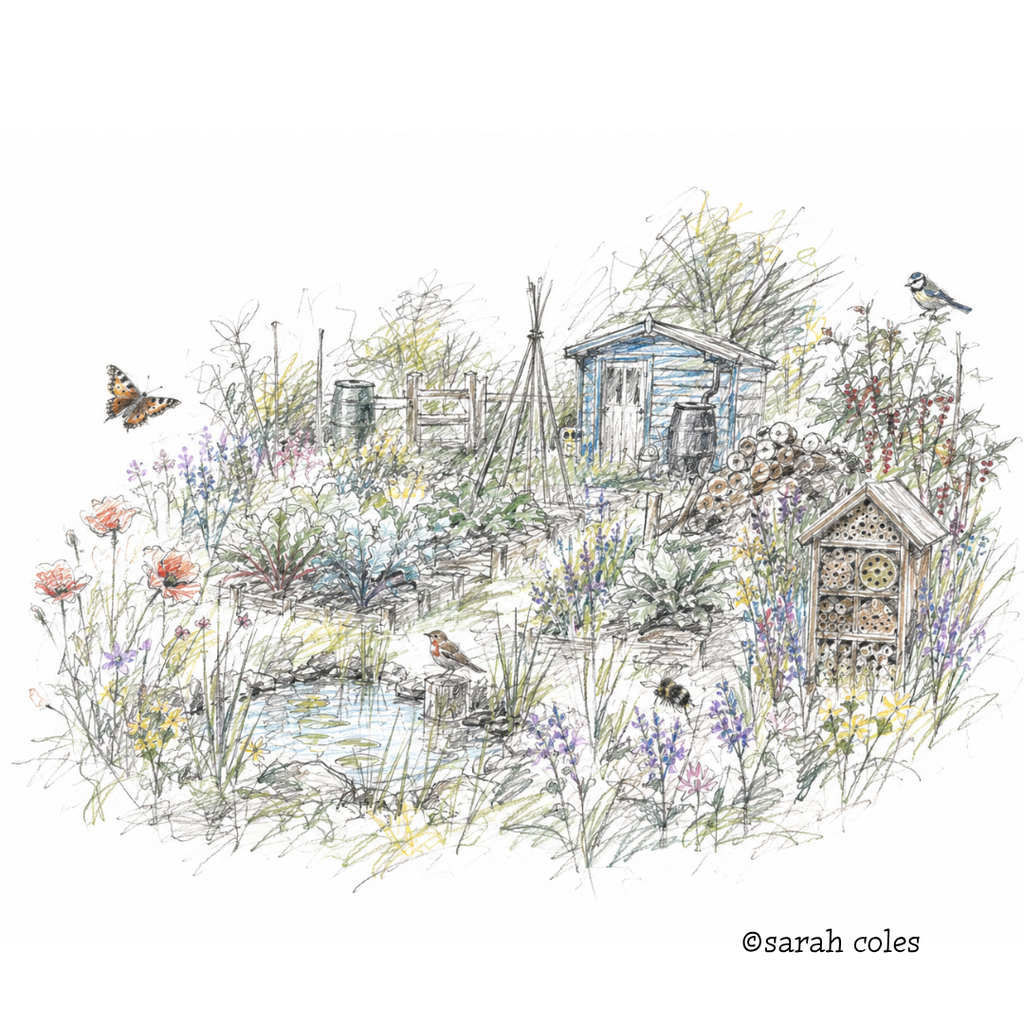
Wildlife needs safe places to rest, breed and shelter from bad weather. Bird boxes, bat boxes and insect hotels can all help, provided they are positioned correctly and cleaned or maintained when necessary.
Simple natural habitats are just as valuable. For example, a pile of logs can shelter beetles and other invertebrates, while a small stack of stones may provide cool hiding places for frogs and toads. Similarly, fallen leaves can protect insects over winter.
Place these features in quiet areas where they will not be disturbed regularly. In addition, avoid making the plot too tidy, especially during autumn and winter, when wildlife depends on stems, seed heads and leaf litter.
4. Leave a Small Area Wild
You do not need to let the entire allotment become overgrown. Nevertheless, leaving one corner a little wilder can create an important refuge.
Allow grasses and wildflowers to grow, leave hollow stems standing through winter and avoid cutting everything back at once. This gives insects somewhere to feed, hide and overwinter. Birds may also visit to eat seeds and search for invertebrates.
If space is limited, a container of native wildflowers or a narrow strip beside a shed can still be useful. The aim is to provide variety, rather than neglect the plot.
5. Add a Pond or Safe Water Source
Water is one of the most effective additions you can make to a wildlife-friendly allotment. Even a small container pond can attract insects and provide drinking water for birds. Over time, frogs and other amphibians may also visit and help control slugs.
Make sure wildlife can enter and leave the water safely. For example, add stones, bricks or a gently sloping edge to prevent animals from becoming trapped. Avoid introducing fish, as they may eat insect larvae and amphibian eggs.
If a pond is not practical, provide a shallow dish of fresh water. Add a few pebbles so that bees and other insects have somewhere safe to land. During warm weather, clean and refill it regularly.
6. Plant Flowers for Pollinators
Bees, butterflies, moths and hoverflies are vital pollinators. Many allotment crops, including courgettes, squash, beans and soft fruit, depend on insect visits to produce a good harvest.
Choose flowers that bloom at different times so nectar and pollen are available from early spring until late autumn. Good options include lavender, foxgloves, sunflowers, calendula and borage. Flowering herbs such as rosemary, thyme, oregano, chives and sage are also excellent choices.
In addition, favour single, open flowers over heavily doubled varieties. Their nectar and pollen are usually easier for insects to reach. Where possible, plant flowers in groups so pollinators can find and use them efficiently.
7. Avoid Harmful Pesticides
Broad-spectrum pesticides can kill beneficial insects as well as the pests you want to control. Consequently, they may upset the natural balance of your allotment and make future outbreaks more difficult to manage.
Start by checking plants regularly and identifying the problem correctly. A few aphids rarely justify treatment, especially because they provide food for ladybirds, hoverflies and birds. If intervention is necessary, try physical methods first, such as hand removal, barriers, netting or a jet of water.
You can also use companion planting and crop rotation as part of an integrated approach. Above all, choose the least harmful method and apply it only where needed.
8. Feed and Protect the Soil
Healthy soil is alive. It contains earthworms, beetles, bacteria, fungi and many other organisms that break down organic matter, release nutrients and improve soil structure. Therefore, caring for soil life is essential to biodiversity above and below ground.
Add well-rotted compost regularly to supply organic matter. Then apply mulch around established plants to conserve moisture, suppress weeds and protect the soil surface. Suitable materials include homemade compost, leaf mould and other clean, untreated organic matter.
Avoid leaving soil bare for long periods. Instead, sow green manures or use an organic mulch. This reduces erosion and creates more stable conditions for soil organisms.
9. Prevent Soil Compaction
Compacted soil contains less air and drains poorly, which makes it harder for roots and soil organisms to thrive. To reduce compaction, avoid walking on growing beds, particularly when the ground is wet.
Create permanent paths or use stepping stones so you can reach crops without treading on the soil. Raised beds can also help because they allow you to work from the edges. Furthermore, a no-dig or reduced-dig approach can preserve fungal networks and minimise disruption to soil life.
10. Use Crop Rotation and Mixed Planting
Growing the same crop in the same place year after year can encourage pests and diseases while depleting particular nutrients. Crop rotation helps break these cycles by moving plant families between beds each season.
Mixed planting can provide further benefits. For example, flowers grown among vegetables attract pollinators and pest predators, while herbs add scent and structural variety. However, good spacing still matters because overcrowded plants may suffer from poor airflow and disease.
Keep simple records of what you grow and where. As a result, planning next year’s rotation becomes much easier.
Work With Your Allotment Community
Wildlife does not recognise plot boundaries. Therefore, biodiversity efforts become even more effective when neighbouring allotment holders take part.
Share spare seeds and wildlife-friendly plants, exchange composting advice or work together to create hedgerows, ponds and connected habitat corridors. Allotment associations can also organise seed swaps, wildlife surveys and practical workshops.
Before adding permanent structures or allowing an area to grow wild, check the rules of your allotment site. Clear communication can prevent misunderstandings and help others see that a wildlife area is being managed deliberately.
Start Small and Build Gradually
You do not need to make every change at once. Begin with one or two manageable improvements, such as planting flowering herbs, adding a water dish or leaving seed heads standing over winter. Then observe which species visit and adapt your approach.
Over time, these small actions can turn your allotment into a vibrant, productive and resilient ecosystem. More importantly, you will be growing food in a way that supports the wider natural world.
Further Reading: National Allotment Association, Save the Bees – Protect the Planet, My Garden Journal & Notes
