


Look closely at a quiet corner of the garden and you’ll soon discover it isn’t quiet at all. A ladybird disappears beneath a curled leaf, a beetle noses under a log and a solitary bee investigates a hole in an old fence post.
Gardens are full of small lives carrying on around us, often unnoticed. Yet many of the natural hiding places these creatures depend on—dead wood, hollow stems, loose bark and undisturbed leaves—are easily lost when gardens are kept very tidy.
A bug hotel offers some of that shelter back. It can be as simple as a bundle of dry stems beneath a roof or as grand as a stack of wooden pallets filled with logs and twigs. There is no need to make it elaborate. In fact, a few small shelters placed in suitable parts of the garden can be more useful than one enormous structure trying to cater for everything.
Here’s how to build a bug hotel that has a genuine chance of welcoming guests.
What is a bug hotel?
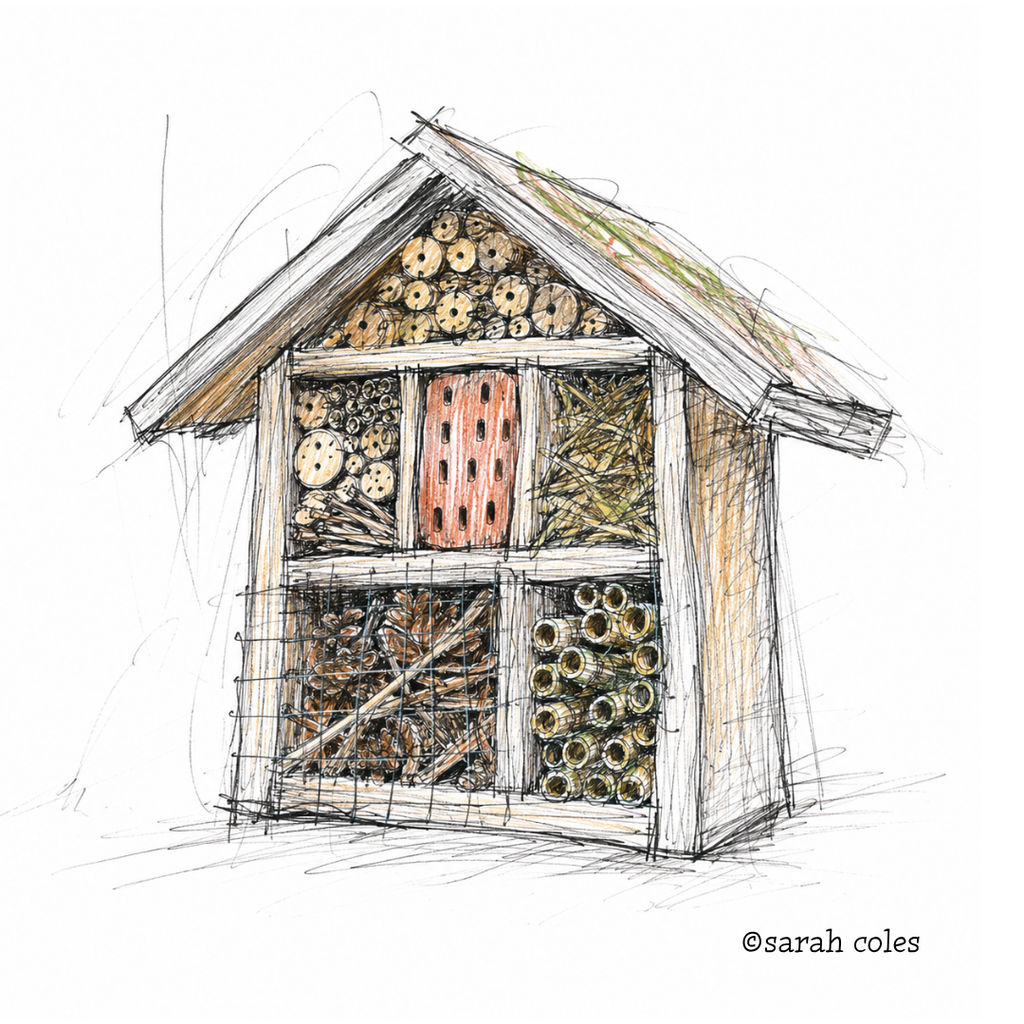
A bug hotel, sometimes called an insect hotel, is a man-made shelter containing the sorts of nooks and crevices found in natural habitats.
Depending on its design and position, it may provide a nesting place for solitary bees or somewhere for ladybirds, lacewings, beetles and other small creatures to hide. Spiders may move in too. They aren’t insects, of course, but they are an important part of the garden community.
The name “hotel” is a little misleading. Some visitors may stay for a night or shelter through winter, while solitary bees use suitable holes as nurseries for their young. Once a female bee has laid her eggs and sealed the entrance, the developing bees may remain inside for many months.
Why build a bug hotel?
Insects perform much of the quiet work that keeps a garden going. Bees, hoverflies, butterflies and moths help pollinate flowers. Beetles and other small creatures break down dead plant material, returning nutrients to the soil. Predators such as ladybirds, lacewings and solitary wasps feed on aphids and other invertebrates.
They are also an essential source of food for birds, bats, frogs, toads and hedgehogs. A healthy garden is not made up of isolated species; it is a web of relationships, with each creature supporting another.
By adding a bug hotel, you provide another piece of habitat. It will be most effective when it sits within a garden that also offers flowers, water and less-disturbed places to feed and shelter.
The National Trust’s wildlife-friendly gardening advice recommends retaining logs, twigs and stones because dead and decaying wood is an increasingly scarce habitat.
A bug hotel is also a wonderful way to observe garden wildlife. Children may enjoy checking sealed bee tubes, looking beneath nearby logs and keeping a simple record of the creatures they spot. Just remember to look without poking inside or disturbing occupied spaces.
Bug hotel or bee hotel?
Although the names are often used interchangeably, a bug hotel and a bee hotel are not quite the same thing.
A bee hotel contains smooth, narrow nesting holes designed for solitary bees. These holes might be drilled into solid, untreated wood or provided by bundles of hollow stems.
A general bug hotel usually contains a broader mixture of materials, such as bark, twigs, pine cones, dry leaves and small logs. It creates hiding places for a wider range of invertebrates, although there is no guarantee that every compartment will be occupied.
You can include both in the same structure, but each section should be designed with its intended visitors in mind. Simply filling a box with attractive materials may look charming without providing much useful shelter.
Where should you put a bug hotel?
The best position depends on the sort of hotel you are making.
A solitary bee hotel needs a warm, dry and sheltered location. Fix it firmly to a fence, wall or post where it will receive morning sunshine, ideally facing somewhere between south and east. It should not swing in the wind, and the front must remain clear of overhanging leaves.
Shelters made for beetles, woodlice and other moisture-loving creatures are better placed lower down in a shady, undisturbed corner. Position them close to plants, leaf litter or a hedge so their occupants can move between shelter and feeding areas without crossing too much open ground.
Whichever site you choose, avoid somewhere that regularly floods or catches driving rain.
What do you need to build a bug hotel?
You can make a simple bug hotel from materials already found around the garden. Useful supplies include:
- Untreated timber for the frame
- Hollow bamboo canes, reeds or dry plant stems
- Solid blocks of untreated hardwood
- Small logs and pieces of bark
- Twigs and pine cones
- Dry leaves or straw
- Old bricks with holes
- Roof tiles, slate or a piece of untreated wood
- Screws and strong garden twine
- Secateurs, a saw and a drill
Avoid painted, varnished or chemically treated wood where insects will be nesting. Pallets should be checked carefully for markings and signs of contamination before being reused.
Keep everything dry while you work. Damp fillings can quickly become mouldy, making the hotel far less inviting.
How to make a simple bug hotel
1. Build a sturdy frame
Make a shallow wooden box with an open front and a closed back. A depth of roughly 10–15cm gives hollow stems and nesting holes enough length while keeping the structure manageable.
Add internal dividers if you want separate compartments, but don’t feel obliged to create dozens of tiny rooms. A simple frame with two or three well-made sections is quite enough.
Secure every joint firmly. Once filled, even a small bug hotel can be surprisingly heavy.
2. Add a weatherproof roof
Fit a sloping roof that extends beyond the front and sides. This overhang helps carry rain away from the nesting materials.
Slate, reclaimed roof tiles or a piece of untreated timber can work well. The aim is to keep the interior dry rather than to make the roof decorative.
A living roof planted with sedum can look attractive, but it adds weight and requires a strong, waterproof structure. For a small homemade hotel, a plain roof is usually the safer choice.
3. Make a nesting area for solitary bees
Cut hollow stems to the depth of the frame. Each piece should have a natural node at the back, creating a closed end, while the entrance remains open. Pack the stems tightly so they cannot move or fall out.
Alternatively, drill holes into a block of untreated hardwood. Use drill bits of several sizes between approximately 2mm and 10mm to suit different bee species. Never drill all the way through—the back of each tunnel must be closed.
The holes should be deep, straight and smooth. Sand away splinters around the entrances, as rough edges can damage delicate bee wings. The RHS guide to creating habitats for wild bees offers further advice on choosing hole sizes and preparing them safely.
Avoid soft wood that tears into fibres when drilled, and don’t use pine cones or loose straw in the bee section. Solitary bees need clean nesting tunnels rather than general packing material.
4. Create hiding places for other minibeasts
Fill another section with a loose mixture of dry natural materials. Pieces of bark, twigs, hollow stems and pine cones create gaps where small creatures may shelter.
A bundle of corrugated cardboard kept completely dry may attract lacewings, although it will need replacing when it begins to deteriorate. Dry leaves or straw can also provide cover, but don’t pack them so tightly that air cannot circulate.
Near ground level, logs and bark may be more useful when placed directly on the soil. This creates a cool, damp habitat for beetles, woodlice and other decomposers.
5. Fix the hotel securely
Mount the finished structure so that it cannot swing, tip or collapse. A bee hotel should be attached securely to a solid fence, wall or post. A larger pallet-style hotel must have a stable base, with each layer fastened to the next.
If children use the garden, check that the hotel cannot be climbed on or pulled over.
Once it is in place, leave it alone. Insects are far more likely to settle somewhere that remains dry, stable and undisturbed.
A simpler alternative: make a log shelter
If carpentry isn’t your strong point, a pile of old logs may do more for wildlife than a complicated wooden hotel.
Arrange untreated logs and branches in a shady corner, allowing plenty of gaps between them. Add a little bark and leaf litter, then let plants grow loosely around the edges.
Dead wood supports beetles, fungi and countless tiny decomposers. As it gradually softens, it becomes an increasingly rich habitat. Partly burying one or two pieces creates both damp and dry conditions within the same small pile.
A bundle of hollow stems tied securely beneath a porch, shed roof or simple wooden cover can provide a separate nesting place for solitary bees.
Which creatures might use a bug hotel?
Solitary bees
Britain is home to many species of solitary bee. Unlike honeybees, most do not live in large colonies. A female builds and provisions her own nest, placing an egg in each chamber with a store of pollen before sealing it.
You may notice the entrances of occupied tubes closed with mud or carefully cut pieces of leaf. Resist the urge to open them. The young bees are developing safely inside.
Ladybirds
Ladybirds may shelter among dry stems, bark and leaf litter, particularly during colder weather. Both adults and larvae of many species feed on aphids, although other ladybirds have different diets.
Planting nectar-rich flowers and leaving some natural cover will do as much to encourage them as the hotel itself.
Lacewings
Adult lacewings sometimes use dry, sheltered crevices in which to overwinter. Their larvae feed on aphids and other small, soft-bodied invertebrates.
A pesticide-free garden with plenty of flowering plants provides the food and habitat they need through the rest of their life cycle.
Beetles
Beetles may hide beneath bark, among logs or in the cooler sections near the ground. Some feed on decaying matter, while others prey on slugs and smaller invertebrates.
Many beetles prefer a natural pile of dead wood to an elevated wooden hotel, so it is worth providing both if you have room.
Spiders
Spiders often settle wherever there are secure crevices and a ready supply of prey. They help keep invertebrate populations in balance and provide food for other garden wildlife.
They may not be the guests you expected, but they belong there just as much as the insects do.
How to look after a bug hotel
A bug hotel should be checked occasionally, but frequent disturbance does more harm than good.
Look at the roof after strong winds and make sure the structure remains securely fixed. Replace loose or waterlogged materials, but never pull out stems or clean holes while they are sealed or occupied.
Solitary bee nesting tubes eventually accumulate parasites and debris. Removable paper or cardboard liners can make long-term care easier. Replace old nesting materials only after the adult bees have emerged, introducing fresh, dry tubes gradually rather than clearing the whole hotel at once.
If you find mould, the hotel is probably too damp. Improve the roof, move the structure to a more sheltered position and replace affected materials when you are certain they are unoccupied.
There is no need to evict spiders, earwigs or other unexpected visitors. A bug hotel is a habitat, not a display with a fixed guest list.
Make the rest of the garden welcoming too
A bug hotel cannot support wildlife on its own. Its occupants also need food, water and places to move through the garden.
You can help by:
- Growing nectar- and pollen-rich flowers across the seasons
- Leaving some hollow stems standing over winter
- Allowing a patch of grass to grow longer
- Keeping a small pile of logs or fallen leaves
- Providing a shallow source of water
- Avoiding pesticides wherever possible
- Leaving a little bare, well-drained soil for ground-nesting bees
- Connecting gardens with gaps beneath fences
A few untidy corners are often more valuable than an expensive wildlife feature. What looks like a jumble of stems and leaves to us may be food, shelter and nesting material to something much smaller.
Leave room for nature to move in
Building a bug hotel is only the beginning. The real pleasure comes afterwards, when you notice the first tube neatly sealed with mud or find a ladybird tucked behind a piece of bark.
There may be weeks when nothing seems to happen. Then, one warm morning, you’ll spot a bee hovering at the entrance, checking one hole after another before choosing where to settle.
Make the structure safe, keep it dry and surround it with the plants and natural habitats its visitors need. After that, the best thing you can do is step back and let the smallest residents of the garden get on with their lives.
Further Reading: Save the Bees – Protect the Planet, My Garden Journal & Notes
