


Pears have a habit of testing our powers of observation.
For what feels like an age, they sit in the fruit bowl resolutely firm. You check them on Monday. Not ready. Tuesday. Still not ready. Wednesday morning brings much the same news.
Then Thursday arrives and, apparently having held a meeting overnight, every pear decides to ripen at once.
It’s at moments like these that a little zero-waste thinking comes in handy.
An overripe pear isn’t necessarily destined for the compost heap. Nor does a glut from the garden have to become an increasingly urgent problem. Soft pears can be baked, poached, frozen, preserved and turned into compote. Even peelings and cores can sometimes be put to another use before they finally reach the compost bin.
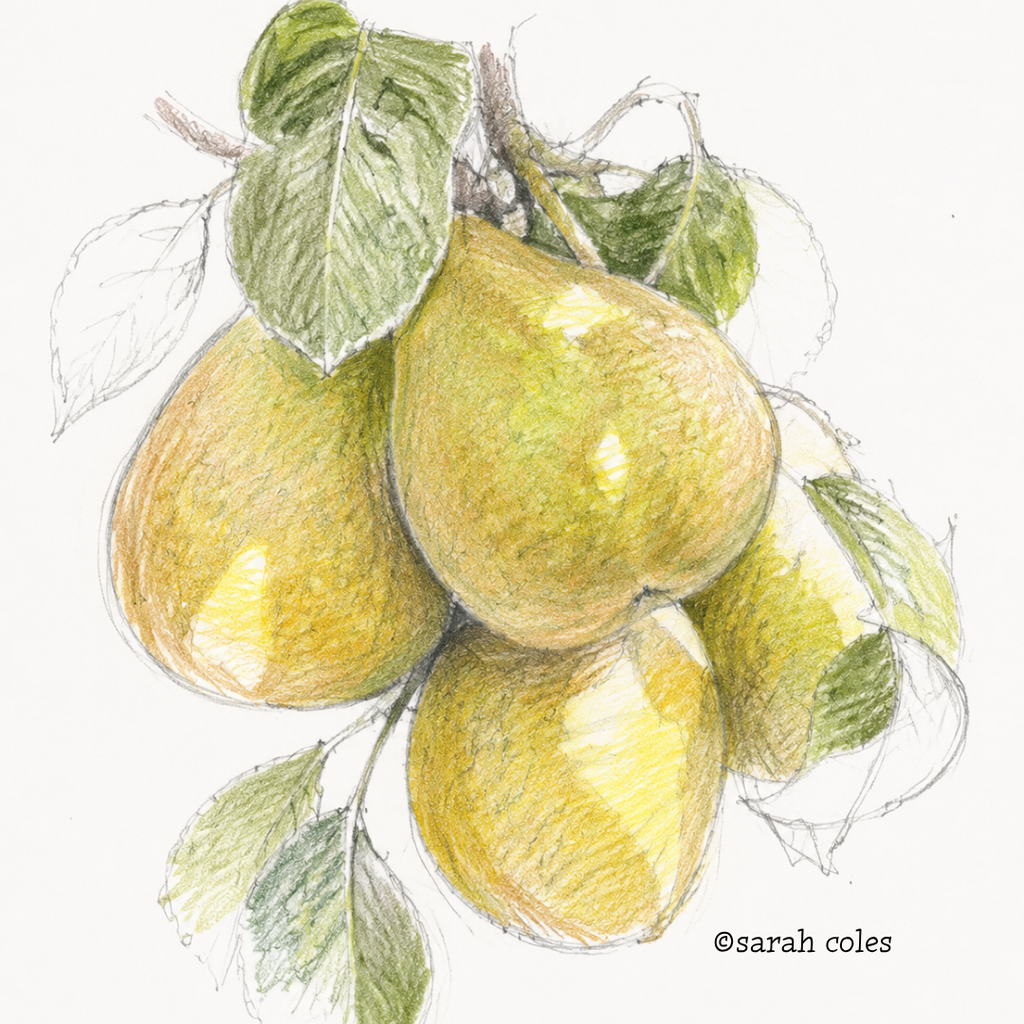
So, whether you’ve picked rather more pears than expected or simply forgotten about three at the back of the fruit bowl, here’s how to make the most of them.
First things first: when is a pear too far gone?
There’s an important difference between a pear that’s overripe and one that’s spoilt.
A very soft pear, perhaps with a few bruised patches, can still be perfectly useful for cooking. Cut it open, remove damaged areas and use the good flesh in cakes, crumbles, sauces or compotes.
But fruit showing mould or signs of decay belongs in your food-waste or compost collection rather than the saucepan. If in doubt about whether a pear is safe to eat, don’t try to rescue it simply for the sake of avoiding waste.
Zero waste shouldn’t mean zero common sense.
The trick is to catch pears while they’re simply a little past their best for eating fresh. That’s when the kitchen possibilities really begin.
What to do with overripe pears
A pear that’s become too soft for the fruit bowl can actually be better suited to certain recipes.
Soft, ripe pears bring sweetness and moisture to cakes and puddings. They’re also easy to cook down into a compote, where nobody will ever know they weren’t quite beautiful enough for the cheeseboard.
Make a simple pear compote
This is perhaps the easiest rescue operation of all.
Peel and core 4 very ripe pears, then roughly chop them and put them into a saucepan with 2 tablespoons of water, a squeeze of lemon juice and a pinch of cinnamon.
Cook gently for around 10–15 minutes, stirring occasionally, until the fruit has softened.
You can leave it chunky or mash it with a fork.
Keep the compote covered in the fridge and spoon it over porridge, yoghurt or pancakes. It’s also rather good served warm alongside a simple sponge pudding.
If your pears are particularly sweet, you probably won’t need to add any sugar at all.
One problem solved.
Freeze pears before they become a problem
If there are more ripe pears than you can reasonably eat, freezing is one of the simplest ways to buy yourself some time.
Peel and core the pears, remove any bruised areas and cut the fruit into slices or chunks. A little lemon juice tossed through the pieces can help reduce browning.
Spread them out on a lined tray so the pieces aren’t touching and freeze until firm. Once frozen, transfer them to a labelled freezer container or bag.
Freezing the pieces separately first prevents them becoming one enormous pear-shaped iceberg.
Frozen pears will be softer once defrosted, so don’t expect them to return to the fruit bowl looking exactly as they left it. Instead, use them in crumbles, cakes, compotes, smoothies or cooked puddings.
Appearance isn’t everything.
Particularly once custard is involved.
Turn a pear glut into crumble filling
When the pear tree has been particularly generous, prepare pudding for another day.
Peel, core and chop the pears, then mix them with a squeeze of lemon juice and a little cinnamon or ground ginger. Add blackberries or chopped apples if you have those to use up as well.
Freeze the fruit mixture in portions suitable for your usual baking dish.
When crumble weather arrives – which, in Britain, is never terribly far away – you’ll already be halfway there.
A freezer containing the beginnings of a pudding is a very reassuring sort of freezer.
Make pear chutney
Some pears need a more ambitious retirement plan.
Chutney is particularly useful when you have a sizeable glut of firm or ripe fruit and would rather not spend the next fortnight eating pear pudding.
Pears work beautifully with onions, vinegar, brown sugar and warming spices. Apples can be added too, making chutney an excellent destination for a mixed autumn harvest.
Easy pear chutney
Makes about 3–4 small jars
You’ll need:
- 750g pears, peeled, cored and diced
- 250g onions, finely chopped
- 150g eating apples, peeled, cored and diced
- 200g light brown sugar
- 300ml cider vinegar
- 100g raisins
- 1 tsp ground ginger
- 1 tsp mustard seeds
- ½ tsp ground cinnamon
- ½ tsp salt
Put everything into a large, heavy-based saucepan.
Heat gently, stirring until the sugar has dissolved, then bring to a simmer. Cook uncovered over a low heat for around 1–1½ hours, stirring more frequently towards the end, until the mixture is thick and there is very little loose liquid remaining.
Take care as it thickens: chutney has an unfortunate tendency to catch on the bottom of the pan just when you become distracted by something else.
Spoon into properly sterilised jars while hot and seal according to current safe preserving guidance.
Once matured, pear chutney is particularly good with cheese, cold meats and autumn lunches.
It’s also a rather satisfying answer to the question, “What on earth are we going to do with all these pears?”
Poach pears that are beginning to soften
Pears that are ripe but still holding their shape are perfect for poaching.
Peel them and simmer gently in water with sugar and whichever flavours happen to appeal: cinnamon, vanilla, star anise and strips of orange or lemon peel all work beautifully.
Once the pears are tender, lift them from the pan.
But don’t pour the poaching liquid away.
This is where a little kitchen thrift becomes considerably more interesting.
Don’t throw away pear poaching liquid
After poaching pears, the remaining liquid will have picked up some of the fruit’s flavour along with whatever spices you’ve added.
Remove the whole spices and citrus peel, then simmer the liquid until it reduces to a light syrup.
Once cooled, it can be spooned over the pears, yoghurt, pancakes or ice cream.
You can also use a little to sweeten stewed fruit.
Suddenly the bit that looked destined for the sink has become arguably the best part of pudding.
What can you do with pear peelings?
If a recipe asks for peeled pears, there may still be life in those peelings.
The simplest option is to leave the skin on whenever the recipe allows. Pear skin is edible, and for crumbles, compotes and many baked dishes there’s often no need to peel the fruit in the first place.
Less work and less waste is a combination worth encouraging.
When you do need to peel them, clean pear peelings can be used to flavour water while you’re cooking fruit, or added to homemade fruit infusions before being strained out.
You can also experiment with turning peelings into a crisp little snack.
Cinnamon pear peel crisps
Toss clean pear peelings very lightly with a little melted butter and cinnamon.
Spread them in a single layer on a lined baking tray and bake at 160°C/140°C fan/Gas 3 for around 15–25 minutes, checking regularly, until dried and crisp around the edges.
Cooking time will vary considerably depending on how thickly the pears were peeled, so keep an eye on them.
They’re a small bonus rather than a reason to start peeling every pear in sight.
And what about pear cores?
Pear cores are less useful in everyday cooking, but they needn’t necessarily go into general waste.
If you have a home compost heap, pear cores and other uncooked fruit scraps can usually be composted. Otherwise, use your local food-waste collection where one is available.
You may occasionally see recipes suggesting that pear cores and seeds should be boiled up for syrups or jellies. For an everyday zero-waste kitchen, there’s little need to go that far.
Making good use of food doesn’t mean every stalk, seed and pip has to end up on the plate.
Sometimes compost is exactly the right destination.
Leave the skin on
One of the easiest ways to waste less is also one of the easiest things to forget: don’t peel a pear unless you actually need to.
Pear skins soften during cooking and work perfectly well in many crumbles, cakes, compotes and roasted pear recipes.
There will be occasions when peeling makes sense. A silky poached pear or particularly refined tart may benefit from it.
But for Tuesday night’s crumble?
The pear probably doesn’t need a beauty treatment first.
Give it a wash, remove the core and get on with pudding.
Preserve pears for later
Before freezers became an everyday part of the kitchen, preserving the harvest was an essential autumn job.
It still makes sense.
Pears can be turned into chutneys, jams and preserves, while suitable fruit can also be bottled using a tested preserving method.
Preserving does require more care than making a crumble. Jars need to be prepared correctly, recipes should have the right balance of ingredients, and proper food-safety guidance should always be followed rather than improvising quantities.
But when done correctly, preserving turns an autumn glut into something that can be enjoyed long after the tree is bare.
There’s something particularly satisfying about opening a jar in winter and remembering the afternoon when there were so many pears that preserving them seemed like the only sensible course of action.
Share the harvest
Of course, the easiest way to use surplus pears may involve no cooking whatsoever.
Give them away.
A bag left with a neighbour, a box taken into work or a few pears passed over the garden fence can make surprisingly short work of a glut.
If you have a particularly productive tree, local community kitchens, food-sharing groups or organisations collecting surplus produce may also be worth investigating.
A harvest doesn’t become less valuable because somebody else gets to enjoy it.
And unlike making six consecutive pear crumbles, sharing requires remarkably little washing up.
Store pears carefully and waste less in the first place
The best way to rescue an overripe pear is not to let every pear become overripe at once.
Check stored fruit regularly and remove anything that’s damaged or beginning to deteriorate before it affects neighbouring fruit.
Pears are generally harvested while still firm and many varieties finish ripening after picking. Keeping an eye on them as they ripen means you can move the softest fruit to the front of the queue.
Think of it as pear triage.
Firm fruit can wait.
Ripe fruit goes into the bowl.
Very ripe fruit becomes pudding.
It’s a simple system, but a surprisingly effective one.
A pear is rarely just one thing
Perhaps that’s the pleasure of cooking with a seasonal harvest.
A firm pear can sit in the fruit bowl. A ripe one can become pudding. A softer one can disappear into cake or compote. A glut can become chutney, and fruit you can’t use today can be frozen for another time.
Even the leftovers can sometimes offer something useful before heading to the compost heap.
None of this requires perfection.
You don’t need to transform every peeling into a culinary masterpiece or feel guilty about a pear core ending up in the food-waste caddy. Reducing kitchen waste is much more about noticing what you have and giving good food another chance before throwing it away.
So next time three pears suddenly become ripe on precisely the same afternoon, don’t panic.
Eat one.
Bake one.
Freeze one.
And feel quietly pleased that, for once, you’ve outmanoeuvred the fruit bowl.
Further Reading: My Garden Journal & Notes
