


Bees bring our gardens to life and help sustain the wider countryside. After years of concern about neonicotinoid pesticides, there are hopeful signs — but the work of protecting pollinators is far from over.
On a warm morning, the lavender border is rarely quiet. Buff-tailed bumblebees shoulder their way into the flowers, honeybees move methodically from stem to stem, and smaller solitary bees appear for a moment before vanishing into the crowd.
It is an ordinary garden scene, easily taken for granted. Yet much of the life around us depends upon visits like these.
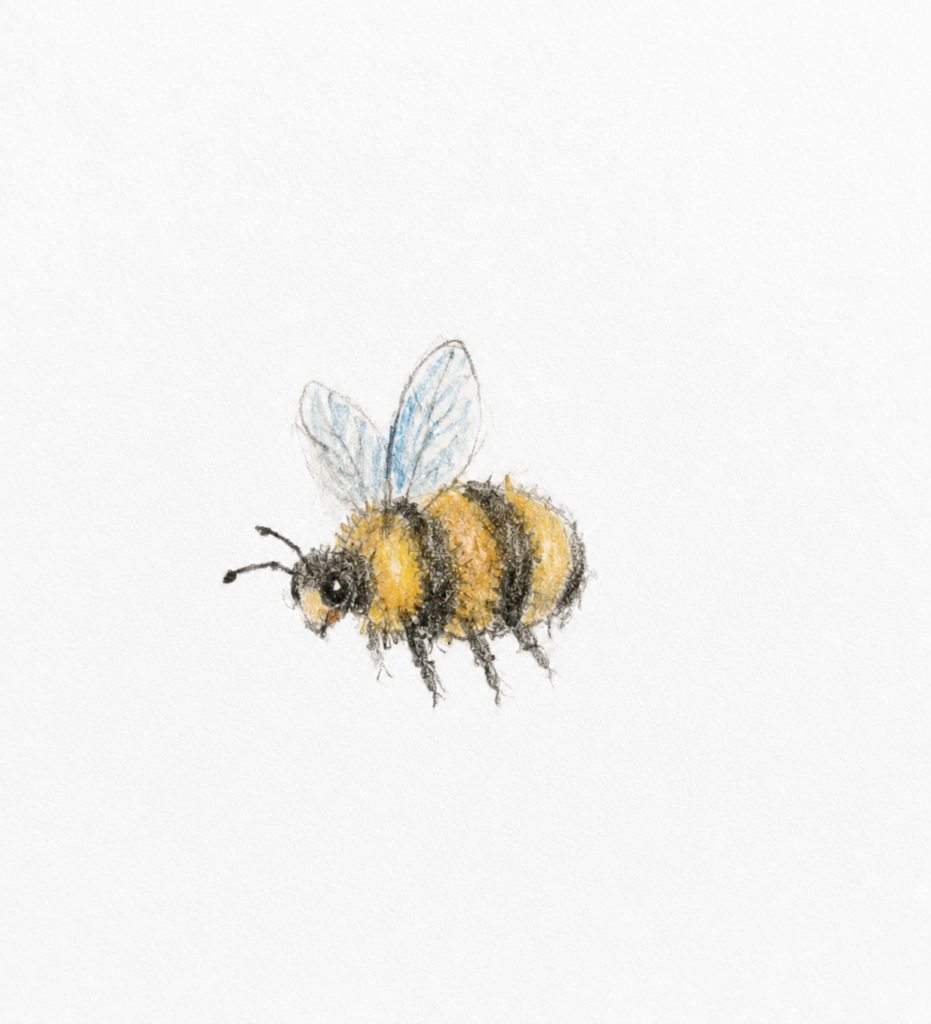
Bees and other insects carry pollen between flowers, allowing many wild plants and food crops to set seed or fruit. Apples, strawberries, beans and courgettes are among the familiar foods that benefit from insect pollination. Beyond the kitchen garden, pollinators help plants reproduce, providing seeds, berries and shelter for other wildlife. They are part of the intricate web that holds a healthy landscape together.
This is why the debate surrounding neonicotinoid insecticides has mattered so much. These chemicals were developed to protect crops from insect pests, but evidence of the risks they pose to pollinators led to restrictions on their outdoor use. Between 2021 and 2024, however, emergency authorisations allowed a neonicotinoid seed treatment to be used conditionally on sugar beet in England.
The position has since changed. The application for use in 2025 was refused, and the Government has stated that no emergency authorisations for the three restricted neonicotinoids have been approved since 2024. That is welcome progress. It is not, however, a reason to stop paying attention.
What are neonicotinoids?
Neonicotinoids — often shortened to ‘neonics’ — are a group of insecticides that act on the nervous system of insects. Some are systemic, which means a treated plant can absorb the chemical as it grows. Depending on the substance and use, residues may reach leaves, pollen or nectar.
This systemic action made the chemicals useful in agriculture: a crop could be protected from pests feeding upon it. The same quality also raised a difficult question. What happens when a beneficial insect visits the treated plant?
Not every neonicotinoid is identical and risk depends upon the active ingredient, dose and route of exposure. However, concern about three in particular — clothianidin, imidacloprid and thiamethoxam — led the UK Government to support prohibitions on their outdoor use in 2018. The official reasoning acknowledged evidence that these substances can harm non-target species, particularly pollinators.
Why bees are vulnerable
A bee does not have to be killed outright for a colony or wild population to be affected. Exposure to certain pesticides can interfere with movement, navigation, feeding and the ability to return to a nest. The risk is not confined to honeybees: Britain is home to bumblebees and many species of solitary bee, each with its own life cycle and needs.
Pesticides are only one part of a much larger picture. Pollinators also face the loss and fragmentation of flower-rich habitat, fewer nesting places, disease, pollution and a changing climate. These pressures can overlap. A bee already travelling further to find food has less room for another burden.
That is why a single flowering border matters, but cannot solve everything on its own. Bees need connected, well-managed habitats across gardens, road verges, parks, farms and the wider countryside.
The sugar beet exemptions: what actually happened?
The history is important because older articles can give a misleading impression of the present position.
Outdoor use of clothianidin, imidacloprid and thiamethoxam was generally prohibited in 2018. From 2021 to 2024, the previous Government granted annual emergency authorisations in England for Cruiser SB, a sugar beet seed treatment containing thiamethoxam. Its purpose was to protect the crop from aphids that transmit virus yellows.
These were conditional and limited permissions rather than a general return of neonicotinoids. The treatment was used in 2022, 2023 and 2024; the forecast threshold that would have triggered use was not reached in 2021.
In January 2025, the Government refused the next application, following consideration of environmental, health and economic evidence and advice from scientific and regulatory bodies. It has since announced an intention to end emergency uses of the three neonicotinoids that present substantial risks to pollinators. The 2025 Environmental Improvement Plan says possible legislative changes are to be assessed with the devolved governments by the end of 2027.
This is a more hopeful position than the one reflected in the original draft. It also shows why environmental safeguards need to be durable. A general prohibition that can be revisited each year through an emergency process may continue to cause uncertainty for farmers, conservationists and the public.
Beyond bees: the life around a field
A healthy field is more than a crop. Beetles hunt smaller pests among the stems. Hoverflies pollinate flowers and, as larvae, some eat aphids. Earthworms work through the soil, while aquatic invertebrates sustain life in ditches and streams.
Broad-spectrum insecticides can affect organisms other than the pest for which they were intended. Because some pesticides persist in soil or move into water, concern extends beyond insects visiting flowers. The consequences depend upon the chemical and the way it is used, so sweeping claims about all fish or amphibians should be avoided. What is clear is that pesticide decisions must consider the whole ecosystem, not simply the crop in the treated field.
The abundance of insects has consequences further along the food chain. Many birds and small mammals depend on invertebrates, directly or indirectly. When the smallest lives are diminished, the effects can travel through the landscape.
A different way of thinking about pests
The Soil Association’s approach to reducing harmful pesticides begins with the farming system rather than a replacement bottle. It argues that lasting change is not simply a matter of swapping one chemical for another, but of creating diverse, resilient farms in which pesticides are not the default response.
This includes organic and agroecological farming, varied crop rotations, healthier soils, resistant crop varieties, habitat for natural predators and agroforestry — bringing trees and farming together. These practices can help interrupt pest and disease cycles and make land more resilient.
Integrated Pest Management, or IPM, follows a similar principle. Farmers monitor crops, assess whether intervention is genuinely needed and draw upon cultural, biological and mechanical controls. A pesticide, where permitted, becomes a carefully considered last resort rather than the first tool from the shed.
None of this dismisses the pressures farmers face. Virus yellows can damage sugar beet crops, and changes in practice require research, practical advice and financial support. Asking growers to carry the cost alone is neither fair nor likely to bring lasting change. Protecting pollinators and producing food should not be treated as opposing ambitions; good policy must help farmers do both.
What gardeners can do for bees
A garden may occupy only a small patch on the map, but millions of gardens together form a considerable habitat. The most useful changes are often simple.
Grow flowers across the seasons
Aim for a succession of nectar and pollen from early spring into autumn. Crocuses, flowering currant and fruit blossom can help early insects; foxgloves, hardy geraniums, lavender and marjoram carry the garden into summer; ivy is a valuable late source of food.
Choose a mixture of flower shapes. Bumblebees with long tongues can reach into deep tubular flowers, while open blooms allow easier access for short-tongued and smaller insects. Single flowers generally offer better access than densely packed doubles.
Ask how plants and seeds were grown
The Soil Association advises gardeners to ask for seed that has not been pre-treated and to avoid pesticides in the garden. When buying plants, speak to the nursery or garden centre about how they were raised. Clear questions from customers encourage clearer supply chains.
Avoid assuming that every product labelled ‘bug killer’ is harmless to beneficial insects. Read the label, identify the supposed pest first and consider whether it is causing enough harm to require action.
Let natural predators lend a hand
Ladybirds, lacewings, hoverfly larvae, ground beetles and birds all eat garden pests. Make room for them with varied planting, hedges, leaf litter in quiet corners and a small source of water. A garden rich in predators is better able to settle minor outbreaks without chemical intervention.
Many apparent pests can simply be tolerated. A few aphids on broad beans are part of the garden’s food web; they are not automatically an emergency.
Offer places to nest
Around 70 per cent of Britain’s bee species nest in the ground. Leave some sunny, well-drained patches of bare soil and avoid covering every surface with membrane, paving or thick mulch. Hollow stems and small holes in old wood are used by some cavity-nesting solitary bees.
Bee hotels can help when well designed and maintained, but they are an addition to habitat, not a substitute for flowers, soil and undisturbed corners.
Garden a little less tidily
Leave hollow stems standing through winter, allow a patch of lawn to flower and let ivy mature where it is safe to do so. Seed heads, tussocky grass and dead wood provide shelter for far more than bees. What looks slightly untidy to us may be exactly what wildlife needs.
Choosing food with the wider landscape in mind
Garden choices are one part of the story; shopping choices can support changes beyond the garden gate. Certified organic standards restrict the use of synthetic pesticides and place emphasis on soil health, rotations and wildlife. Looking for a recognised organic symbol is one practical way to support farming systems designed to work more closely with nature.
This does not require a perfect shopping basket. Choosing one or two organic staples regularly, joining an organic box scheme when it suits the household, or buying directly from a local grower can all help create demand.
The original draft referred to ‘tasting notes’ and exclusive subscriber deals as features of the Soil Association’s pesticide campaign. Those claims are not supported by the cited guidance and have therefore been removed. The useful message is simpler: find out how food is grown, support credible standards and ask thoughtful questions.
Hope in every flower
The refusal of the 2025 sugar beet authorisation was an important step for pollinators. The Government’s wider commitment to end emergency uses of the three most concerning neonicotinoids could make that protection more secure, although its delivery still needs to be watched.
Meanwhile, farmers are testing more resilient ways to grow food, organisations such as the Soil Association are pressing for systemic change, and gardeners are stitching pockets of habitat back into villages, towns and cities.
Return to the lavender border and the work is already under way. Each bee moves almost too quickly to follow, pausing briefly before lifting into the air. We may never know where it nests or which garden it visits next. But by growing generously, avoiding unnecessary pesticides and supporting nature-friendly farming, we can make its journey a little easier.
Trusted references:
- Soil Association: The solution — farming without harmful pesticides
- GOV.UK: Neonicotinoid seed treatment for sugar beet — emergency authorisation decisions
- GOV.UK: Pesticide emergency authorisation denied for 2025
- GOV.UK: Environmental Improvement Plan 2025
Further Reading: My Garden Journal & Notes
