


Just as the garden begins to quieten, chrysanthemums come into their own.
Summer’s exuberance may be fading, seed heads are beginning to replace flowers and the first leaves are turning, but chrysanthemums seem almost oblivious to the changing season. Their flowers open in shades of gold, bronze, crimson, pink, purple and white, bringing colour to borders and containers when much of the garden is preparing for winter.
Perhaps that’s why they have been treasured for so long.
Chrysanthemums have been cultivated for centuries, travelling from the gardens of China and Japan to become one of the world’s best-known flowers. Along the way, gardeners have transformed relatively simple blooms into an extraordinary collection of shapes and forms.
Some are small and daisy-like. Others form tight pompons, great incurving globes or extraordinary flowers with long, curling petals.
There is, it seems, a chrysanthemum for almost every sort of gardener.
A flower with an ancient story
The history of the chrysanthemum begins in China, where the plant has been cultivated for more than two thousand years.
It became associated with autumn and longevity and was valued not simply as an ornamental plant but as part of a much wider cultural tradition.
From China, chrysanthemums reached Japan, where they acquired enormous symbolic importance. The flower became closely associated with the imperial family, and the stylised chrysanthemum remains one of Japan’s most recognisable symbols.
European gardeners encountered chrysanthemums much later.
By the eighteenth and nineteenth centuries, plant breeding and introductions from Asia were beginning to transform the flowers available to British gardeners. Enthusiasm grew, and chrysanthemums became increasingly popular both as garden plants and as flowers for exhibition.
Victorian and Edwardian gardeners developed a particular passion for them, carefully training plants and producing spectacular blooms for autumn flower shows.
That enthusiasm hasn’t entirely disappeared. Chrysanthemums still have devoted growers today, although you no longer need an exhibition greenhouse to enjoy them.
Why do chrysanthemums flower in autumn?
The timing of a chrysanthemum’s display is part of what makes it so valuable.
Many chrysanthemums respond to the shortening days and lengthening nights of late summer and autumn, which help trigger the development of flower buds.
While many familiar garden plants are coming to the end of their flowering season, chrysanthemums are preparing for their main performance.
Depending on the variety and growing conditions, flowering can begin in late summer and continue well into autumn.
That makes them especially useful for filling the gap between summer’s abundance and the quieter months ahead.
Chrysanthemums come in extraordinary shapes
Say ‘chrysanthemum’ and two gardeners may picture completely different flowers.
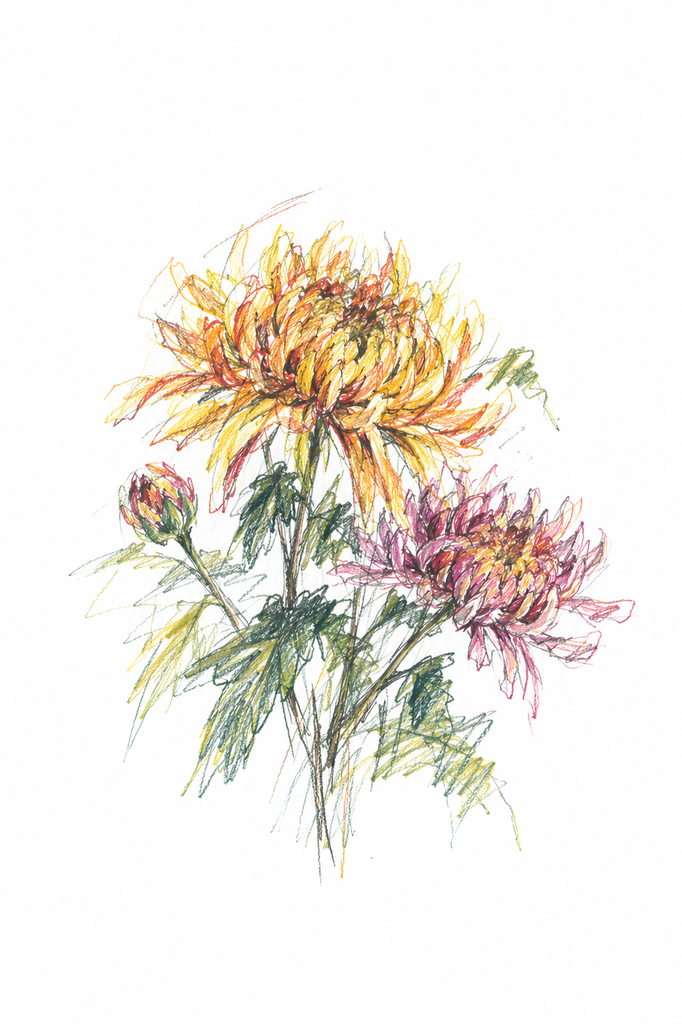
Some varieties have simple, open blooms with a central disc surrounded by petals, giving them something of the character of a daisy.
Others produce neat pompons or rounded decorative flowers packed with petals.
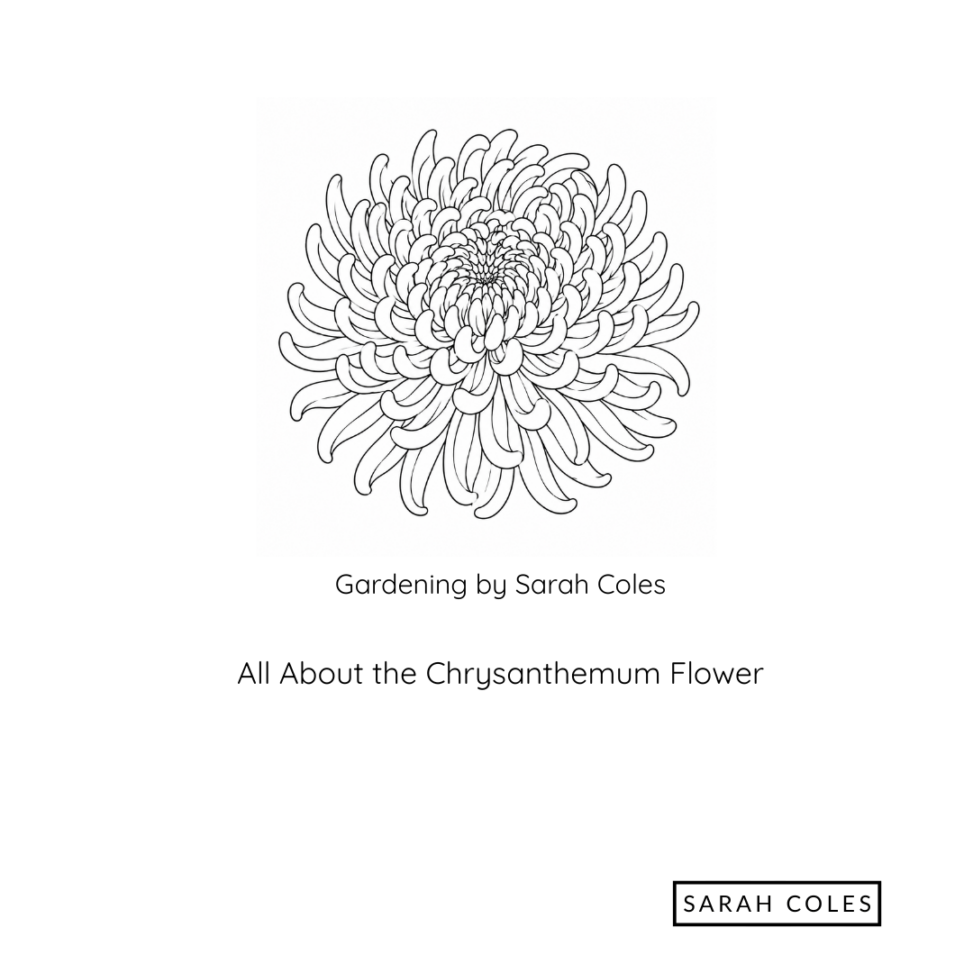
Then there are the more extravagant forms: incurved chrysanthemums whose petals curl inwards to create almost spherical blooms, and spider types with long, narrow petals radiating from the centre.
Part of the pleasure of growing chrysanthemums is discovering this extraordinary diversity.
For a naturalistic border, simpler flowers often sit comfortably among grasses and late perennials. For pots or a more formal display, the larger decorative varieties can become focal points in their own right.
Are chrysanthemums hardy?
This is where choosing the right plant matters.
Some chrysanthemums are sufficiently hardy to remain outside in many British gardens, particularly in a sheltered position and well-drained soil.
Others, especially some of the large-flowered exhibition and florist types, need considerably more protection from winter cold and wet.
Don’t assume that every chrysanthemum bought in flower in autumn can simply be planted in the border and expected to return year after year.
Check the variety and its hardiness before buying.
If you want chrysanthemums primarily for the garden, look for hardy garden varieties suited to outdoor growing. If you’re tempted by the spectacular exhibition types, be prepared to give them more specialised care.
Where to plant chrysanthemums
Chrysanthemums generally flower best in a sunny, sheltered position.
They appreciate fertile soil that holds enough moisture to support strong growth but drains freely, particularly during winter.
This balance matters.
A chrysanthemum growing vigorously through summer needs adequate water, but sitting in cold, waterlogged ground through winter can be far more damaging than low temperatures alone.
Before planting, improve the soil with organic matter where necessary and make sure the site doesn’t remain persistently wet.
A position sheltered from strong winds is useful too, particularly for taller varieties carrying large flowers.
Growing chrysanthemums in containers
Chrysanthemums are excellent container plants.
A generous pot of flowers can transform a doorstep, courtyard or terrace just as summer displays begin to fade.
Choose a container with good drainage holes and use a suitable peat-free compost. Larger containers are generally easier to look after because they don’t dry out as rapidly as small pots.
Keep an eye on watering. A mature chrysanthemum in full flower can use a surprising amount of moisture, particularly during a warm, dry spell.
But don’t leave the pot permanently sitting in water.
Once flowering has finished, what happens next depends on the chrysanthemum you’re growing. Hardy plants may be planted into the garden if conditions are suitable, while more tender varieties will need protection.
Pinching out for bushier plants
If you’re growing chrysanthemums from young plants in spring, a little early attention can make a considerable difference to their shape.
When the shoots are growing strongly, pinching out the growing tips encourages the plant to branch.
Instead of producing a few tall stems, it develops more side shoots and a bushier framework capable of carrying more flowers.
This can be repeated as the plant grows, although you need to stop in good time to allow flower buds to develop.
Exactly when and how often you pinch will depend on the variety and the type of display you want.
Garden chrysanthemums don’t need to be treated like exhibition specimens. Often the aim is simply a sturdy, well-branched plant covered in flowers.
Tall chrysanthemums may need support
A chrysanthemum laden with autumn flowers can become surprisingly top-heavy.
Tall varieties benefit from support before they begin to flop.
The best time to provide it is while the plant is still growing, rather than waiting until stems have collapsed after heavy rain.
Canes and discreet plant supports work well, or stems can be tied carefully as they develop.
If you’re growing chrysanthemums among other perennials, neighbouring plants may provide some natural support, but don’t rely on this for particularly tall or large-flowered varieties.
Watering and feeding
Chrysanthemums put on a great deal of growth before flowering, so they shouldn’t be allowed to dry out repeatedly during the growing season.
Water thoroughly when needed, directing water towards the soil rather than routinely wetting the foliage.
Container-grown plants need particularly close attention because their roots have access to a limited volume of compost.
Plants in pots will also need feeding during active growth. Follow the recommendations for the fertiliser you’re using rather than assuming that more feed will produce more flowers.
Once buds begin to develop, the reward for all that summer care starts to become visible.
Chrysanthemums and pollinators
Late flowers can be valuable in a wildlife-friendly garden because nectar and pollen become less abundant as autumn progresses.
But flower shape matters.
Simple, open chrysanthemums allow insects relatively easy access to the centre of the flower. Very densely packed double blooms may offer less accessible forage.
If supporting pollinators is one of your priorities, include open-flowered chrysanthemums alongside other late-season plants such as asters, sedums and ivy.
A garden containing flowers across as much of the year as possible is far more useful than relying on any single plant.
What to do when flowering finishes
As autumn gives way to winter, chrysanthemums begin to die back.
For hardy garden varieties, cut back the dead growth when appropriate and consider applying a mulch around the plant, taking care not to smother the crown.
Good winter drainage is particularly important.
More tender chrysanthemums are usually better lifted or moved under cover before severe weather arrives. Plants in containers can sometimes be overwintered in a cool, frost-free place.
Keep them on the dry side while dormant, but don’t allow the roots to become completely desiccated.
In spring, increasing light and warmth will encourage new shoots to appear.
Take cuttings for more plants
One of the pleasures of chrysanthemums is how readily many can be propagated.
Fresh shoots appearing from the base in spring can be used to make cuttings.
Choose healthy young growth and root it in suitable cutting compost under protected conditions. Once established, the young plants can be potted on and gradually prepared for life outdoors.
It’s an economical way to increase a favourite variety – and there’s something particularly satisfying about filling an autumn border with plants that began as a handful of small spring cuttings.
Keep an eye out for problems
Like most garden plants, chrysanthemums can occasionally suffer from pests and diseases.
Aphids may gather on soft young growth, while slugs and snails can damage emerging shoots. Fungal problems such as rust and mildew can also occur.
Good growing conditions are the first line of defence.
Give plants enough room for air to circulate, avoid repeatedly soaking the foliage when watering and remove badly affected material rather than allowing problems to build up.
Check plants regularly. A small problem noticed early is usually much easier to deal with.
A flower with many meanings
Few flowers have acquired quite so many different associations around the world.
In China, chrysanthemums have long been linked with autumn and longevity. In Japan, the flower has deep cultural and imperial associations.
Across parts of continental Europe, chrysanthemums are closely connected with remembrance and are traditionally placed on graves.
Elsewhere they are flowers of celebration. In Australia, their name has helped make chrysanthemums a familiar Mother’s Day flower – a natural gift for ‘Mum’.
The meanings may differ, but perhaps their enduring popularity comes from something much simpler.
They flower when we notice them.
At a point in the year when bright colour is becoming scarce, chrysanthemums refuse to disappear quietly.
Let autumn have its flowers
There’s sometimes a temptation to think of autumn as the end of the gardening year.
Chrysanthemums tell a different story.
They arrive as the light softens and mornings become cooler, flowering alongside ripening fruit, turning leaves and the first scattering of autumn debris across the paths.
Grow them in borders or pots. Choose neat pompons, simple daisy flowers or one of the wonderfully extravagant forms that generations of chrysanthemum growers have perfected.
Then, when much of the summer garden has faded, step outside and enjoy them.
Because autumn doesn’t have to be the season when the flowers stop.
With chrysanthemums, it can be the season when some of the best are only just beginning.
Further Reading: My Garden Journal & Notes
