


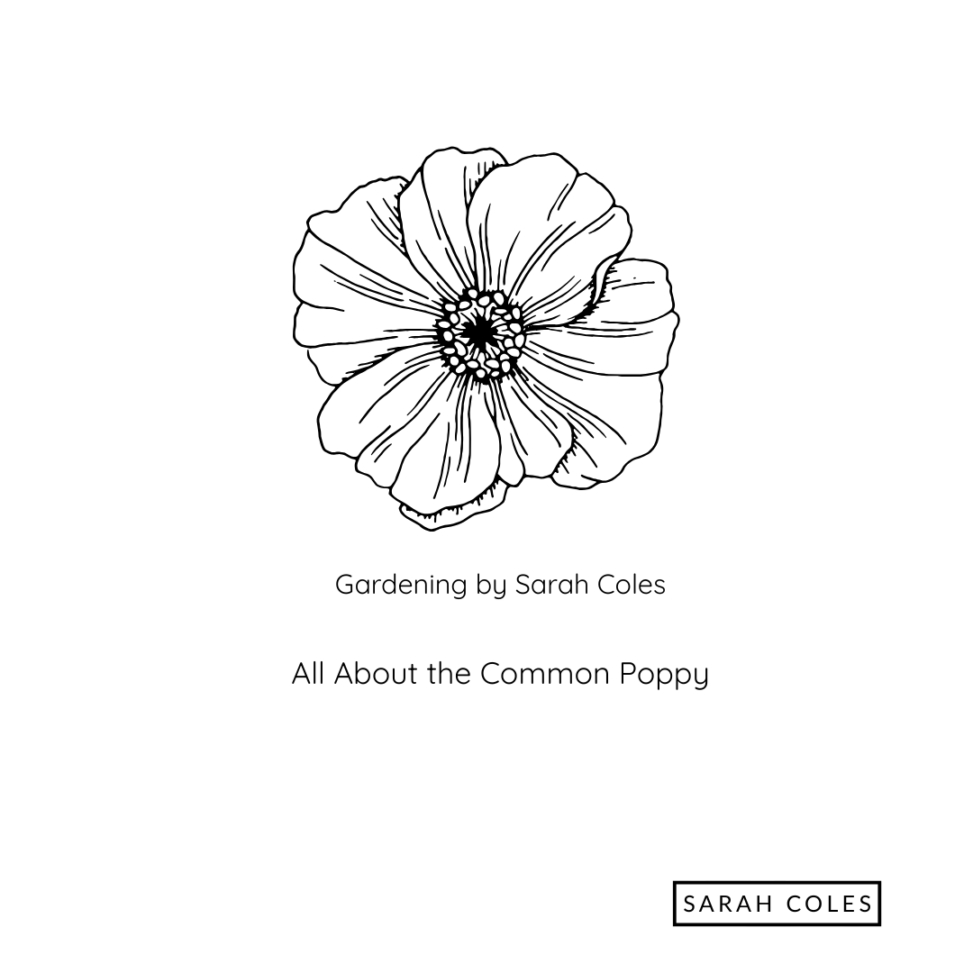
There are few sights quite as stirring as a field scattered with common poppies. Their scarlet flowers seem almost to float above the grasses, held on slender stems that sway with the lightest breeze.
Look closely and each bloom is a small marvel. Four crumpled, tissue-thin petals open around a dark centre, vivid against the green of a meadow or the muted gold of a cornfield. The flowers may be fleeting, but their colour—and the memories they carry—can leave a lasting impression.
The common poppy (Papaver rhoeas), also known as the corn poppy or field poppy, is one of our most familiar wildflowers. It has grown alongside cultivated crops for thousands of years and remains closely woven into Britain’s natural and cultural story.
For gardeners, it is also a wonderfully easy annual to grow. Give it sunshine, free-draining soil and a little freedom to seed, and it will return with a fresh display each summer.
How to recognise a common poppy
The common poppy usually grows between 20 and 80cm tall. Its upright stems and divided leaves are covered in coarse hairs, giving the plant a slightly bristly appearance.
Before opening, each flower bud hangs its head. Then, almost overnight, the sepals fall away and the petals unfold. The flowers are usually a brilliant scarlet, sometimes with a dark blotch at the base of each petal. At the centre is a ring of dusky stamens rich in pollen.
A single flower may last for only a day, particularly in warm or windy weather. The plant makes up for this with a succession of blooms, creating weeks of colour from late spring into summer.
Once the petals have fallen, a rounded seed capsule remains. As it ripens, small openings develop beneath its flat-topped crown. When the dry stem moves in the breeze, tiny seeds are scattered through these holes like pepper from a pot.
A flower that waits for its moment
The common poppy thrives where the ground has been disturbed. For centuries it grew among cereal crops, its seeds brought to the surface whenever fields were ploughed.
Those seeds are remarkably patient. They can remain dormant in the soil for many years, waiting until disturbance exposes them to the light and creates the conditions they need to germinate.
This explains why poppies sometimes appear unexpectedly after soil has been dug, building work completed or a neglected patch cleared. One year there may be bare earth; the next, it is alive with scarlet flowers.
Changes in farming practices have made common poppies less abundant in some parts of the countryside. Gardens, allotments, road verges and community wildflower areas can therefore provide useful places for them to grow.
Why poppies are good for wildlife
Common poppies do not produce nectar, but their flowers provide generous quantities of pollen. Bees and other pollen-gathering insects can often be seen moving busily around the dark centres.
Their early summer flowering can help provide food during a period when pollen from other plants may be less plentiful. They are particularly valuable when grown as part of a varied planting scheme that offers both pollen and nectar across the seasons.
Poppies work beautifully alongside other annual wildflowers, including cornflowers, corn marigolds and corncockles. Together, they create colour, movement and a richer habitat for garden wildlife.
How to grow common poppies
Common poppies are hardy annuals and need very little attention once established. Their preference for relatively open ground makes them well suited to wildflower areas, gravel gardens, sunny borders and informal cottage-garden planting.
Choose a sunny position
Poppies flower best in full sun. Select an open spot where surrounding plants will not quickly crowd them out.
They grow in many types of soil but prefer ground that drains freely. Very rich soil can encourage leafy growth at the expense of flowers, so there is usually no need to add fertiliser.
Sow the seeds directly
Poppies dislike having their roots disturbed, so it is best to sow them where they are to flower.
Prepare the area by removing weeds and lightly raking the surface. Scatter the fine seeds sparingly, then gently press them onto the soil. They need light to germinate, so avoid burying them deeply. Water carefully with a fine rose so that the seeds are not washed away.
Seeds can be sown in autumn or spring. An autumn sowing often produces earlier flowers, while a spring sowing should bring colour later in the season.
Thin crowded seedlings
Once the seedlings are large enough to handle, thin them if they are growing too closely together. This gives the remaining plants more light and air and helps them develop stronger stems.
Keep the area watered during prolonged dry spells while the plants are young. Once established, common poppies are reasonably tolerant of dry conditions.
Let some seed pods ripen
If you would like poppies to return, leave a few seed capsules in place at the end of summer. Once they turn brown and dry, they will release their seed naturally.
You can also collect ripe capsules on a dry day. Tip the seeds into a labelled paper envelope and keep them somewhere cool and dry until you are ready to sow.
If the plants begin to spread farther than you would like, remove some of the seed heads before they ripen. Bear in mind that disturbing the soil in future may encourage dormant seeds to germinate.
Where to grow poppies in the garden
Common poppies are at their best when allowed to mingle naturally with other plants.
Try them:
- along the sunny edge of a vegetable garden
- among grasses and annual wildflowers
- in a gravel or coastal-style garden
- in gaps within an informal border
- on a sunny bank or bare patch of ground
- in a large container filled with free-draining compost
Their flowering season is relatively short, and the plants die after setting seed. Grow them among longer-lasting perennials and grasses so that neighbouring foliage gradually fills the space they leave behind.
Avoid collecting seed or plants from the wild. Widely available cultivated seed is a more responsible and reliable choice.
Poppies, history and remembrance
The common poppy has accompanied people since the earliest days of agriculture. Its seeds have been found at ancient sites, reflecting its long association with cultivated and disturbed ground.
Over time, the flower became linked with sleep, loss and renewal. Its deepest modern significance, however, comes from the First World War.
Fighting and shelling repeatedly disturbed the soil of battlefields in France and Belgium. Dormant poppy seeds were brought to the surface, where they germinated and flowered across the devastated ground.
The sight inspired Canadian doctor Lieutenant-Colonel John McCrae to write In Flanders Fields in 1915. In the years that followed, the red poppy became a symbol of Remembrance. The Royal British Legion adopted it as its emblem in 1921, and it continues to honour those who have lost their lives in service.
For many people, the poppy now carries several meanings at once: sacrifice and remembrance, but also resilience, renewal and hope for a more peaceful future.
A note of caution
Poppies have a long history of traditional use, but historical remedies should not be treated as modern medical guidance. Parts of Papaver rhoeas contain biologically active compounds and should not be consumed without suitable expert advice.
The common poppy should not be confused with the opium poppy, Papaver somniferum, which is a different species. If children or pets use the garden, it is sensible to discourage them from eating any part of a plant unless it is known to be safe.
A fleeting flower worth making room for
The common poppy does not offer neat foliage or year-round structure. Its petals are easily scattered by wind and rain, and its stems eventually fade into the border. Yet this briefness is part of its charm.
For a few weeks, it brings an unmistakable glow to the garden. It feeds visiting insects, softens formal planting and connects even a small patch of ground with the wider countryside.
Sow a handful of seeds in a sunny corner, then wait. When the first crumpled petals open and catch the morning light, you may find that this modest wildflower has created one of the most memorable moments of summer.
Further Reading: My Garden Journal & Notes
